THE IRURI JOURNAL
FIELD NOTES & BOLT-ON ARCHITECTURE
7 Bolt-On Jeep Wrangler JL Upgrades Worth Considering in 2026
A Considered Buyer’s Guide to Functional Modification, Vehicle-Specific Architecture, and Clean Installation.
The Jeep Wrangler JL is one of the easiest vehicles to modify. But easy to modify does not mean every accessory deserves a place on the vehicle. It also does not mean every upgrade should involve cutting, drilling, or permanent alterations. For most daily-driven, light off-road, and overland builds, a more considered approach starts with a simple question: What problem are you actually trying to solve?
Modification should solve friction, not create more of it.
When we evaluate whether an upgrade deserves a place on a Wrangler, we look at five fundamental criteria:
• Does it solve a real, repeatable problem?
• Does it minimize permanent vehicle modification?
• Is the mounting logic direct, mechanical, and reliable?
• Is the fitment genuinely vehicle-specific?
• Does it add capability without introducing unnecessary visual noise?
A coherent build is not about adding more parts. It is about adding the right component in the right place. Below are seven bolt-on upgrades we believe remain thoroughly worth considering for a Jeep Wrangler JL build in 2026.
Quick Selection Guide
If you are not sure where to start, do not begin by asking which part is the most impressive. Ask a simpler question: What problem do I encounter most often? If roof access is inconvenient, start with access. If auxiliary lighting is the priority, start with the mounting architecture. If the goal is simply to create a more coherent mechanical language, begin with a smaller, restrained component. A coherent Wrangler build should solve problems in order—not collect parts.
01 / Upgrade the Hood Latch
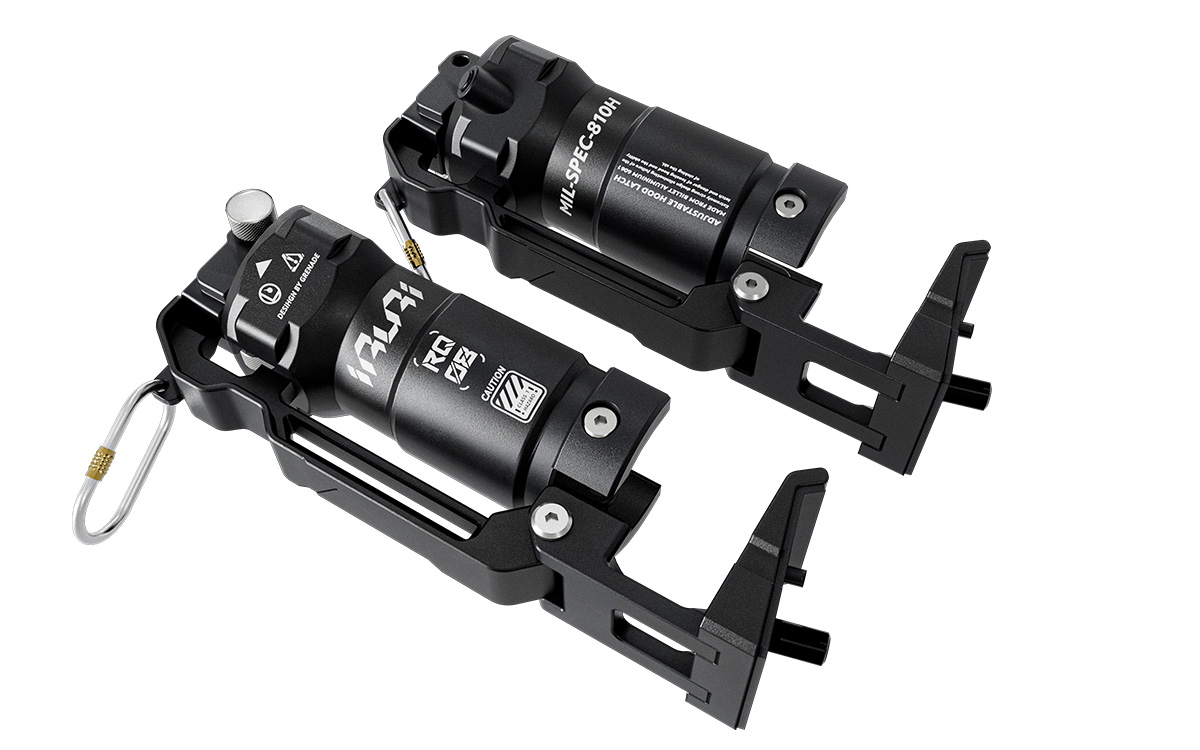
The Wrangler’s exposed hood latch is one of the vehicle’s most recognizable mechanical details. Unlike hardware concealed behind body panels, the hood latch remains visible on both sides of the front cowl. That makes it both a functional component and an integral part of the Wrangler’s exterior architecture.
The factory latch performs its basic job, so replacing it is never a mandatory modification. However, if the goal is to create a more coherent mechanical language across the vehicle, the hood latch is a logical place to begin. Rather than making a major structural alteration to the body, a precisely manufactured metal latch introduces a more deliberate mechanical detail while keeping the Wrangler’s iconic silhouette intact.
When evaluating an aftermarket hood latch, look past styling and focus on engineering fundamentals:
• Correct alignment with factory mounting locations.
• Dimensional consistency between the left and right sides.
• Complete elimination of unnecessary drilling or cutting.
• Physical stability under long-term cyclic vibration.
• Material and surface finishes that integrate with the vehicle.
A well-designed mechanical component should feel as though it belonged on the vehicle from the factory.
Engineering Note
For an exterior mechanical component like this, geometry, alignment, and long-term stability matter far more than visual complexity. The IRURI Origin Billet Hood Latch system uses solid billet construction developed specifically around JL and JT mounting geometries.
Who Doesn’t Need It?
If the factory latch already fulfills your requirements and you are not aiming to establish a consistent exterior mechanical language, there is no reason to replace it simply for the sake of modification. This is not a repair for a broken vehicle; it is a detail for owners who care about mechanical finish and visual consistency.
IRURI Reference
5-Axis CNC machined from solid 6061 aluminum billet (~0.7 kg). 100% factory bolt-on installation with zero drilling. Precision-fit for Jeep Wrangler JL, JL Rubicon, Wrangler 4xe, and Gladiator JT. Configurable as Hood Latch Only or as an integrated Hood Latch + Door-Off Mirror Kit.
02 / Add Structure Around the Side Mirrors
The Wrangler’s side mirrors sit well outside the vehicle’s main body line. Whether navigating tight forest tracks, squeezing into narrow parking bays, or negotiating city traffic, they are among the components most vulnerable to contact with branches, obstacles, and surrounding walls.
For that reason, a mirror cover should be more than a cosmetic accessory. Its primary objective should be structural and functional. An ideal solution does not replace the complete factory mirror assembly. Instead, it adds a protective structure around the existing housing while preserving the original field of view and factory electronic functions.
If that added structure also provides an integrated mounting position for action cameras or small exterior accessories, the upgrade becomes practical rather than purely decorative:
• Retains the original mirror assembly and electronic adjustment.
• Minimizes alteration to the underlying door structure.
• Follows factory mirror geometry without adding excessive visual bulk.
• Provides authentic mechanical utility.
Engineering Note
One of the easiest mistakes with mirror protection is overbuilding it. A good structure should follow the geometry of the original mirror rather than becoming a heavy, disconnected object bolted to the side of the vehicle.
Who Doesn’t Need It?
If your Wrangler spends almost all of its time on open suburban roads and you rarely encounter narrow trails or require an external camera hardpoint, the factory mirror housing is completely adequate. Do not assume you need additional hardware simply because it looks off-road focused.
IRURI Reference
5-Axis CNC machined from solid-billet aluminum-magnesium alloy. Adds protective external perimeter armor with an integrated action-camera interface while preserving factory mirror electronics. Zero drilling or permanent modifications. Fits JL, 4xe, Rubicon, and Gladiator JT.
03 / Make the Roof Easier to Use
Many Wrangler owners eventually install a roof rack. But once the roof becomes functional storage, another challenge immediately arises: How do you reach it reliably?
Recovery boards, storage cases, camping hardware, photography equipment, and even basic roof cleaning become tedious tasks without a dedicated, stable foothold. Roof accessibility is frequently an overlooked part of an overland build.
A rear tailgate ladder is one option, but it significantly alters the rear architecture and can add weight behind the rear axle. For owners who do not require a massive rear assembly, a compact side-access system is often more logical. The purpose of a side ladder is not to look adventurous; it is to provide a stable, repeatable, and intuitive access point:
• Adequate mechanical traction on the step surface under wet or muddy conditions.
• Natural climbing movement without awkward stretching.
• Complete clearance for full door opening.
• Safe separation distance from vehicle sheet metal.
• Vehicle-specific compatibility that stays rigid over long-term use.
Engineering Note
This is a component whose real-world utility should far exceed its visual footprint. The IRURI Side Ladder is offered in specific JL, 4xe, JT, and Rubicon variants and is engineered around direct vehicle mounting. Exact dimensional fitment matters far more than general similarity.
Who Doesn’t Need It?
If you never use the roof, do not run a roof platform, and rarely carry gear above the cabin, a dedicated ladder simply adds dead weight and visual clutter. This upgrade should be dictated purely by usage frequency.
IRURI Reference
5-Axis CNC machined from aluminum-magnesium alloy. Features an adjustable modular architecture and fold-flat profile that anchors directly to factory door hinges. Non-invasive bolt-on installation takes approximately 30 minutes with zero body drilling. Compatible with JL, 4xe, Rubicon, and Gladiator JT.
04 / Give Auxiliary Lighting the Right Mounting Position
More auxiliary lights do not automatically yield a superior lighting package. Where the light is mounted matters just as much as the luminaire itself. Common mounting zones on a Wrangler include the bumper, grille, roofline, and A-pillars. Each zone alters beam performance, wiring complexity, and driving sightlines.
A-pillar locations remain popular because they offer a balanced compromise of mounting height, peripheral visibility, and aiming adjustment. However, the bracket itself is often neglected. Even a premium light pod performs poorly if its mounting bracket flexes, vibrates over washboard tracks, or positions the lamps inconsistently between the left and right sides.
A properly engineered A-pillar mount should:
• Anchor directly to existing factory hardpoints.
• Maintain symmetrical pod placement on both sides.
• Maintain mounting rigidity and minimize unwanted movement under trail vibration.
• Minimize unnecessary wind noise or vibration when correctly installed.
• Integrate naturally with the cowl rather than looking like an afterthought.
Furthermore, different Wrangler configurations feature subtle variations in hood radius and cowl geometry. Looking compatible is never the same as being compatible.
Engineering Note
Each main mount is 5-axis CNC-machined from solid 6061-T6 aluminum billet and uses existing factory mounting points without drilling. Rubicon 392 configurations use a distinct functional hood and air-induction architecture, so components located near the hood and A-pillar should be verified separately. Fitment is part of the design.
Who Doesn’t Need It?
If your Wrangler is driven almost entirely on lit urban corridors and you have no genuine need for trail illumination, campsite lighting, or peripheral ditch scanning, auxiliary lighting should not be a priority. Avoid bolting on lights merely to look ready for an expedition.
IRURI Reference
5-Axis CNC machined from solid 6061-T6 aluminum billet (~4.5 kg / pair). Bolts directly to factory cowl hardpoints with zero drilling, providing a vibration-stable platform for auxiliary ditch and trail lighting.
Fitment Note: Current configuration supports Wrangler JL, JL Rubicon, and Gladiator JT. Not compatible with Wrangler 4xe. Verify 392-specific compatibility before ordering.
05 / A Side Step Is Not Automatically a Rock Slider
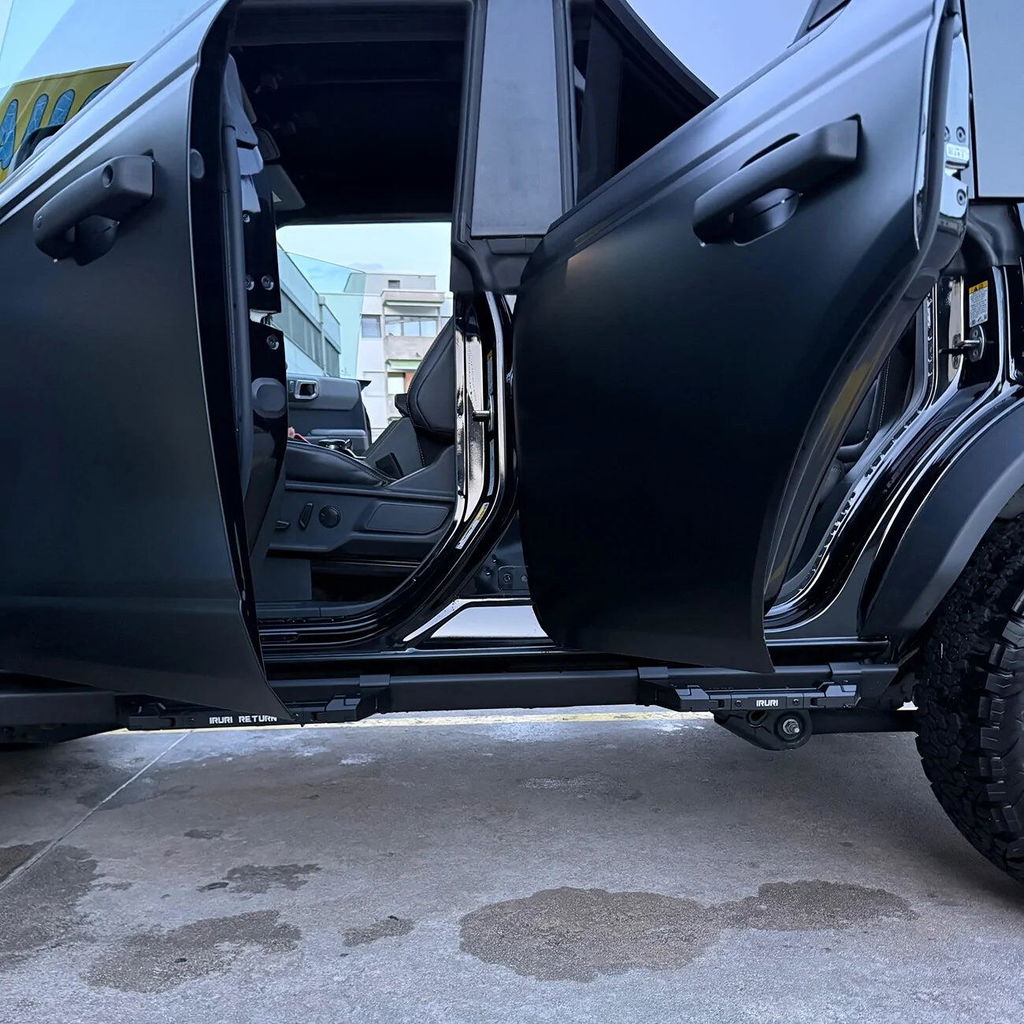
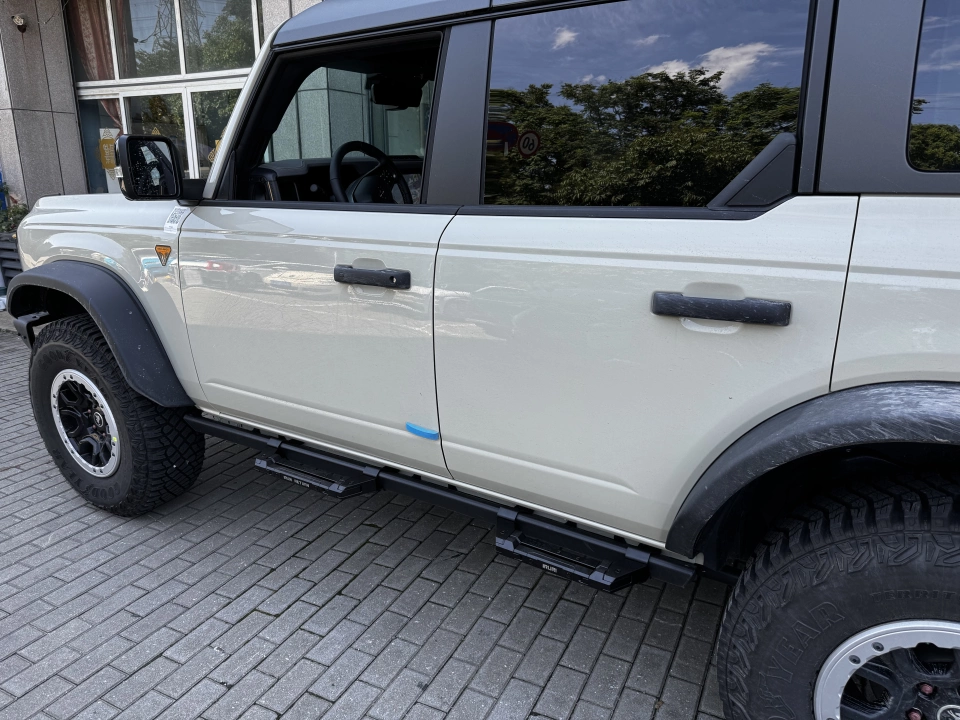
These two terms are constantly conflated in the off-road aftermarket. A side step is primarily engineered to facilitate cabin entry and exit. A rock slider is engineered to support the physical weight of the vehicle when the rocker panels contact boulders and ledges.
They may share similar exterior proportions, but their structural priorities are entirely distinct. While some products attempt to span both roles, that does not mean every step on the market should be advertised as a structural rock slider.
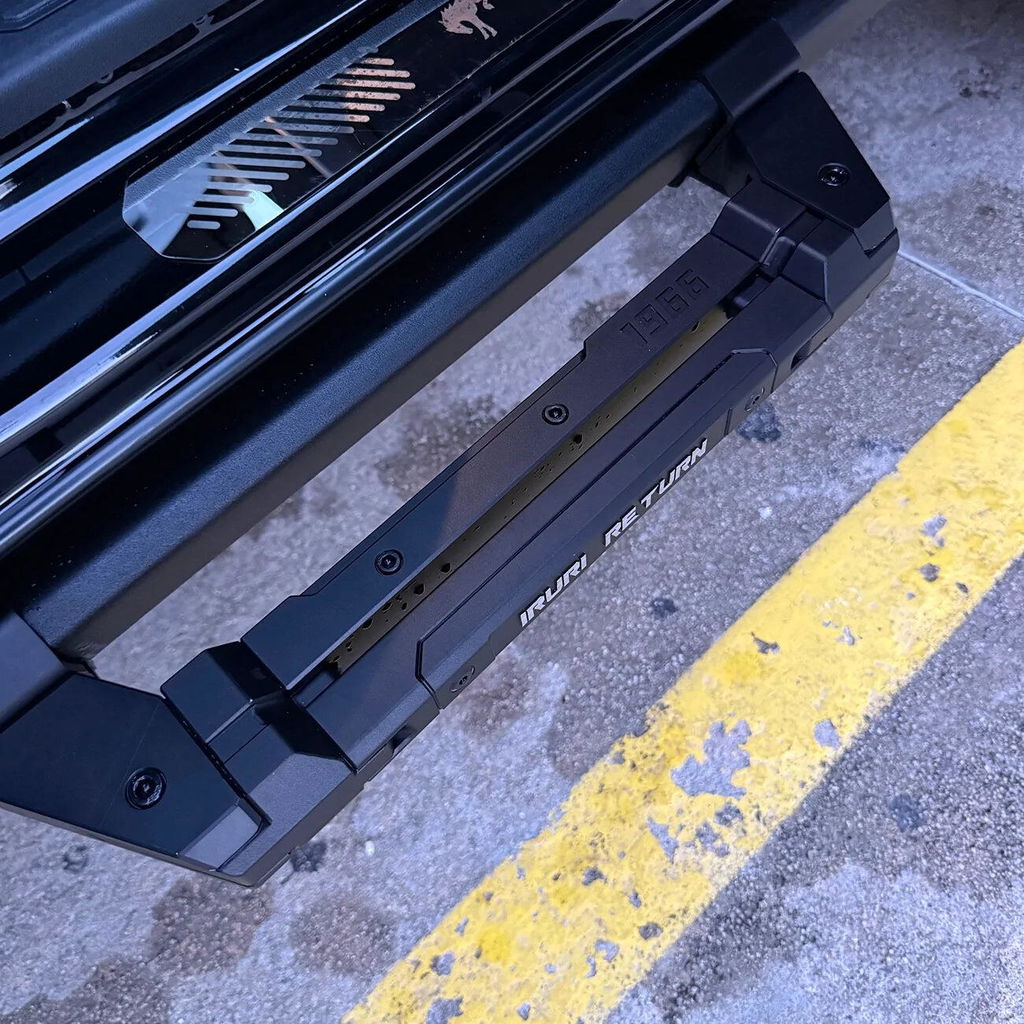
For street driving, overland touring, and light trail use, a well-engineered side step provides immediate daily utility—particularly after a suspension lift or the installation of larger tires. When evaluating a side step, prioritize:
• Generous usable step surface area.
• Mechanical slip-resistance in mud, snow, and rain.
• Preservation of reasonable ground clearance.
• Robust, non-flexing mounting architecture.
• Natural foot placement when swinging doors open.
• Visual balance with the vehicle's wheelbase.
Engineering Note
The IRURI system is designated as a Modular Side Step. We describe it accurately as a modular access and profile system rather than mislabeling it as a heavy rock slider. Accurately defining what a component is engineered to do is fundamental to good design.
Who Doesn’t Need It?
If your vehicle remains at stock suspension height and occupants enter effortlessly, an aftermarket step may not be required. Conversely, if your primary objective is technical rock crawling across boulder fields, prioritize dedicated structural steel rocker armor over an access step.
IRURI Reference
5-Axis CNC machined from aluminum-magnesium alloy (~36 kg / 79.4 lb per pair). Engineered as a dedicated modular step system for daily entry and side profile integration. Direct factory bolt-on installation with zero drilling and zero welding. Fits Wrangler JL (2019–2025) and Wrangler 4xe.
06 / Protect the Rear Corners
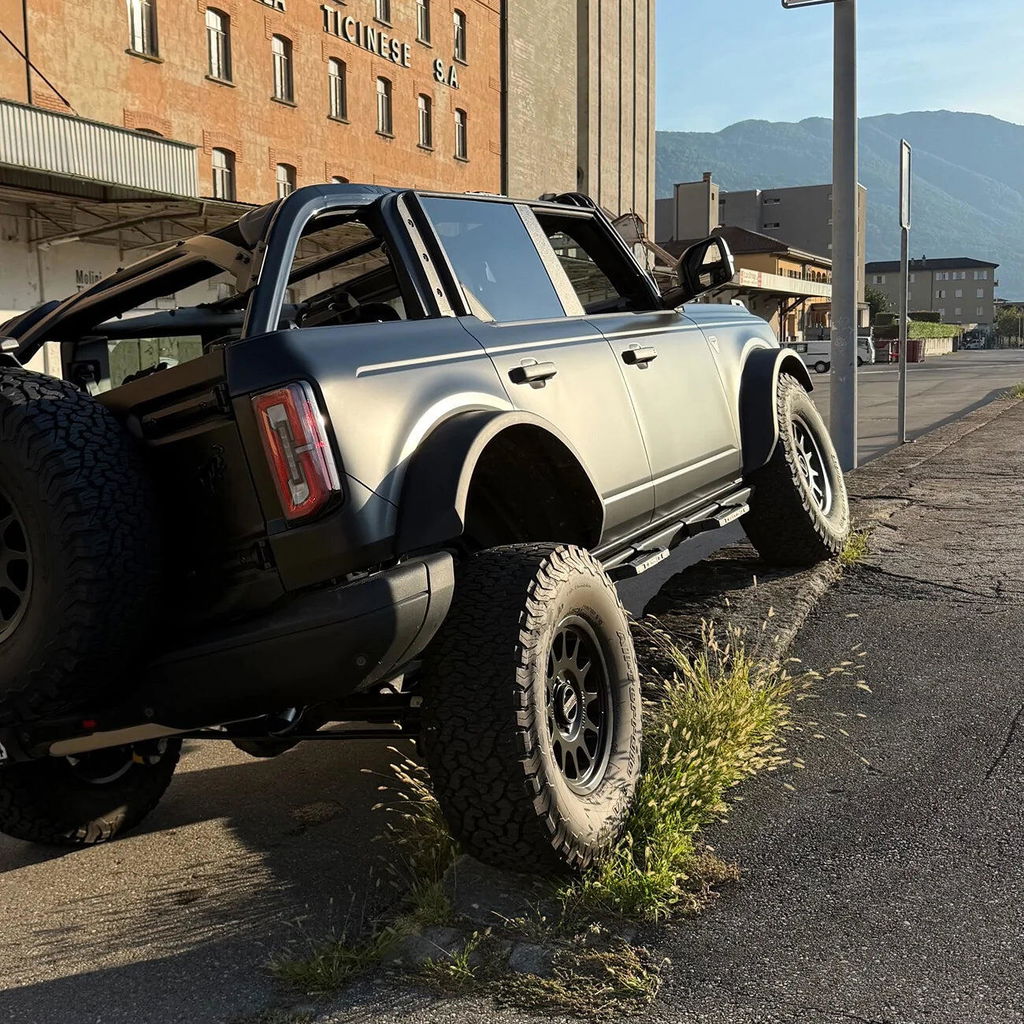
The Wrangler’s taillights project outward from two exposed rear corners. They create a clean signature profile, but they are also exceptionally vulnerable to tree branches, outdoor gear, and tight garage maneuvers.
A frequent misstep with taillight armor is overbuilding. A well-designed guard should not encase the factory lamp in an oversized, heavy metal cage. Instead, it should trace the natural contour of the lamp, introducing structural protection precisely where impact occurs while preserving full illumination visibility and factory proportions:
• Zero obstruction of brake, turn, or reverse light visibility.
• Minimal visual bulk and unnecessary weight.
• Natural contouring along factory lamp lines.
• Seamless integration that looks part of the vehicle.
Good protection is not about covering everything in steel; it is about establishing a functional perimeter around vulnerable components.
Engineering Note
The central challenge with protective hardware is knowing where to add material—and knowing where to stop. Excessive coverage increases mass and visual clutter while potentially reducing light visibility. The IRURI guard uses an open-frame architecture designed to maintain visibility of the factory LED lighting while using existing mounting locations without drilling.
Who Doesn’t Need It?
If your Wrangler rarely sees overgrown trails, carries no rear-mounted gear, and lives in spacious parking environments, taillight armor is not a priority. Protection should address real exposure risk, not cosmetic desire.
IRURI Reference
Formed from high-grade aluminum alloy (~4.3 kg / pair). Open-frame protection designed specifically for factory LED taillights, preserving all photometric signaling while safeguarding vulnerable lamp perimeters. 100% factory mounting with zero drilling. Fits Wrangler JL, JL Rubicon, and 4xe.
07 / Not Every Upgrade Needs to Add Horsepower
Exhaust tips are routinely marketed with exaggerated performance claims. But viewed honestly, replacing a tailpipe tip should never be treated as a horsepower modification. What it actually provides is a finished visual termination, refined material character, and an intentional industrial profile at the rear of the vehicle. That alone is a valid reason to consider the upgrade.
The rear of a Wrangler contains prominent functional hardware: the spare tire, hitch receiver, steel bumper, tow hooks, and the exhaust outlet. If the exhaust terminates in an unfinished, raw steel pipe, it can feel unresolved against the rest of the build. A quality exhaust tip should focus on:
• Exact fitment over the factory exhaust tailpipe.
• High-temperature durability and weather resistance.
• Robust, non-welded clamping architecture.
• Visual consistency with adjacent chassis hardware.
It does not need to promise dyno gains; a carefully resolved mechanical detail justifies itself on its own merits.
Engineering Note
The IRURI exhaust tip is developed around a 5-axis CNC machining methodology from magnesium-aluminum alloy. In a component where surface texture and geometry are prominent, precision machining defines the product. However, it should always be described accurately as an exhaust-finishing detail—not as an engine performance upgrade.
Who Doesn’t Need It?
If you are indifferent to rear-end detailing and your sole focus is powertrain performance, your budget is far better allocated toward a complete performance exhaust system or tuning hardware.
IRURI Reference
5-Axis CNC machined from magnesium-aluminum alloy (~1.0 kg) with matte black high-temp coating and tuned chamber. Features an integrated heavy-duty clamp-on design that installs in ~15 minutes with zero cutting or welding. Direct fit for factory exhaust tailpipes on JL, 4xe, Rubicon, and Gladiator JT.
Build the Wrangler as a System, Not a Collection of Parts
The most cohesive Wrangler builds are rarely the ones carrying the largest quantity of accessories. They are the vehicles where every single component has a clear reason to exist. We prefer to organize the build into four functional subsystems:
• ACCESS: The Side Ladder solves roof-level cargo handling; the Modular Side Steps resolve everyday entry and exit.
• LIGHTING: The A-Pillar Light Mounts provide rigid, vehicle-specific mounting points for auxiliary lighting.
• PROTECTION: Billet Mirror Covers safeguard the widest points of the vehicle; Taillight Guards protect rear lamps; the Billet Hood Latch replaces visible factory retention hardware with a more deliberate, integrated mechanical system.
• DETAIL: The 5-Axis CNC Exhaust Tip resolves the final mechanical detail at the rear of the vehicle.
One component. One clear purpose. Together, they become an integrated system. If a part solves no friction and contributes nothing to the vehicle’s architecture, leave it off.
JL / 4xe / Rubicon / 392 / JT: Why Fitment Should Never Be Assumed
"Jeep Wrangler JL" does not describe one single, identical vehicle. Different model years, engine architectures, and trim levels introduce real physical variations. This is especially true when comparing the standard Wrangler JL, Wrangler 4xe, Rubicon, Rubicon 392, and Gladiator JT.
While these vehicles share fundamental structural architecture, components are not automatically interchangeable. Fitment is influenced by:
• Hood height, cowl radius, and stamping contours.
• Clearance around the A-pillar base and windshield hinge.
• High-voltage powertrain cooling and hybrid battery packaging.
• Factory chassis mounting hardpoints.
• Fender flare height and inner wheel liner geometry.
This is why broad statements like "Fits Jeep Wrangler" are inadequate. A properly engineered component must state precisely which model years, trims, and engine configurations are supported. For example, Rubicon 392 configurations use a distinct functional hood and air-induction architecture, so components located near the hood and A-pillar should be verified separately. Fitment is part of the design.
Which Upgrade Should You Do First?
The first upgrade you make does not need to be the most expensive or the most visually dramatic. It should simply be the one you will use most often:
• If entering and exiting the vehicle is difficult every day: solve the side steps first.
• If you regularly transport cargo overhead: solve roof access first.
• If low-light trail visibility is an immediate challenge: solve the lighting mounts first.
• If the vehicle works well and your goal is visual consistency: start with small, precise mechanical details.
Do not modify a Wrangler simply to complete an arbitrary checklist. A mature build grows out of authentic use.
Frequently Asked Questions
Do these upgrades require drilling into the vehicle?
This guide focuses strictly on bolt-on upgrades engineered to minimize permanent modifications. Most IRURI components utilize existing factory mounting holes and hardware locations. However, installation details vary across model years and trims; always verify specific product installation instructions before ordering.
Are JL and 4xe accessories completely interchangeable?
Not automatically. While the 4xe shares the primary JL body shell, differences in high-voltage battery packaging, underbody clearances, curb weight, and specific cowl components mean that fitment must be confirmed individually. For example, the IRURI Origin Billet A-Pillar Light Mounts are not compatible with the Wrangler 4xe.
Do Rubicon accessories automatically fit a standard JL Sport or Sahara?
Not necessarily. Rubicon models feature high-clearance fender flares, different suspension heights, and distinct factory rocker rails. Products interacting with fenders, sills, and bumpers must be cross-referenced against your specific trim.
What is the primary fitment consideration on the Rubicon 392?
The Rubicon 392 features a specialized functional hood with increased clearance and a unique internal air-induction system. Components mounting to or near the hood and A-pillars require dedicated verification.
Is a side step the same as a rock slider?
No. A side step is designed to optimize foot placement for entering and exiting the cabin. A rock slider is a structural armor component built to bear the physical weight of the vehicle against rocks. While some designs blend features, the two should not be confused.
Should I choose aluminum or steel accessories?
Neither material is universally superior. Machined aluminum is ideal when weight reduction, corrosion resistance, and precision CNC finishes are priorities. Steel remains invaluable where severe sliding rock impacts and heavy structural recovery loads are expected. The application dictates the material.
Does an exhaust tip increase engine horsepower?
No. A clamp-on exhaust tip alters the exit profile and visual finish of the tailpipe. It does not reduce upstream exhaust restriction or alter engine output.
Which upgrade should I do first?
Begin with the friction point you encounter most frequently. Modification should never follow an aftermarket catalog; it should follow your real-world driving routine.
A Wrangler Does Not Need More Parts. It Needs Better Decisions.
IRURI develops modular components around the architecture that already exists on the vehicle. Not to change what the Jeep is, but to make every added component feel as though it belonged there from the beginning.
PRECISION MODULAR GEAR FOR JEEP WRANGLER
Explore purpose-built bolt-on hardware engineered around mechanical clarity, structural fitment, and zero permanent modification.
EXPLORE THE WRANGLER COLLECTION →


0 comments