

THE IRURI JOURNAL
FIELD NOTES & TAILPIPE ACOUSTICS
Jeep Wrangler JL Exhaust Tip Guide: What Changes—and What Doesn’t
A Practical Buyer’s Guide to Tailpipe Acoustics, Departure Clearance, Clamp-On Fitment, and Rear-End Proportions.
Understanding what an exhaust tip can realistically achieve on a Wrangler JL or Gladiator JT—and when factory tailpipe hardware is already sufficient.
An exhaust tip is not an exhaust system. Before considering an upgrade, it helps to separate what a tailpipe extension can realistically accomplish from what it cannot. In off-road forums and owner discussions, exhaust modifications are often blurred across four distinct hardware categories: an exhaust tip, a muffler, an axle-back system, and a cat-back exhaust. For most owners, the biggest change is visual—not mechanical.
The goal is not to turn a Wrangler into something it isn't. It is to finish an exposed functional detail with more intention.

01 / What Does an Exhaust Tip Actually Change?
To evaluate an aftermarket exhaust tip rationally, its mechanical impact should be divided into three distinct aspects:
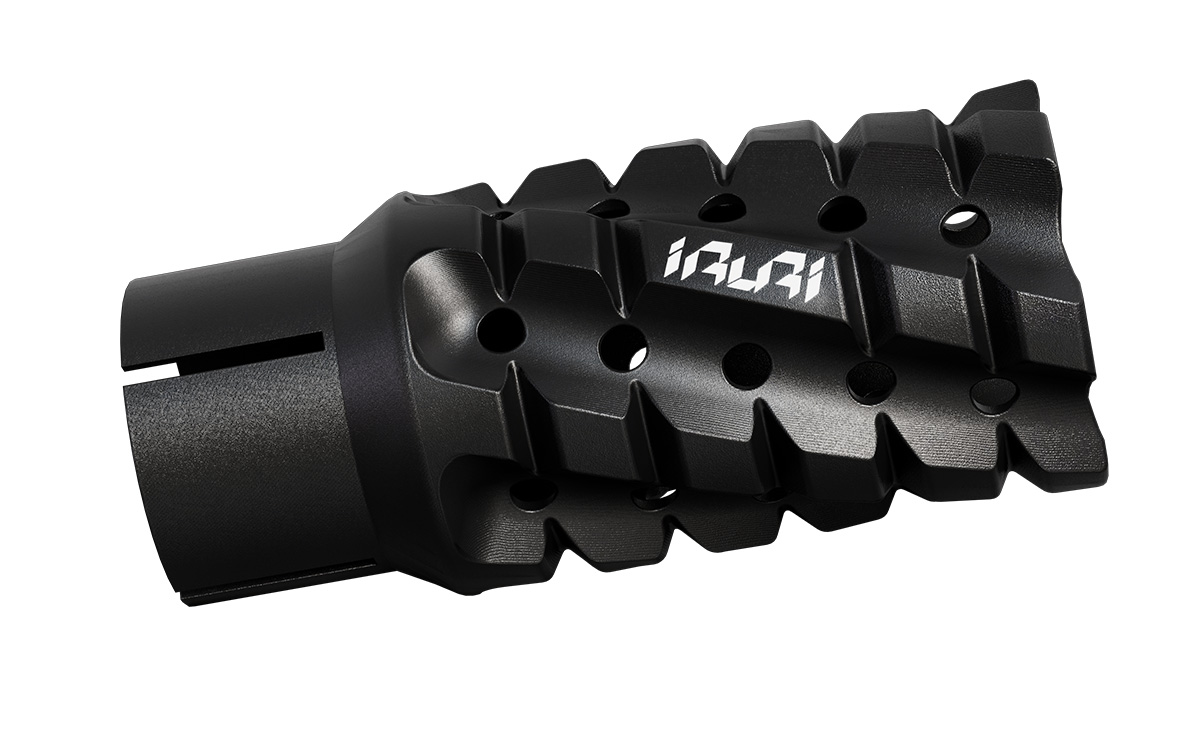
• Visual Proportions: The factory tailpipe on a Jeep Wrangler JL or Gladiator JT is purely functional—a bare metal tube projecting beneath the rear bumper. An engineered exhaust tip visually anchors the rear quarter, complementing larger all-terrain tires and aftermarket rear bumpers with a finished, purposeful profile.
• Exit Geometry: The exit diameter, length, wall thickness, and outer sleeve geometry define how exhaust gases leave the chassis. External fluting and perforated detailing can also influence localized airflow around the tailpipe exit.
• Acoustic Character at the Exit: An exhaust tip may subtly influence perceived tone depending on its geometry and the exhaust system behind it, but the difference can be small—and on some vehicles may be difficult to notice at all.
The scale of that sound change should not be confused with replacing a muffler or installing a complete exhaust system.


02 / Will an Exhaust Tip Make a Wrangler Louder?
The short answer is: possibly, but usually not in the way a muffler or cat-back does.
An engine’s overall decibel level is dictated primarily by cylinder displacement, engine architecture, and the baffling volume of the main muffler. Because a bolt-on tip mounts downstream of the entire factory exhaust system, the primary muffling work has already occurred before the gases ever reach the tip.
However, exit geometry can play a limited role in tone. Internal chambers or contoured exit openings can slightly alter how exhaust pulses disperse into the air, which some drivers perceive as a subtle shift in exhaust depth.
For many Wrangler and Gladiator owners, this is precisely what they are after: they do not want an aggressive, raspy exhaust roar that attracts unwanted attention or causes fatigue on long road trips, but rather a more defined mechanical character from the rear of the vehicle.
03 / What About Highway Drone?
Exhaust "drone"—a fatiguing, low-frequency cabin resonance typically occurring at cruising speeds—is one of the most common complaints regarding aftermarket exhaust modifications.
A tip-only change is much less likely to create the kind of drone associated with muffler deletes or aggressive axle-back systems, because the factory muffler and resonator remain in place.
Drone is primarily a system-level acoustic issue involving engine speed, pipe length, muffler baffling, and cabin volume resonance. However, cabin acoustics vary by vehicle and configuration (including hardtop vs. soft top, gear ratios, and tire tread), so a universal claim of "zero drone" across every possible setup would be too absolute. What can be said is that a tip does not alter the upstream sound-absorption architecture that keeps cruising noise controlled.
04 / Will It Add Horsepower?
No meaningful performance claim should be made. Do not purchase an exhaust tip expecting gains in horsepower or torque.
A clamp-on exhaust tip leaves the upstream exhaust hardware essentially unchanged. It does not meaningfully change upstream exhaust restriction or engine performance. Adding an accessory over the last few inches of the tailpipe does not alter internal thermodynamic flow.
An exhaust tip should be evaluated strictly as an exterior finish and acoustic detail—not as an engine performance upgrade.
05 / Before You Buy: Check the Rear Clearance
On a passenger car, an exhaust tip is judged almost entirely by styling. On a Jeep Wrangler or Gladiator, the space behind the rear axle is a functional departure area regularly exposed to ledges, steep drop-offs, and trail obstacles.
An exhaust tip does not typically alter a vehicle’s rated departure angle on paper, but it does add a rigid projecting component to the tailpipe terminus. If a tip extends too far past the bumper lip or hangs noticeably lower than the factory tube, it can become an early point of contact when dropping off obstacles. Striking a tip against a rock shelf can crush the tailpipe inward, bend exhaust hanger brackets, or push the assembly into the rear bumper fascia.
When evaluating an exhaust tip for an off-road Jeep:
• Check Longitudinal Projection: Verify how far the tip extends beyond the rear bumper face.
• Inspect Vertical Clearance: Confirm the outer diameter does not unnecessarily reduce clearance beneath the tailpipe.
• Assess Your Trail Use: Drivers who regularly tackle aggressive rock crawling should measure rear clearance carefully before adding exterior hardware to the exhaust outlet.


06 / Fitment: Measure Before You Order
A common assumption among owners is that all aftermarket and factory exhaust tailpipes share universal dimensions. When choosing a clamp-on exhaust tip, two critical rules apply:
1. Factory Exhaust System: The IRURI exhaust tip features a listed nominal inlet inner diameter (ID) of 76 mm, engineered for clamp-on installation over factory exhaust tailpipes. If your vehicle retains its complete factory exhaust, select the variant specified for your model configuration.
2. Aftermarket Exhaust Systems: If your Jeep has been modified with an aftermarket axle-back or cat-back system, do not assume universal compatibility. Aftermarket exhaust manufacturers use varying pipe diameters. Measure the actual outside diameter (OD) of your tailpipe with calipers before ordering.
A proper clamp-on tip should seat cleanly over the tailpipe without mechanical interference and secure tightly using its band clamp without requiring cutting, drilling, or welding.
(Fitment Note: Confirm specific model-year fitment—across JL, JL Rubicon, 4xe, and JT models—against current product documentation before purchase).

07 / Material, Heat & Real-World Exposure
Exhaust-tip hardware is continuously exposed to heat cycles, water, road debris, mud, and road salt. Because the tip sits at the vehicle's rear corner directly behind the tire track, material choice and surface treatment matter significantly for long-term appearance.
The IRURI exhaust tip uses a Magnesium-Aluminum Alloy body finished with a Matte Black High-Temperature Coating.
This combination provides a solid, structured component weighing approximately 1.0 kg, while the specialized thermal coating is intended to help resist heat-related discoloration and outdoor environmental exposure under normal operating conditions.


08 / Decision Matrix: Who Should Actually Buy an Exhaust Tip?
Use this matrix to determine whether a clamp-on exhaust tip aligns with your specific vehicle goals:
| Modification Goal | Is an Exhaust Tip the Right Solution? | Practical Assessment |
|---|---|---|
| Finish exposed, raw factory rear tailpipe | YES | An engineered tip provides an immediate visual upgrade and balanced rear proportions. |
| Desire a subtle change in tailpipe tone | MAYBE | A tip may influence perceived tone, but the change depends on the vehicle and can be subtle or hard to notice. |
| Seeking loud, aggressive exhaust volume | NO | A tip does not replace mufflers; consider an axle-back or cat-back exhaust system instead. |
| Looking to increase engine horsepower | NO | Tailpipe extensions leave upstream flow restrictions unchanged; do not buy for power. |
| Prefer clean installation without welding | YES | A clamp-on system installs in ~15 minutes with simple hand tools and zero cutting. |
| Vehicle retains factory exhaust pipe | LIKELY | Direct fit for factory Wrangler JL / JT tailpipes (verify model configuration). |
| Vehicle has aftermarket exhaust system | MEASURE FIRST | Must measure existing tailpipe outside diameter (OD) before ordering. |
| Frequent extreme rock crawling | CHECK CLEARANCE FIRST | Assess rear bumper projection and ledge clearance prior to installation. |
09 / The IRURI Approach
At IRURI, we design components not to disguise the vehicle, but to resolve exposed, utilitarian details with cold industrial precision. The IRURI Jeep JL/JT Exhaust Tip is built as an exterior tailpipe termination that respects factory mechanical parameters:
• Precision-Machined Magnesium-Aluminum Alloy Construction: Formed alloy construction weighing approximately 1.0 kg, featuring external fluting and perforated detailing.
• Tuned Chamber: Designed with an internal chamber structure intended to refine tailpipe pulses and acoustic character at the exit.
• 76 mm Nominal Inlet ID & Clamp-On Architecture: Direct slip-on design engineered for factory exhaust outlets. Secures in roughly 15 minutes using standard 10 mm or 12 mm sockets—zero welding, cutting, or permanent modifications.
• Matte Black High-Temp Coating: Protective exterior finish formulated to resist heat-related discoloration and outdoor exposure under normal operating conditions.
• Dimensions: Measures 228 × 102 × 102 mm.
• Platform Application: Engineered for Jeep Wrangler JL, JL Rubicon, 4xe, and Gladiator JT models equipped with factory exhaust systems. (Measure existing pipe OD first if an aftermarket exhaust is installed).


10 / Frequently Asked Questions
Does an exhaust tip make a Jeep Wrangler louder?
It can subtly influence perceived tone depending on its geometry, but it will not make the Jeep significantly louder. Overall volume is governed by the engine, catalytic converters, and primary muffler. An exhaust tip with an internal chamber is intended to add character to the exit note rather than increase raw decibels.
It can subtly influence perceived tone depending on its geometry, but it will not make the Jeep significantly louder. Overall volume is governed by the engine, catalytic converters, and primary muffler. An exhaust tip with an internal chamber is intended to add character to the exit note rather than increase raw decibels.
Does an exhaust tip add horsepower?
No. An exhaust tip does not meaningfully change upstream exhaust restriction or engine performance. It should be purchased for visual proportions, corrosion resistance, and subtle acoustic character—not for power gains.
No. An exhaust tip does not meaningfully change upstream exhaust restriction or engine performance. It should be purchased for visual proportions, corrosion resistance, and subtle acoustic character—not for power gains.
Will an exhaust tip cause highway drone?
A tip-only change is much less likely to create the kind of drone associated with muffler deletes or aggressive axle-back systems, because the factory muffler and resonator remain in place. However, cabin acoustics vary by vehicle and configuration, so a universal "zero drone" claim cannot be made for every setup.
A tip-only change is much less likely to create the kind of drone associated with muffler deletes or aggressive axle-back systems, because the factory muffler and resonator remain in place. However, cabin acoustics vary by vehicle and configuration, so a universal "zero drone" claim cannot be made for every setup.
What size exhaust tip fits a Jeep Wrangler JL?
The IRURI exhaust tip features a listed 76 mm nominal inlet inner diameter (ID), engineered to seat over factory Wrangler JL and Gladiator JT exhaust tailpipes and secure via an integrated heavy-duty clamp. If you have an aftermarket exhaust, measure your pipe's outside diameter before purchasing.
The IRURI exhaust tip features a listed 76 mm nominal inlet inner diameter (ID), engineered to seat over factory Wrangler JL and Gladiator JT exhaust tailpipes and secure via an integrated heavy-duty clamp. If you have an aftermarket exhaust, measure your pipe's outside diameter before purchasing.
Can I install an exhaust tip without welding?
Yes. The IRURI system uses a clamp-on design that bolts securely over the factory tailpipe in approximately 15 minutes using basic hand tools, requiring no cutting or welding.
Yes. The IRURI system uses a clamp-on design that bolts securely over the factory tailpipe in approximately 15 minutes using basic hand tools, requiring no cutting or welding.
Will an exhaust tip reduce off-road clearance?
An exhaust tip adds a rigid component to the end of the tailpipe. While it does not change the vehicle's published departure angle, it can become an early contact point if it protrudes too far past the bumper. Drivers who frequently tackle extreme ledge drop-offs should measure clearance before driving on technical trails.
An exhaust tip adds a rigid component to the end of the tailpipe. While it does not change the vehicle's published departure angle, it can become an early contact point if it protrudes too far past the bumper. Drivers who frequently tackle extreme ledge drop-offs should measure clearance before driving on technical trails.
Purpose Before Power.
Modifying a Jeep is not about adding noise or claiming horsepower where none exists. It is about understanding what each component does and choosing upgrades that serve a defined purpose. If your goal is to finish the exposed tailpipe while retaining the factory exhaust system and avoiding fabrication, a well-designed clamp-on tip is a simple, low-intervention upgrade.
EXPLORE THE IRURI JEEP JL/JT EXHAUST TIP
Engineered from magnesium-aluminum alloy for finished rear proportions and clamp-on fitment.
EXPLORE EXHAUST TIP →

0 comments