

THE IRURI JOURNAL
FIELD NOTES & HARDWARE STUDY
Do You Actually Need Aftermarket Hood Latches on a Jeep Wrangler JL?
A Mechanical Buyer’s Guide to Hood Movement, Retention Compliance, Door-Off Visibility, and Front-Fender Integration.
Evaluating when factory Wrangler JL hood latches are sufficient, when mechanical upgrades make sense, and how to manage cowl clutter when driving doorless.
Not every Jeep Wrangler JL needs aftermarket hood latches. The factory hood latch is designed to work across normal daily-driving conditions while accommodating production tolerances, vibration, and routine vehicle use. For many stock vehicles driven primarily at suburban speeds, the original equipment functions adequately. An aftermarket latch should not be treated as a default modification checklist item.
The best accessory is not an additional bracket bolted to the cowl. It is an existing structural component engineered to do more than one job.

01 / What Hood Movement Actually Is
On forums and highway drives, few phenomena generate as much initial concern for new Wrangler owners as hood movement. At highway speeds—particularly when passing opposing commercial trucks or driving into sustained crosswinds—the outer corners of the hood panel can visibly lift and cycle against the fender bump stops.
This is not necessarily an indicator of imminent mechanical latch failure. At highway speeds, pressure differences around the hood, airflow through the grille and engine bay, and compliance in the latch system can all contribute to visible hood movement.
The concern is usually not catastrophic hood release, but repeated visible movement that some drivers find distracting or undesirable during highway travel.


02 / When the Factory Latch Is Probably Enough
A rational build requires knowing when components do not require modification. The factory hood latches are likely completely sufficient for your needs if:
• Your Wrangler JL is driven primarily as a daily commuter at urban and suburban speeds.
• You do not experience noticeable or distracting hood movement during typical highway driving.
• You rarely travel extended washboard roads or corrugated terrain where front-end vibrations are continuous.
• You keep full doors mounted year-round and have no need for auxiliary mirror mounting points.
If the factory hardware remains in good working condition and your hood stays planted during your daily routine, replacing it offers minimal practical return.
03 / When an Upgrade Starts to Make Sense
Mechanical upgrades become defensible when real-world conditions introduce requirements beyond standard commuting:
• Noticeable Highway Hood Movement: Operating regularly on open, wind-swept highways where sustained crosswinds produce distracting panel movement.
• Repeated Rough-Road & Trail Use: Vehicles regularly exposed to washboard tracks, trail vibration, and repeated front-end movement may benefit from a more rigid retention system.
• Preference for Firmer Mechanical Retention: A preference for the positive mechanical feedback and solid latching feel of precision metal hardware.
• Frequent Door-Off Driving: Removing factory doors removes factory side mirrors, creating an operational need for a stable, integrated mirror position on the cowl area.


04 / Compliance vs Rigidity: What Changes Mechanically
Transitioning from factory components to an aftermarket metal latch represents a structural trade-off between elastic compliance and rigid restraint:
• Factory Compliance: The original system is designed with enough tolerance to accommodate production variation, daily vibration, and normal vehicle use. That compliance is useful, but it can also allow some movement under certain conditions.
• Rigid Aluminum Construction: A more rigid latch reduces movement within the retention assembly itself and can help hold the hood more consistently against its factory stops when correctly adjusted. The trade-off is that rigid components require accurate manufacturing and proper alignment during installation to avoid putting unnatural stress on factory body panels.
05 / Hood Latch Upgrade vs Hood Lock: They Are Not the Same Thing
In consumer search queries, "hood latch upgrade" and "hood lock" are frequently conflated, but they address entirely different functions:
• Upgraded Hood Latches: Focus on dynamic structural stability. They replace the exterior retention mechanism to reduce movement and provide firmer mechanical retention while driving. Their primary task is mechanical stability on the road.
• Dedicated Hood Locks: Focus exclusively on stationary security and theft prevention. A central hood lock (often installed behind the front grille) physically locks the hood closed to prevent unauthorized access when the vehicle is parked. This protects batteries, electronics, and other under-hood equipment.
If your goal is reducing hood movement during highway driving, a latch upgrade is the relevant component. If your goal is securing under-hood equipment against theft, you need a dedicated central hood lock.
06 / What Changes When You Drive Door-Off
When Wrangler owners remove their doors for open-air driving, the factory side mirrors are removed along with them. Driving without side mirrors impairs spatial awareness in highway traffic and along tight trails. (Note: Mirror requirements vary by state and jurisdiction. Check local regulations before driving on public roads with the doors removed).
The conventional response involves temporary add-on brackets:
• Door-hinge drop-in mirrors: Introduce longer unsupported arms and may show more vibration depending on their geometry and mounting hardware.
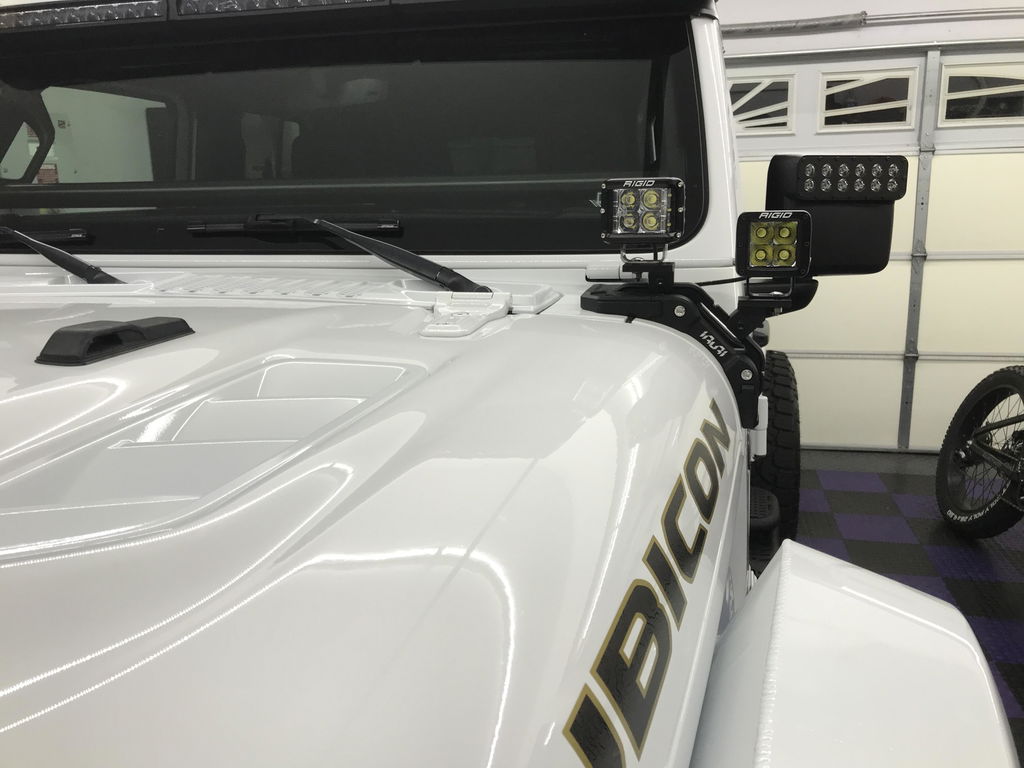
• Cowl-mounted brackets: Add another dedicated mounting interface near an area that may already carry ditch lights, antennas, or other accessories.
• Mounting overhead: Separate brackets add another component interface to install, align, and remove each time the doors come off.
07 / One Mounting Zone, Two Functions
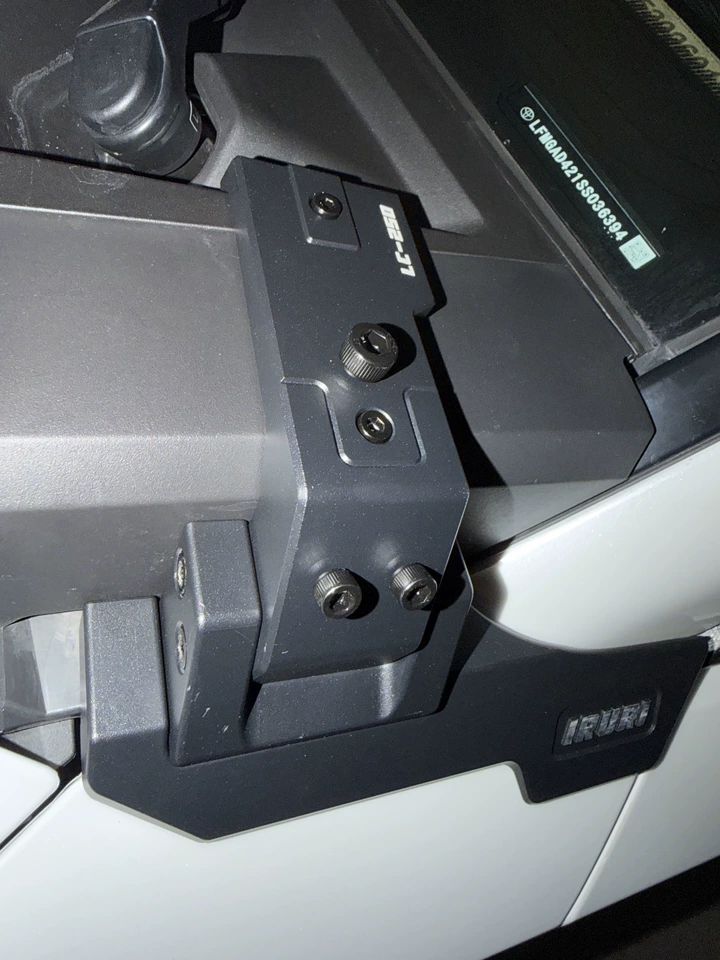
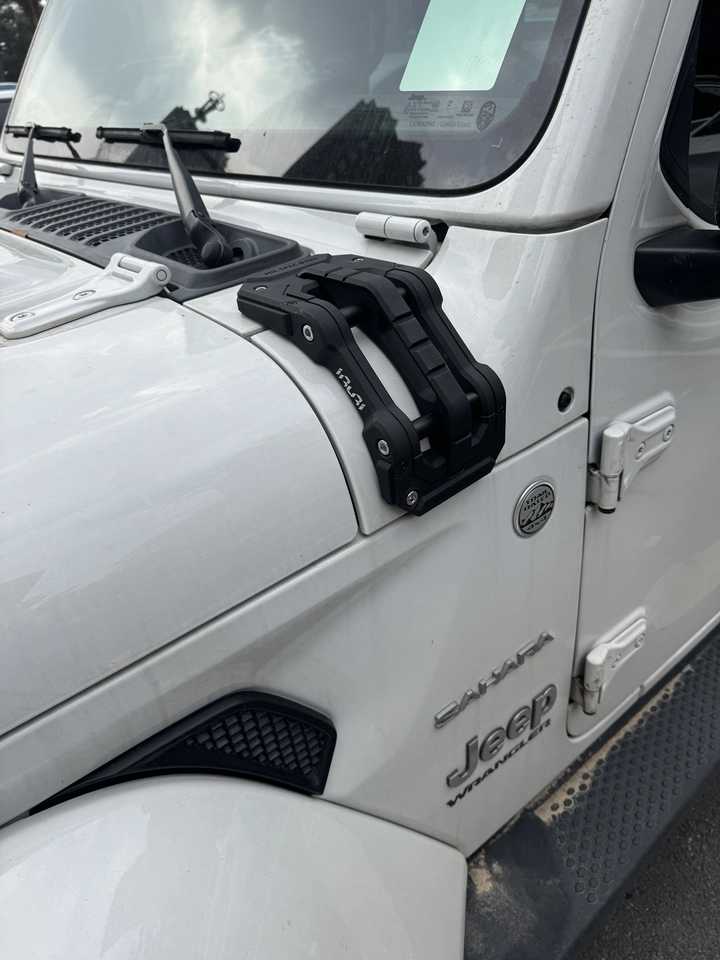
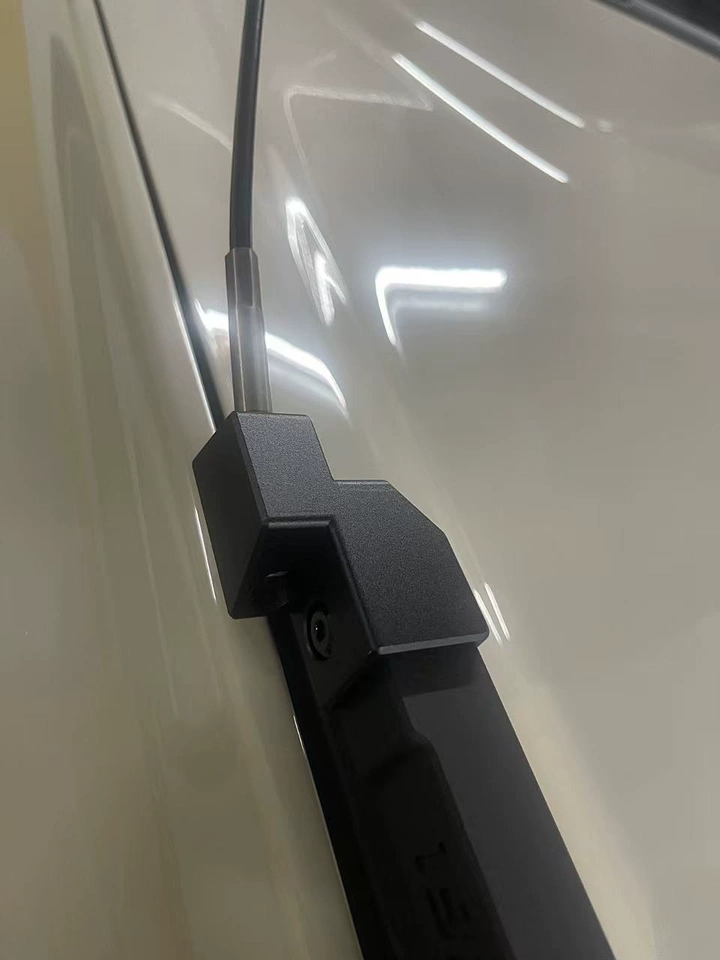
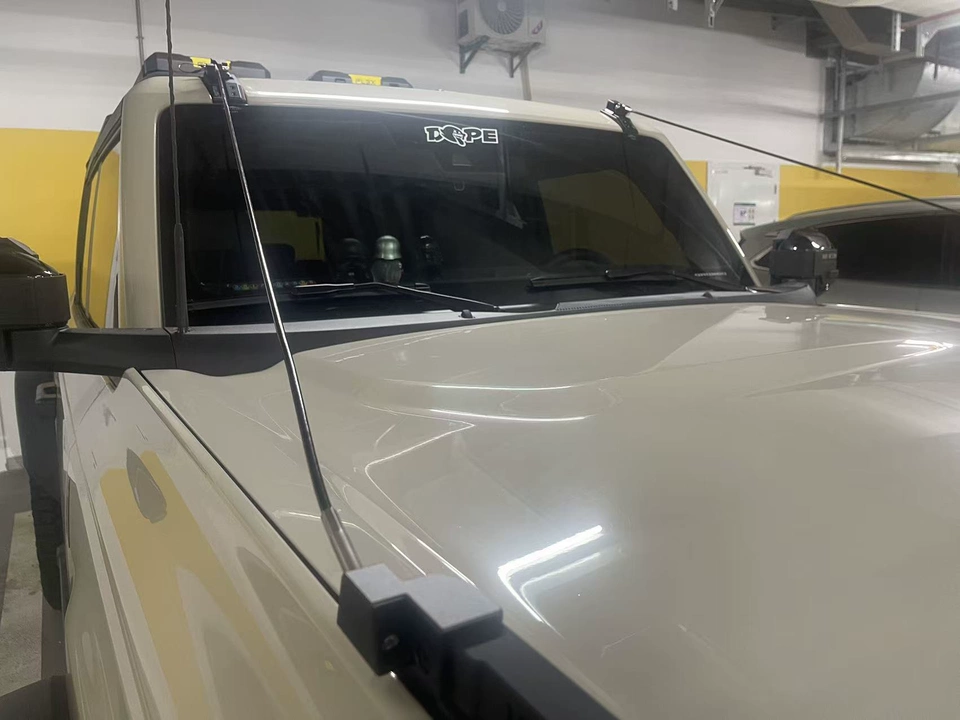
The lower hood latch bracket uses an existing factory mounting location along the front cowl and fender area. It sits forward of the door frame, below the driver's forward horizon, and clear of the windshield wipers.
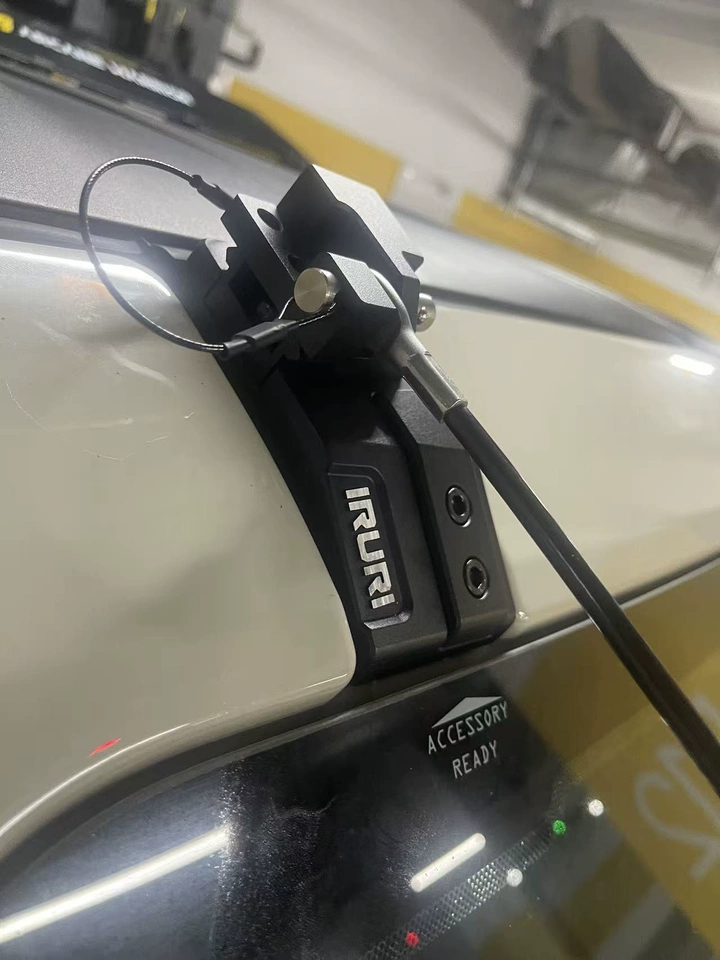
Instead of bolting separate mirror brackets to the cowl or hinge pins, integrating an adjustable mirror mount directly into the rigid hood latch base serves two operational needs with a single structural footprint:
• Hardware Consolidation: Eliminates the need to carry, store, and mount separate auxiliary mirror brackets when removing doors.
• More Direct Mounting Path: Integrating the mirror arm directly into the latch base creates a shorter, more direct mounting path with fewer separate interfaces.


08 / What to Check & Which Setup Fits You
Before purchasing any aftermarket hood latch setup, evaluate candidate hardware against this 5-point mechanical checklist:
1. Exact Vehicle Compatibility: Confirm compatibility with your JL, 4xe, or JT model year and configuration. Factory front-camera-equipped vehicles may require different hardware; always verify product-specific fitment before purchase.
2. Material & Construction: Check that materials, fasteners, and coatings are clearly specified for an exterior load-bearing environment exposed to outdoor weather.
3. Fit, Alignment & Retention: Verify how the latch establishes tension against the hood stops and whether it aligns naturally with the vehicle's body lines without forcing the sheet metal.
4. Installation Method: Confirm the hardware uses existing factory mounting locations with no permanent drilling or body cutting required.
5. Door-Off Mirror Integration: If doorless driving is part of your regular use, assess whether mirror arms mount securely to the latch base and adjust reliably for clear rearward sightlines.

| Driver Profile & Use Case | Recommended Direction | Primary Mechanical Rationale |
|---|---|---|
| Daily Commuting / No Noticeable Hood Movement | Factory Latches Sufficient | No functional issue has been identified that requires modification. |
| Highway Touring & Sustained Crosswinds | Upgraded Aluminum Latches | Reduces latch compliance and can improve hood stability when properly adjusted. |
| Unpaved Trails & Corrugated Dirt Driving | Reinforced Metal Latches | Provides steady mechanical retention across repetitive trail vibrations. |
| Frequent Door-Off / Warm-Weather Driving | Integrated Latch + Mirror Setup | Provides a direct, integrated mirror mount on the cowl, eliminating separate brackets. |
| High-Theft Urban Parking Concerns | Dedicated Central Hood Lock | Directly locks engine compartment access to protect auxiliary electrical assets. |
09 / The IRURI Approach
At IRURI, we view the front cowl of the Jeep Wrangler as a functional integration zone rather than an area for mounting redundant individual brackets. The IRURI Hood Latch Kit with Sand Mirror was engineered around the structural requirements of the JL and JT platforms:
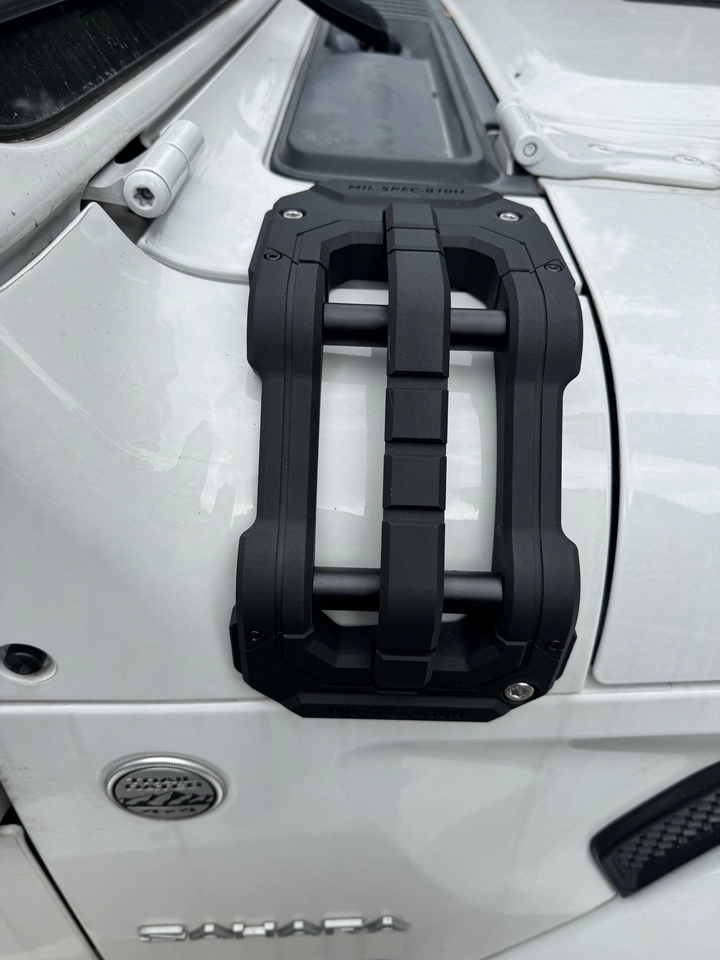
• CNC-Machined 6061 Aluminum Alloy: Precision-milled from 6061 aluminum alloy, providing a rigid mechanical retention interface with a listed product weight of approximately 0.7 kg.
• 100% Factory Bolt-On Installation: Fastens directly to original body mounting locations with no drilling or permanent modifications required. Installation takes approximately 45 minutes using standard hand tools (13 mm socket, T40 Torx bit, and trim tool).
• Matte Black Anodized Finish: A restrained exterior finish designed to integrate visually with the Wrangler's factory hardware.
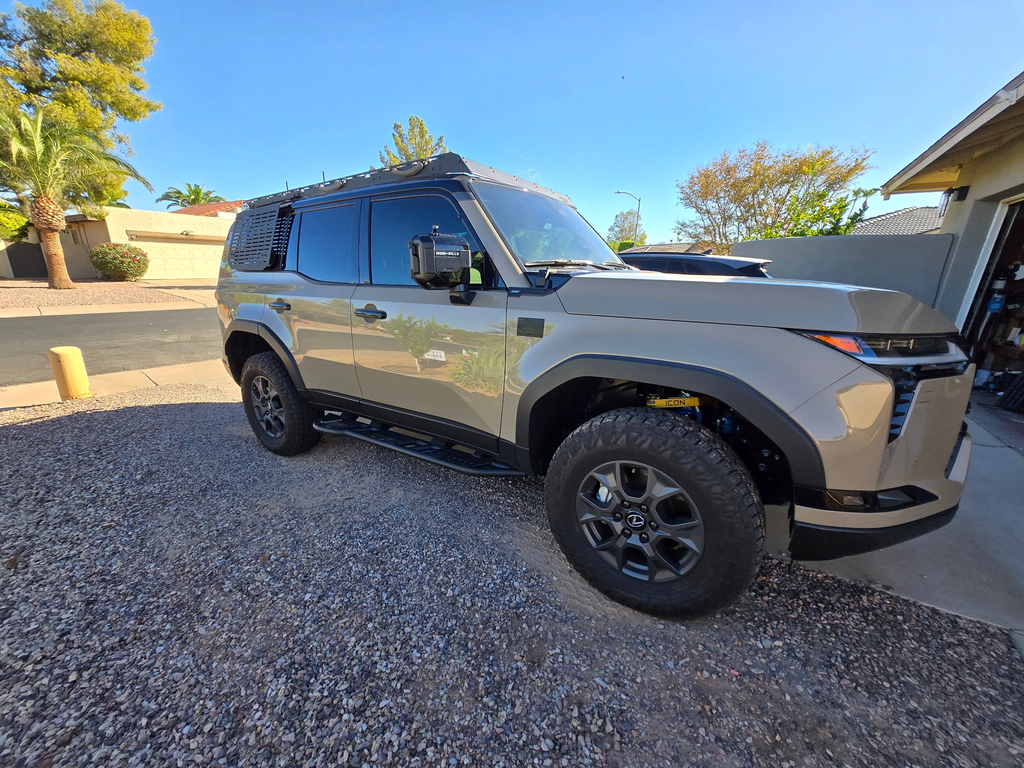
• Integrated Off-Road Sand Mirror: Incorporates an adjustable mirror assembly that locks directly to the rigid latch base, providing a dedicated rearward viewing position for door-off driving without requiring separate door-hinge brackets.
• Vehicle Compatibility: Precision-fit for Jeep Wrangler JL (2018–Present), Rubicon, 4xe, and Gladiator JT models with standard factory cowl configurations. (Note: The current IRURI kit is not compatible with factory integrated hood camera systems).


10 / Frequently Asked Questions
Do Jeep Wrangler JL hood latches need to be upgraded?
Not necessarily. If you drive a stock Wrangler JL primarily in urban environments and experience no noticeable hood movement, the factory latches are adequate. An upgrade becomes valuable if you drive frequently at highway speeds, encounter buffeting winds, or regularly drive doorless.
Not necessarily. If you drive a stock Wrangler JL primarily in urban environments and experience no noticeable hood movement, the factory latches are adequate. An upgrade becomes valuable if you drive frequently at highway speeds, encounter buffeting winds, or regularly drive doorless.
What causes hood movement on a Wrangler JL?
At highway speeds, pressure differences around the hood, airflow through the grille and engine bay, and movement within the retention system can all contribute to visible hood movement.
At highway speeds, pressure differences around the hood, airflow through the grille and engine bay, and movement within the retention system can all contribute to visible hood movement.
Can aftermarket hood latches reduce hood movement?
They can. A more rigid and correctly adjusted latch can reduce movement introduced by compliance in the factory retention system. The overall result depends on vehicle condition, latch adjustment, hood alignment, and the source of the movement.
They can. A more rigid and correctly adjusted latch can reduce movement introduced by compliance in the factory retention system. The overall result depends on vehicle condition, latch adjustment, hood alignment, and the source of the movement.
What is the difference between a hood latch and a hood lock?
A hood latch holds the exterior sides of the hood clamped down during driving to stabilize the panel. A hood lock is a security mechanism (often mounted through the central grille) designed to prevent unauthorized access to the engine compartment when parked.
A hood latch holds the exterior sides of the hood clamped down during driving to stabilize the panel. A hood lock is a security mechanism (often mounted through the central grille) designed to prevent unauthorized access to the engine compartment when parked.
Does the IRURI JL hood latch require drilling?
No. The IRURI JL/JT hood latch uses existing factory mounting locations and requires no drilling, cutting, or permanent body modification. Installation methods for other aftermarket systems vary.
No. The IRURI JL/JT hood latch uses existing factory mounting locations and requires no drilling, cutting, or permanent body modification. Installation methods for other aftermarket systems vary.
Purpose Before Power.
A considered Wrangler build does not accumulate disconnected accessories. It solves specific problems with as few unnecessary interfaces as possible. If hood movement or door-off mirror mounting has become part of your actual use case, choose hardware that solves that problem without adding unnecessary complexity.
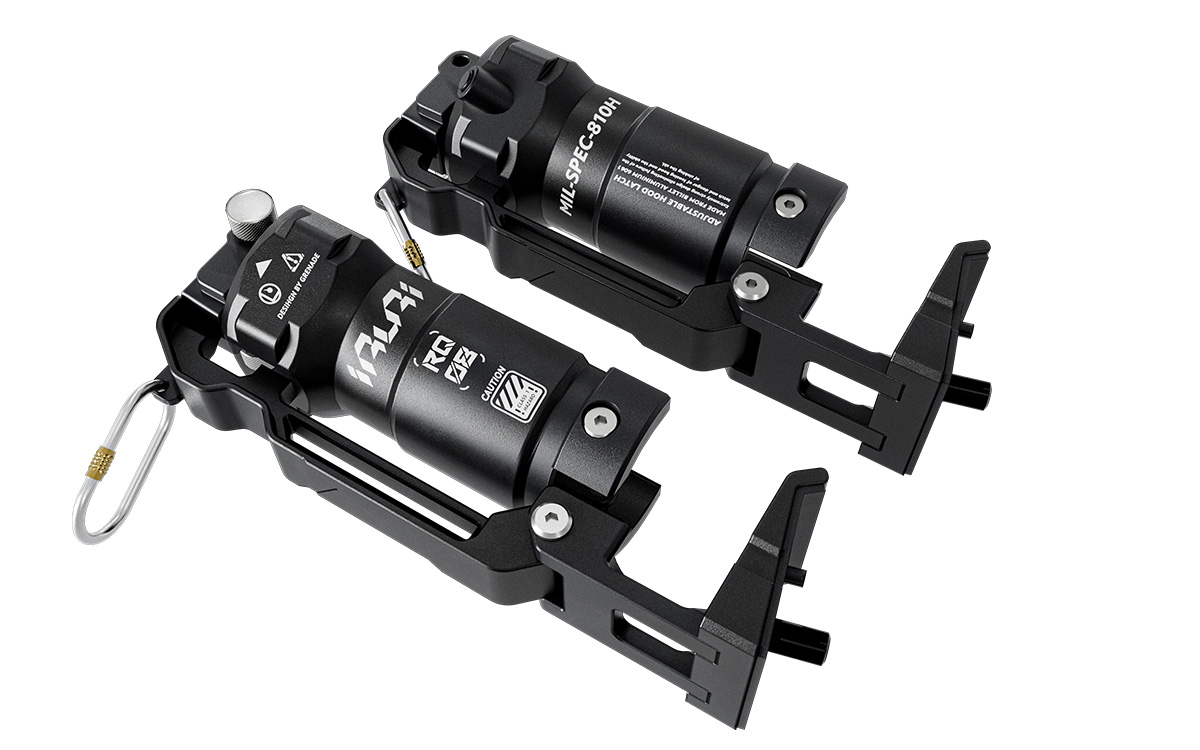
EXPLORE THE IRURI HOOD LATCH KIT WITH SAND MIRROR
Engineered from CNC 6061 aluminum for rigid retention and integrated door-off trail visibility.
EXPLORE HOOD LATCH KIT →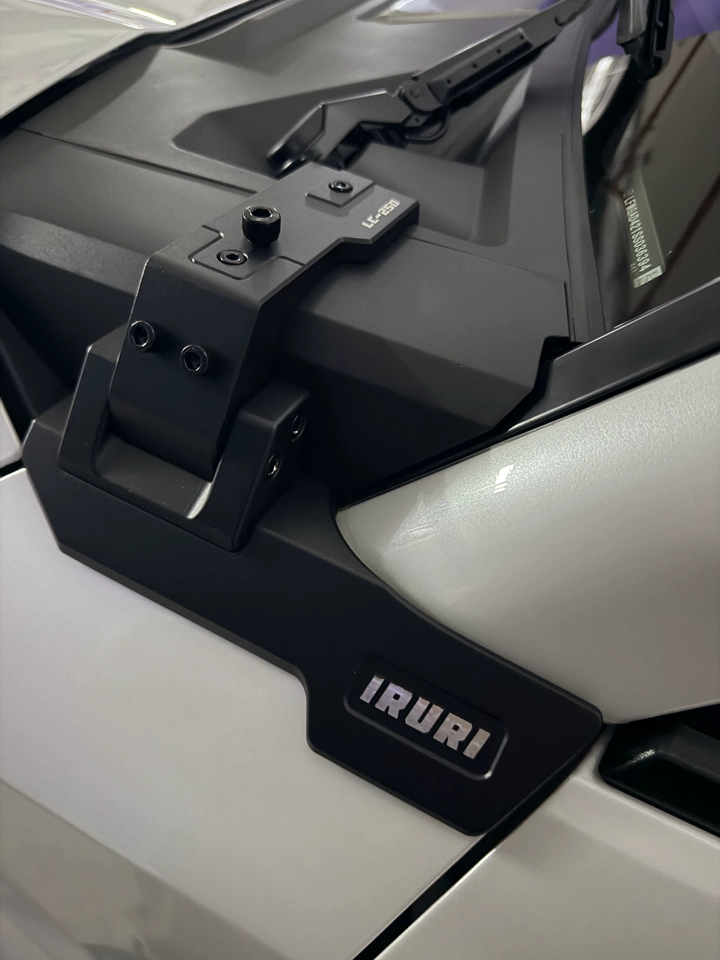
0 comments