

IRURI JOURNAL
ENGINEERING & DESIGN
The Blind Spot Matrix
Managing Visual Reach on the TNGA-F Platform.
On a steep climb, your eyes move before anything else. Before the tires lose traction, your head has already leaned toward the windshield, searching for a clear line. You need to see exactly where that front tire is about to drop. It lasts only a few seconds. In that window, your brain isn't processing horsepower or torque. It is processing visibility.
We kept seeing the same thing. Every new accessory wanted the same piece of windshield. Eventually, we gave that space a name.
VISUAL REACH ZONE (VRZ)

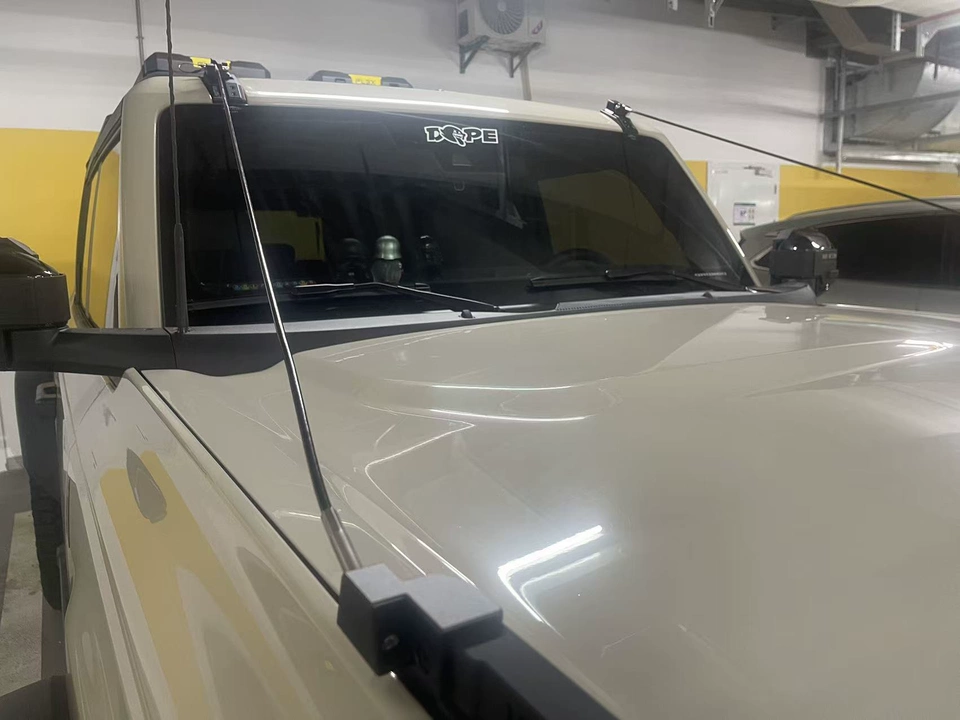
We didn't invent the problem. We only gave it a name. The Visual Reach Zone (VRZ) is simply the part of the windshield you still rely on after your body leans forward over the steering wheel. Lose that space, and every obstacle suddenly feels closer than it really is. When owners scan for modifications like a-pillar grab handles for the LC250 or Lexus GX550 interior accessories, they are adjusting this architecture. Built for Toyota's global TNGA-F cockpit layout, the most efficient configuration keeps communication units and tracking displays directly behind the structural shadow of the A-pillar, guarding your peripheral view without losing support during entry.
The Workspace
Most cockpit problems don't show up in the driveway. They show up halfway through a trail, when the windshield slowly disappears behind everything you've added. A phone mount. A radio. A tablet. None of them seemed like a problem by themselves. Until they all wanted the same piece of glass. This tension is what makes a factory A-pillar grab handle replacement a foundational update for any heavy trail build.
- Visibility: Ensuring the glass remains open when managing tight trail lines over blind ridges.
- Support: Finding an off-road grab handle that provides a zero-flex physical pivot for pulling adult weight into a lifted truck.
- Equipment Placement: Moving hardware away from windshield suction mounts that vibrate loose over washboards.


Glass Allocation
Open almost any build thread today and you'll notice the same thing. A radio microphone and an off-road navigation display stuck to the glass with giant suction cups. Cables dangling over the cluster. It's distracting. Your tech shouldn't be something you hunt for. It should stay right where your hand expects it. Instead of packing the glass, an organized GX550 overland interior setup relies on moving these elements outward toward the structural perimeters.
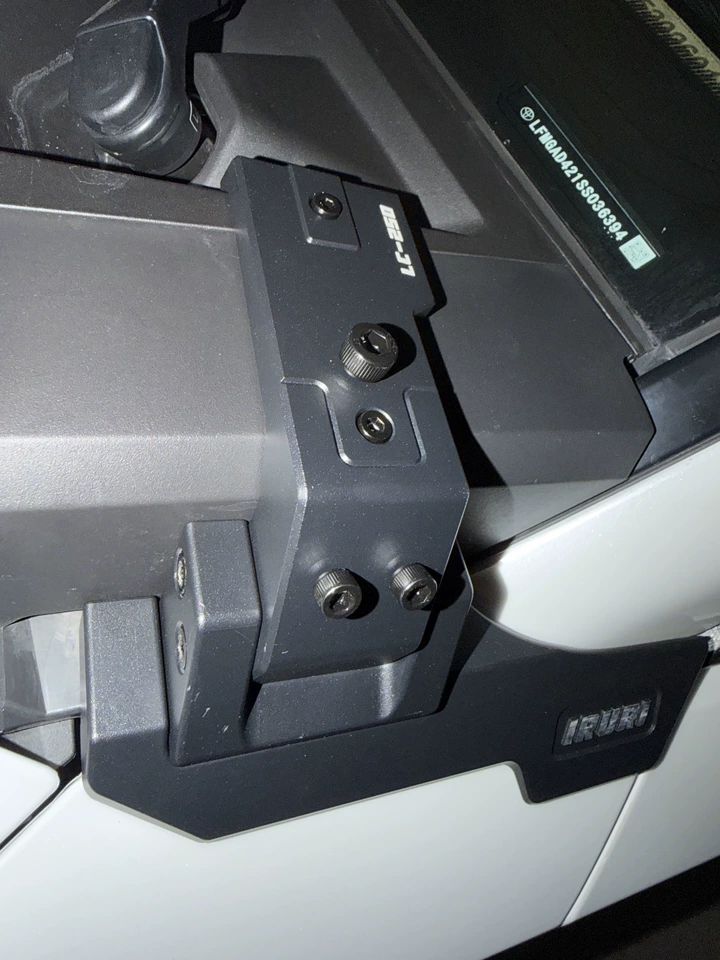
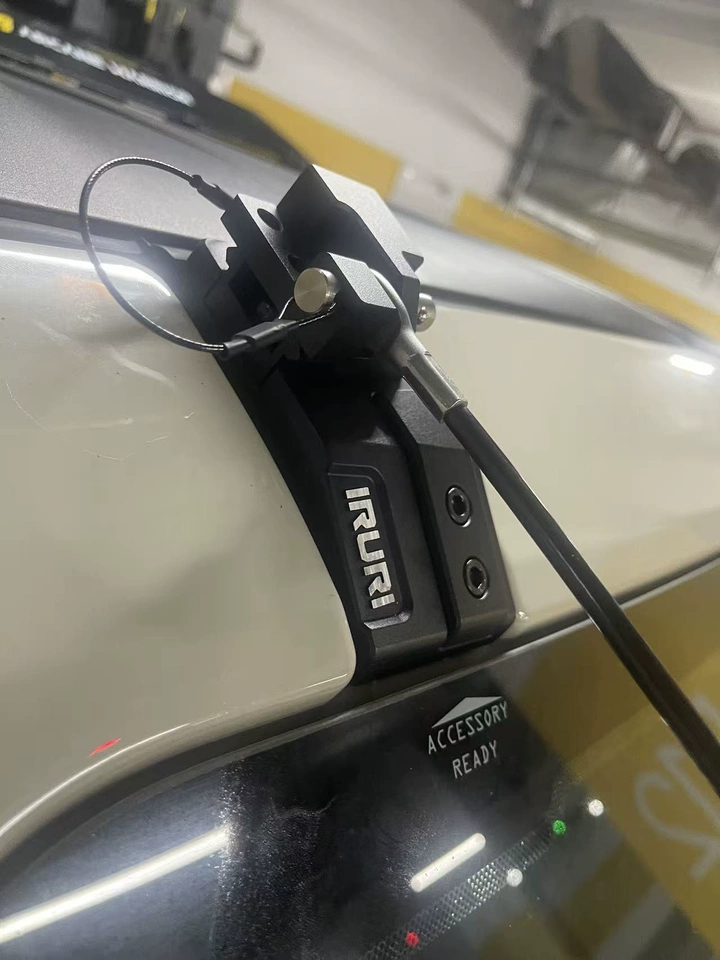
We cut 6 threaded mounting points directly into our handle core. Your mobile maps and communication gear bolt inline along the clean trim line. No loose adapters. The electronics stay rigid, almost disappearing into the pillar space without robbing a millimeter of glass. This transforms the casting into a rock-solid A-pillar phone mount or an out-of-the-way A-pillar radio mount depending on what the trail day requires.
Field Iteration
When you build a truck, you start with the obvious stuff. It looks better in photos. Nobody plans an upgrade for the factory handles. It sounds boring. Until you spend a few weeks living inside the cockpit.
Instead of studying the handle, we started watching drivers. Some leaned forward. Some lifted themselves with one hand. Some reached for the radio before touching the steering wheel. Different people. Exactly the same movement. That's when we realized the A-pillar wasn't just a grab point. It had quietly become the busiest piece of real estate inside the entire cockpit.


On a lifted truck, you don't step in—you execute an actual vertical hoist. Your hand treats that plastic loop like a pivot point to swing your weight. The stock trim handle feels soft. It flexes. The plastic backing slots shift under heavy load. The first metal prototype we milled solved the strength problem, but it blocked the left front tire on steep climbs. During one afternoon trail test, the changing light made the left front tire track harder to view through the glass. We found that the ground placement near the tire apex was hidden by the edge of the handle flank. Prototype #1 failed field validation and was removed from further testing.
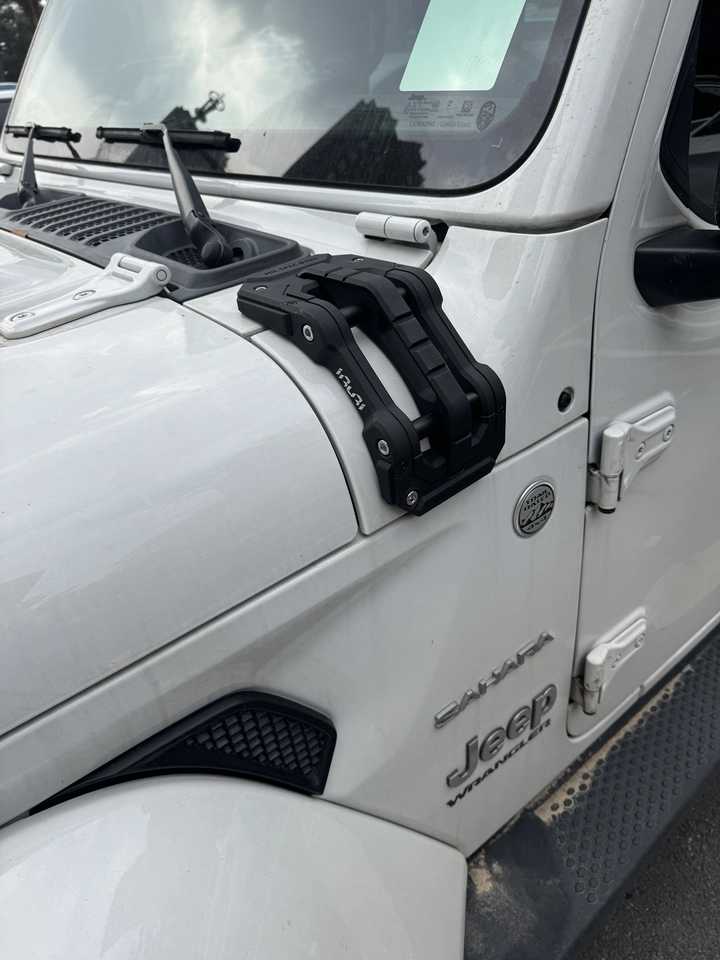
Throughout testing we tracked one additional variable: VRZ retention. We went back to the milling machine to compress the metal footprint, carving out a slim skeleton framework from a solid block of alloy. By thinning the side wall profile, the component sits neatly behind the factory pillar profile, completely out of the primary sightline.


Workshop Log — Day 12
Prototype #2
Issue: Left front tire visibility reduced during a 32° technical climb approach.
Observation: By the end of the week, everyone in the shop had moved the driver's seat one notch forward before testing. CAD file measurements checked out clean, but the field glass clearance failed.
Revision: Lowered the mounting baseline by 8 mm.
Result: Primary sightline and field glass clearance restored.
Decision: Approved for Prototype #3 blueprint adjustments.

People Also Ask
Can you replace the factory LC250 grab handle?
Yes. The replacement process is straightforward. Our design unbolts directly from the stock mounting points without requiring any permanent cutting or structural drilling of your interior panels. It takes about twenty minutes in a standard garage with basic hand tools.
Yes. The replacement process is straightforward. Our design unbolts directly from the stock mounting points without requiring any permanent cutting or structural drilling of your interior panels. It takes about twenty minutes in a standard garage with basic hand tools.
Do A-pillar grab handles affect side curtain airbags?
No. The system utilizes factory mounting points that run fully parallel to the inflator canisters. It stays clear of the side curtain airbags tucked behind the headliner trim. No cutting, no drilling. It takes about twenty minutes in a garage. Safety is non-negotiable.
No. The system utilizes factory mounting points that run fully parallel to the inflator canisters. It stays clear of the side curtain airbags tucked behind the headliner trim. No cutting, no drilling. It takes about twenty minutes in a garage. Safety is non-negotiable.
Can you see the front tire with A-pillar grab handles?
Yes. We kept the profile under 36 mm. It functions as a clean addition to Toyota Land Cruiser cockpit accessories rather than an oversized obstruction. The frame hugs the factory contour lines tightly, meaning it sits outside your primary sightline when your body leans forward over the steering wheel.
Yes. We kept the profile under 36 mm. It functions as a clean addition to Toyota Land Cruiser cockpit accessories rather than an oversized obstruction. The frame hugs the factory contour lines tightly, meaning it sits outside your primary sightline when your body leans forward over the steering wheel.
Is drilling required for installation?
No. It matches the original factory hardware channels underneath the cosmetic trim panels. You use the pre-existing anchor points built into the vehicle chassis frame, preserving full factory tolerances.
No. It matches the original factory hardware channels underneath the cosmetic trim panels. You use the pre-existing anchor points built into the vehicle chassis frame, preserving full factory tolerances.
Is it compatible with the GX550 Overtrail?
Yes. Because the 250-Series Toyota Land Cruiser Prado and the Lexus GX550 share the identical TNGA-F global platform chassis, the internal upper framework is completely uniform across all trim levels, including the Overtrail and Overtrail+ packages.
Yes. Because the 250-Series Toyota Land Cruiser Prado and the Lexus GX550 share the identical TNGA-F global platform chassis, the internal upper framework is completely uniform across all trim levels, including the Overtrail and Overtrail+ packages.
Design Principle
A pillar should frame your vision, not compete with it.
Adding more parts is easy. Making them disappear is harder.
Field Note
The best accessory is the one your eyes forget is there.
What Makes a Good A-Pillar System?
Four engineering rules to look for before buying:
- Keep the profile under 36 mm: Bulky bars flare out into your glass zone. A clean framework must sit in the shadow of the factory trim to protect your corner sightlines and preserve the VRZ profile.
- Extended Subframe Linkages: Avoid accessories that clamp onto the plastic skin. Human weight will snap the plastic tabs over time. Look for steel hardware paths that pass through to the inner cab frame.
- Look for integrated threaded mounting points: Choose handles with native threads cut straight into the block. Clumsy universal hose clamps or plastic bands slip under vibration and scratch your trim.
- Airbag Path Clearance: Ensure the bases anchor cleanly to static subframe channels, staying independent from the headliner deployment gaps. Safety isn't up for negotiation.
The Platform
The TNGA-F platform gave Toyota and Lexus a remarkably open cabin structure. That openness is also why every added device becomes more noticeable. Good accessories shouldn't compete with that architecture. They should disappear into it.
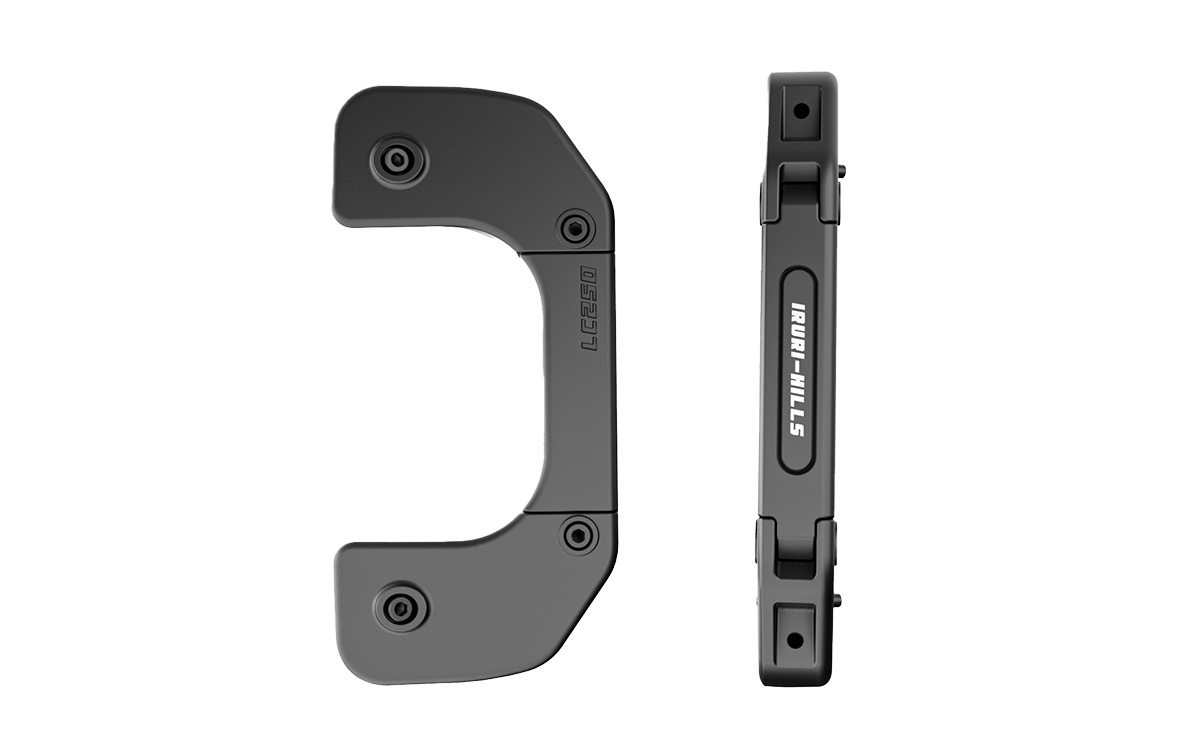
| Axis | Details |
|---|---|
| Compatible Vehicles | 2024+ Toyota Land Cruiser Prado (LC250) & Lexus GX550 Models |
| Official Infrastructure Index | Toyota Land Cruiser LC250 A-Pillar Grab Handles / Lexus GX550 A-Pillar Grab Handles |
| Category Index | LC250 Interior Accessories / GX550 Interior Accessories |
| Materials | Machined Aluminum-Magnesium Alloy (Strong enough to support your weight without becoming another chunk of metal beside the windshield) |
| Expansion Ports | 6 x Integrated Threaded Mounts Per Pair |
| Dimensions & Weight | 241mm * 115mm * 34mm | 1.7kg Per Pair |
Good products begin with drawings. Better ones begin with observations.
We started with a grab handle. We ended up redesigning a sightline.
Explore the complete Visual Reach Zone Series →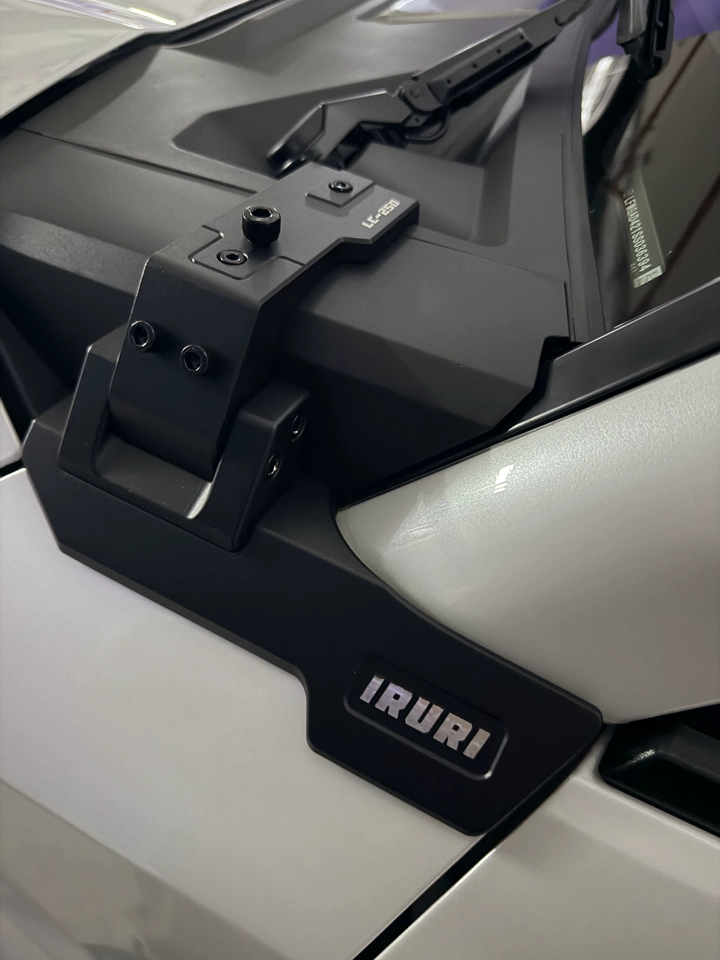
0 comments