

THE IRURI JOURNAL
ENGINEERING & DESIGN
We Didn't Start With a Step. We Started With a Problem.
Where Habit Leaves a Mark: A note about the first movement beside a vehicle—long before anything else changes.
Before this became a removable side step for the Ford Bronco, it was simply something we kept noticing. Not in CAD. Not in a workshop. But every time someone climbed into a lifted Bronco.
Some problems become obvious only after people stop talking about them. They quietly become part of everyday life. This was one of them.

Chapter 1: The First Step Changed
Installing larger tires changes more than ground clearance. A Bronco on 35-inch tires sits differently. The cabin is only a little higher, but the first movement into the vehicle becomes noticeably different. You don't think about it. You simply begin looking for somewhere to place your foot.
Factory rock rails still protect the rocker panels. But protection and accessibility are rarely the same thing. For many owners, the first step becomes the hardest one. Especially for children, shorter passengers, or anyone carrying gear.
Chapter 2: Where People Actually Step
Most running boards assume the entire side of the vehicle should become one continuous platform. Real use doesn't look like that. After paying attention for long enough, a simple pattern appears.
People step near the front door. People step near the rear door. The middle section is rarely used. It stays cleaner. It wears differently. The dust tells the same story every time. Nobody plans this. It simply happens. Once you notice it, it's difficult not to see it everywhere.


Chapter 3: Removing What Was Never Needed
That observation changed the project. Instead of asking how large the platform should be, we started asking a different question. How much of it is actually being used? The answer surprised us. Not much.
So instead of building one full-length running board, we separated the landing areas into two independent step platforms. Nothing was removed from where people actually needed support. Only from where they almost never stepped. The goal wasn't to create a minimalist design. It was to stop adding material where it served no purpose.


Chapter 4: Why We Made It Removable
Most aftermarket running boards solve one problem. Then create another. They make daily entry easier. But they permanently reduce ground clearance. For a vehicle that spends weekends on forest roads, rocky trails, or uneven terrain, that compromise never completely disappears.
We didn't think the answer was choosing one lifestyle over another. Some days you need a step. Some days you need clearance. A removable system simply lets the vehicle become what the day requires.
Friday evening, the platforms come off in seconds. Saturday belongs to the trail. Sunday night, they go back on. Monday morning, they're ready for school pickup, work, or grocery runs. The truck changes because your week changes.

Chapter 5: Different Tools For Different Days
Overlanding has always been about carrying the right equipment. Recovery boards. Tow straps. Traction devices. Portable compressors. None of them stay in your hands all day. They appear when they're needed. Then disappear again.
We started thinking about side steps the same way. Not as permanent furniture attached to the truck. But as equipment. Useful. Available. And removable.


Good design doesn't ask people to change the way they move. It pays attention to the way they've always moved. Then quietly makes room for it.
The best products rarely introduce a new habit. More often, they recognize one that has been there all along.


Rigid Stance Restored — Zero Overhang

Frequently Asked Questions
Are factory Bronco rock rails enough for everyday use?
Factory rock rails provide excellent protection against rocks and trail obstacles, but they aren't designed to function as comfortable entry steps. Many Bronco owners find daily access more difficult after installing larger tires or suspension lifts, especially for passengers and children.
Factory rock rails provide excellent protection against rocks and trail obstacles, but they aren't designed to function as comfortable entry steps. Many Bronco owners find daily access more difficult after installing larger tires or suspension lifts, especially for passengers and children.
Are full-length running boards a good choice for a lifted Ford Bronco?
Traditional running boards improve accessibility, but they also reduce ground clearance and can interfere with off-road driving. If your Bronco regularly alternates between commuting and trail use, a removable side step system offers more flexibility.
Traditional running boards improve accessibility, but they also reduce ground clearance and can interfere with off-road driving. If your Bronco regularly alternates between commuting and trail use, a removable side step system offers more flexibility.
Why doesn't this side step run the full length of the vehicle?
Because people rarely use the entire length. Most owners naturally step near the front and rear door openings. Separating those landing zones reduces unnecessary weight while maintaining support exactly where it's needed.
Because people rarely use the entire length. Most owners naturally step near the front and rear door openings. Separating those landing zones reduces unnecessary weight while maintaining support exactly where it's needed.
Can the side steps be removed without removing the mounting brackets?
Yes. The structural brackets remain installed beneath the vehicle. Only the aluminum step platforms are removed. This allows the Bronco to return to its original ground clearance in under a minute without disturbing the mounting system.
Yes. The structural brackets remain installed beneath the vehicle. Only the aluminum step platforms are removed. This allows the Bronco to return to its original ground clearance in under a minute without disturbing the mounting system.
Will removable side steps rattle after off-road use?
Properly engineered quick-release systems rely on tight manufacturing tolerances and self-centering mounting points. When installed correctly, they remain secure during highway driving, washboard roads, and repeated trail use.
Properly engineered quick-release systems rely on tight manufacturing tolerances and self-centering mounting points. When installed correctly, they remain secure during highway driving, washboard roads, and repeated trail use.
Do removable side steps trap mud?
Open-frame designs allow water and mud to pass through naturally. Unlike many full-length running boards that collect dirt across a continuous surface, separated platforms are easier to wash and less likely to retain debris after trail driving.
Open-frame designs allow water and mud to pass through naturally. Unlike many full-length running boards that collect dirt across a continuous surface, separated platforms are easier to wash and less likely to retain debris after trail driving.
Are removable side steps useful for overlanding?
For many overland vehicles, yes. They provide a stable place to enter the cabin, access roof racks, or load equipment at camp, while allowing owners to remove them when maximum trail clearance becomes more important than convenience.
For many overland vehicles, yes. They provide a stable place to enter the cabin, access roof racks, or load equipment at camp, while allowing owners to remove them when maximum trail clearance becomes more important than convenience.
| Engineering Anchor | System Specification Details |
|---|---|
| Vehicle Compatibility | 2021+ Ford Bronco Platforms (Direct Adaptive Subframe Alignments for 2-Door & 4-Door Trims) |
| Architectural Layout Index | Split Architecture / Quick-Release Trail Step Independent Perimeter Systems |
| Material Properties | CNC-Machined 6061-T6 Aluminum-Magnesium Structural Alloy Cores |
| Dimensional Boundary Matrix | Front Segment: 416mm * 213mm * 139mm (3.5Kg) | Rear Segment: 491mm * 213mm * 82mm (3.6Kg) |
| Functional Step Threshold | Optimized Symmetrical 3-Inch (76mm) Non-Slip Landing Contact Zones |
| Installation Hardpoints | 100% No-Drill Bolt-on Realignment; Clamps Directly into Factory Threaded Chassis Subframe Wells |
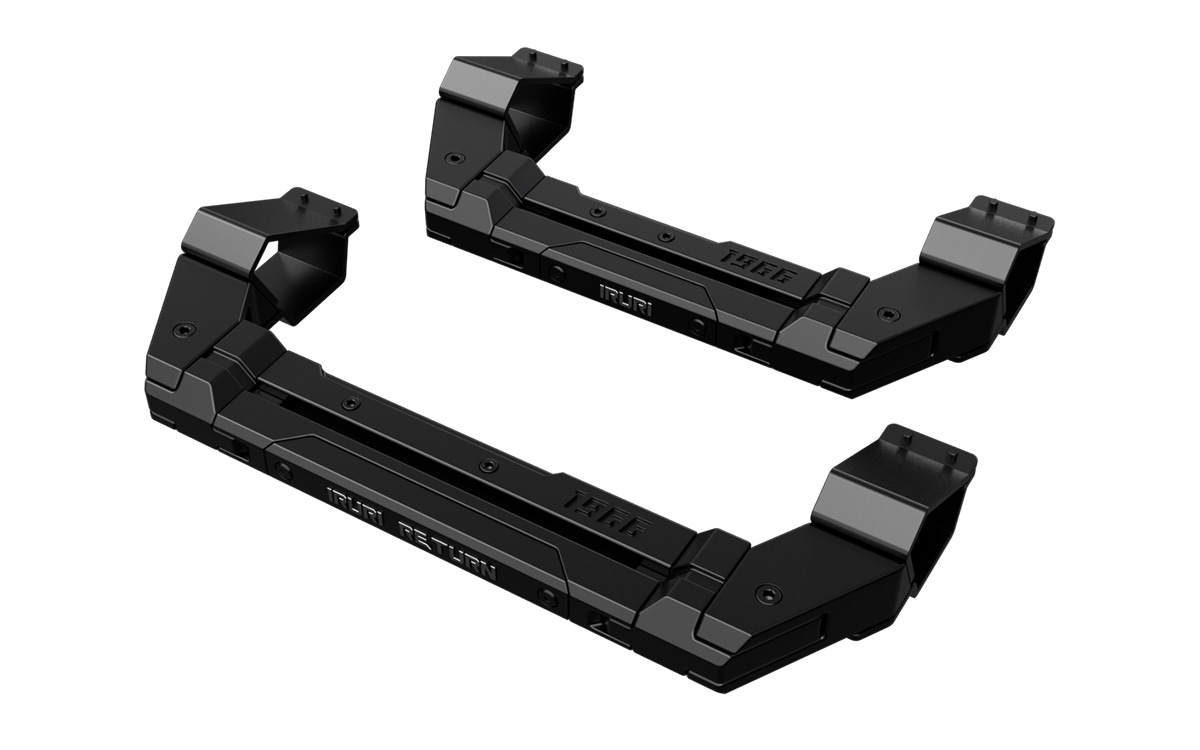
Every vehicle changes over time. Larger tires. Different suspension. More equipment. New places. The way people use them changes too.
This project didn't begin with the idea of building another running board. It began with a simple observation. People were already showing us where they needed a step. We simply chose to build it there.
Explore the Removable Side Step Platform Series →
0 comments