

THE IRURI JOURNAL
ENGINEERING & DESIGN
Where Stability Actually Begins.
Most door-off mirrors chase stability by adding mass. We started by asking why the vehicle was shaking in the first place.
IRURI Journal isn't about products. It's about the observations that eventually became products. Some stayed as sketches. Some became prototypes. A few became something worth building.
When people drive a doorless Jeep on the highway, they notice three distinct annoyances:
1. The side mirror reflection turns into an unreadable blur above 60 mph.
2. The aluminum hood flutters visibly whenever a semi-truck passes in the opposite lane.
3. Turbulent wind noise hums continuously around the front cowl area.
To most drivers, these seem like three completely unrelated flaws of open-air driving.
But are they really unrelated?

Design Principle
Stability doesn't begin at the mirror. It begins at the structure beneath it.
Part 1: What Everyone Accepts
For over twenty years, the aftermarket industry has treated mirror vibration as an isolated accessory problem.
When customers complained that their door-off mirrors shook, manufacturers responded with predictable solutions:
• They made the bracket arms thicker.
• They added larger, heavier door-hinge clamps.
• They placed thicker rubber pads beneath the mounting plates.
Everyone was trying to build a stiffer mirror. Almost nobody stopped to ask why the mirror was vibrating in the first place.

Part 2: The Question
If a mirror is shaking uncontrollably, is the mirror itself actually defective?
If the hood is fluttering under aerodynamic lift, is it just an isolated latch issue?
Or is the entire load path around the front cowl reacting to dynamic energy that isn't being properly anchored?
We realized that adding another heavy bracket onto a flexing body panel was simply layering complexity onto a bad foundation.

Part 3: Engineering Observation
To understand mirror instability, you have to trace how vibration travels through the chassis:
Tire Chatter / Air shear
↓
Flexible Factory Hood Latch
↓
Front Quarter Panel Flex
↓
Long Unsupported Bracket Arm
↓
Mirror Glass Vibration
↓
Flexible Factory Hood Latch
↓
Front Quarter Panel Flex
↓
Long Unsupported Bracket Arm
↓
Mirror Glass Vibration
When flexible stock rubber latches stretch under highway wind shear, the movement doesn't stop at the hood. It sends micro-vibrations across the entire front quarter panel.
If you bolt a mirror to a hinge or cowl plate that sits on this flexing zone, no amount of rubber padding will keep the image still. The lever arm will always win.


The Design Decision
Rethinking What Was Already There

We decided not to design another accessory.
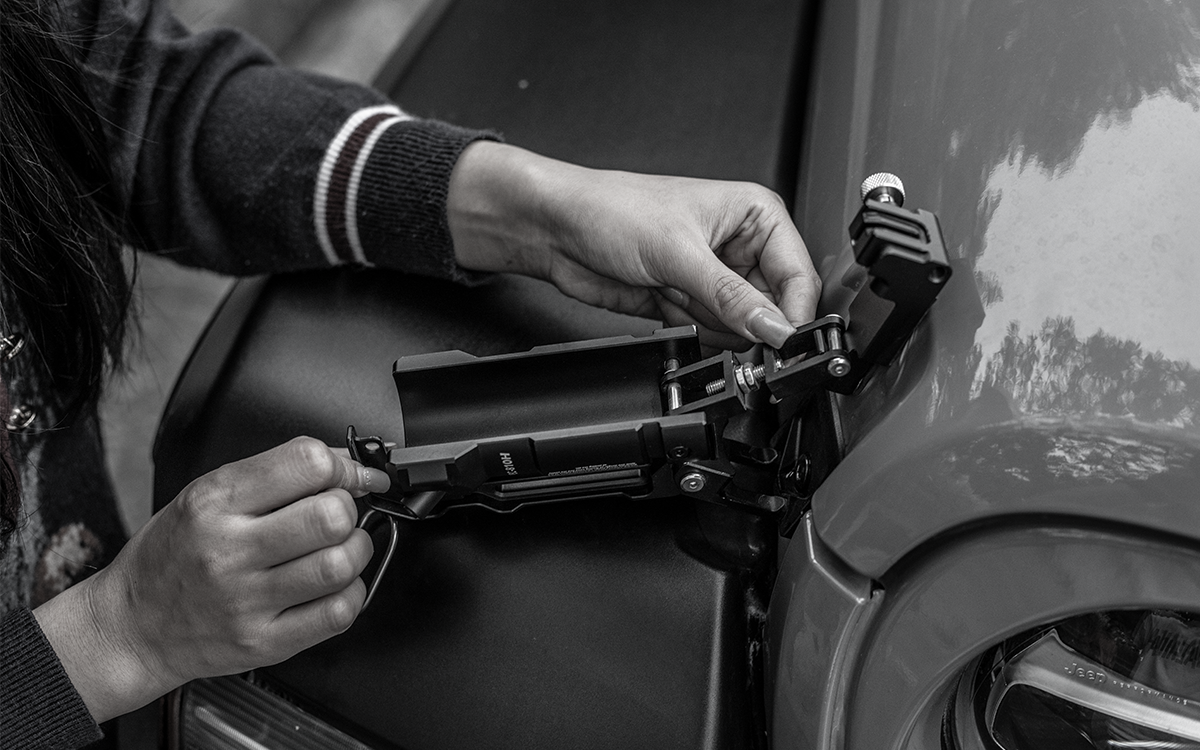
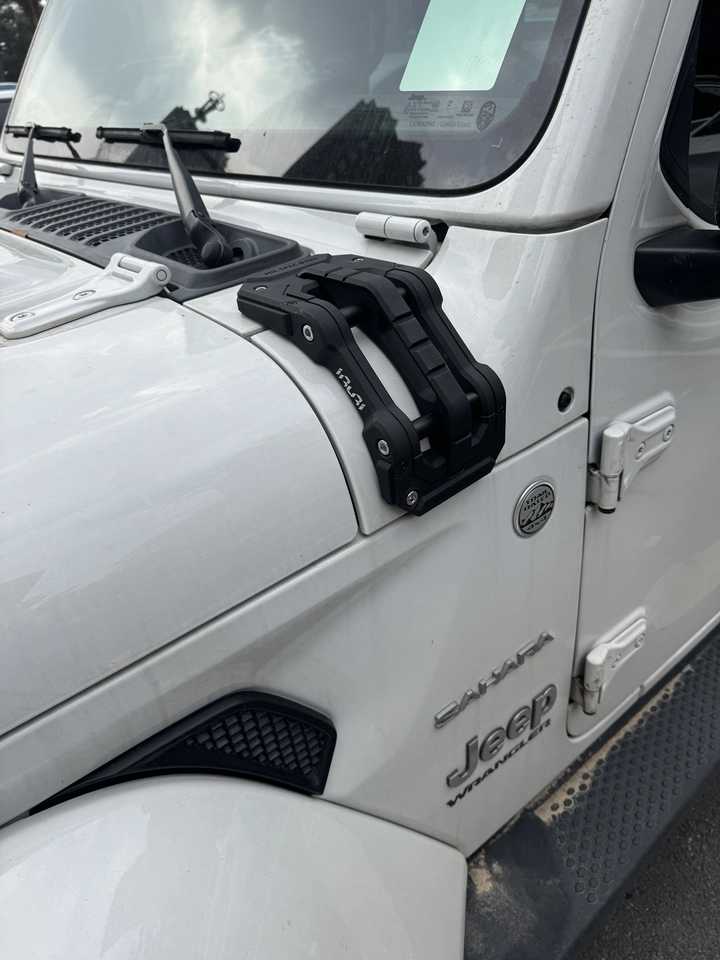
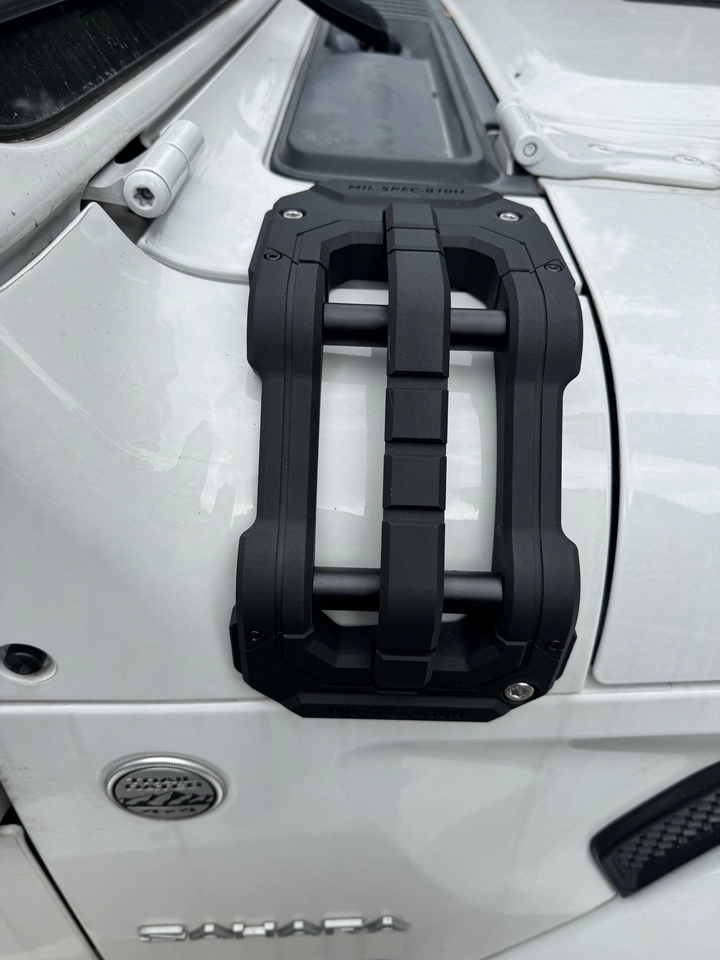
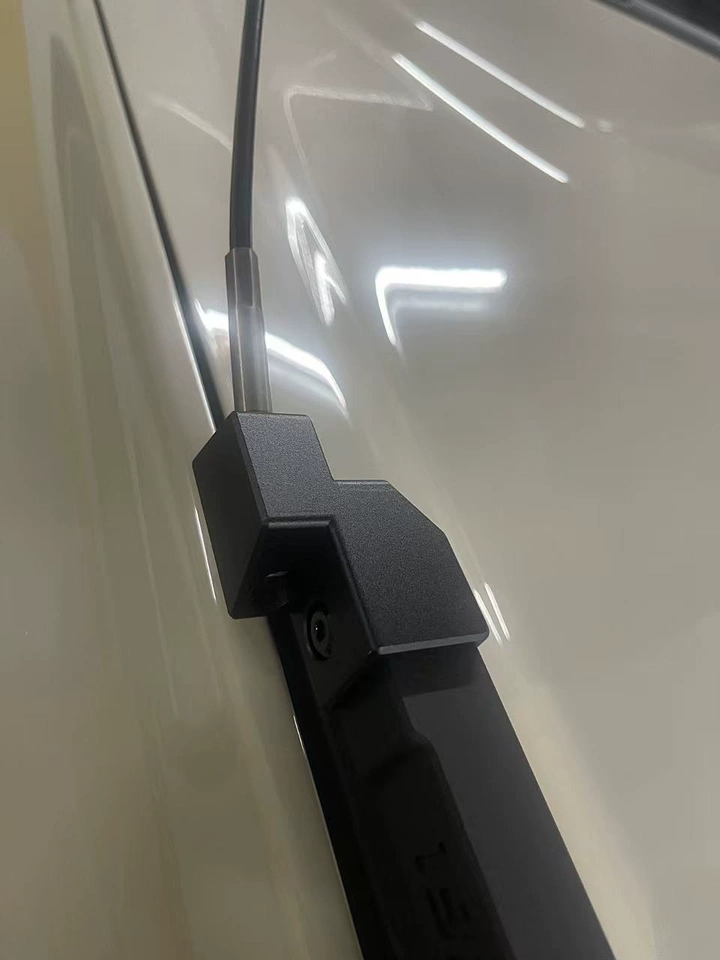
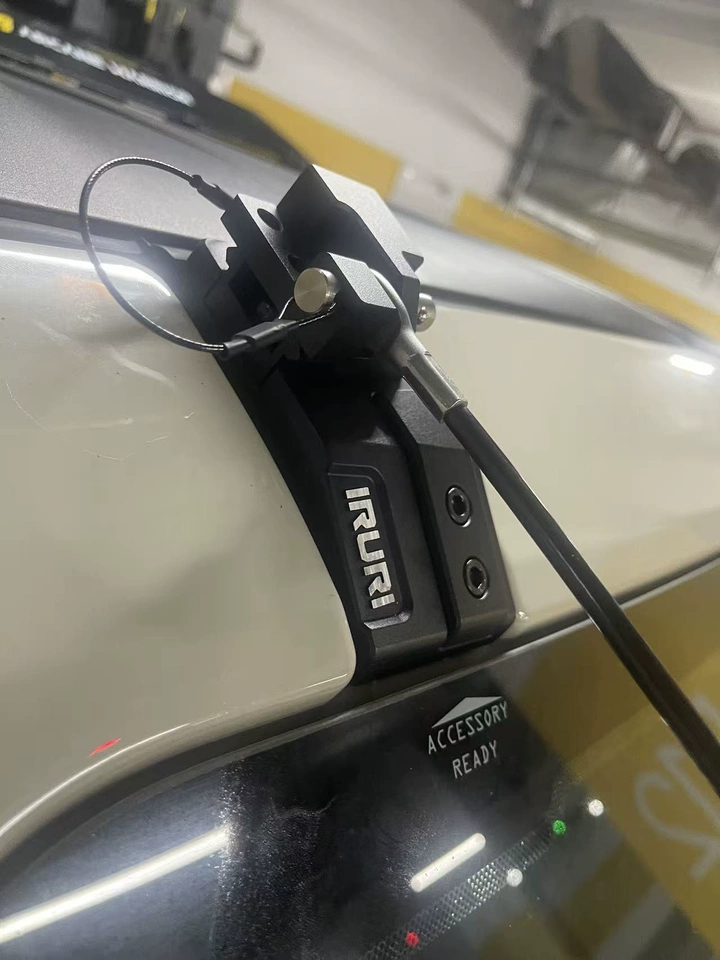
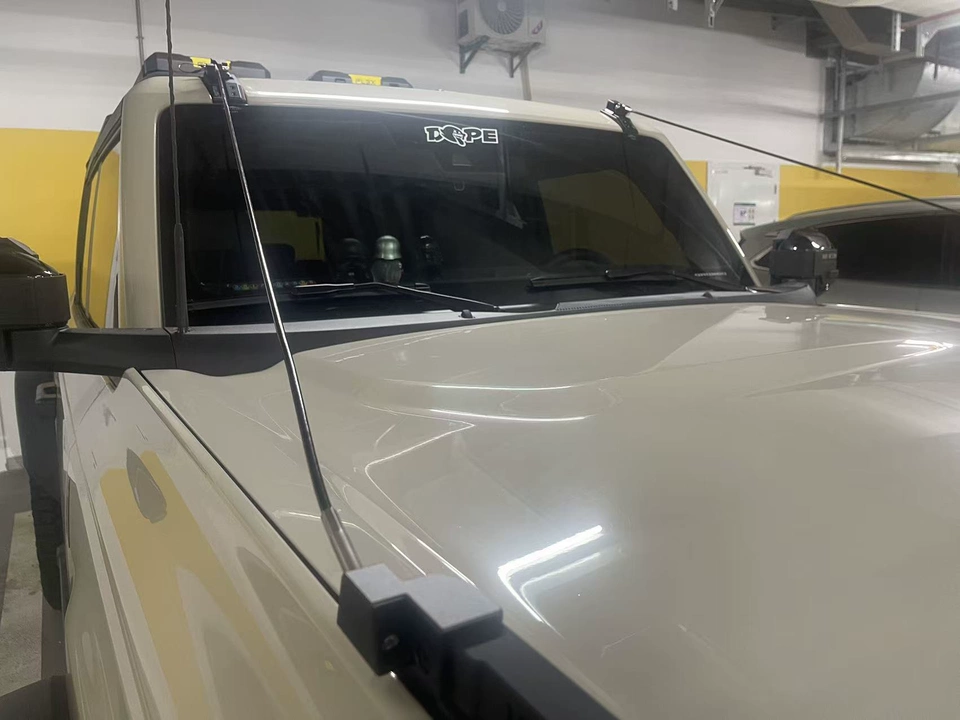
Instead of adding a new clamp or bracket to an already crowded A-pillar, we looked at the factory component that was already anchored to the strongest structural datum on the front fender: the hood latch base.
Instead of adding another accessory, we redesigned one you were already using.
Part 4: The Object
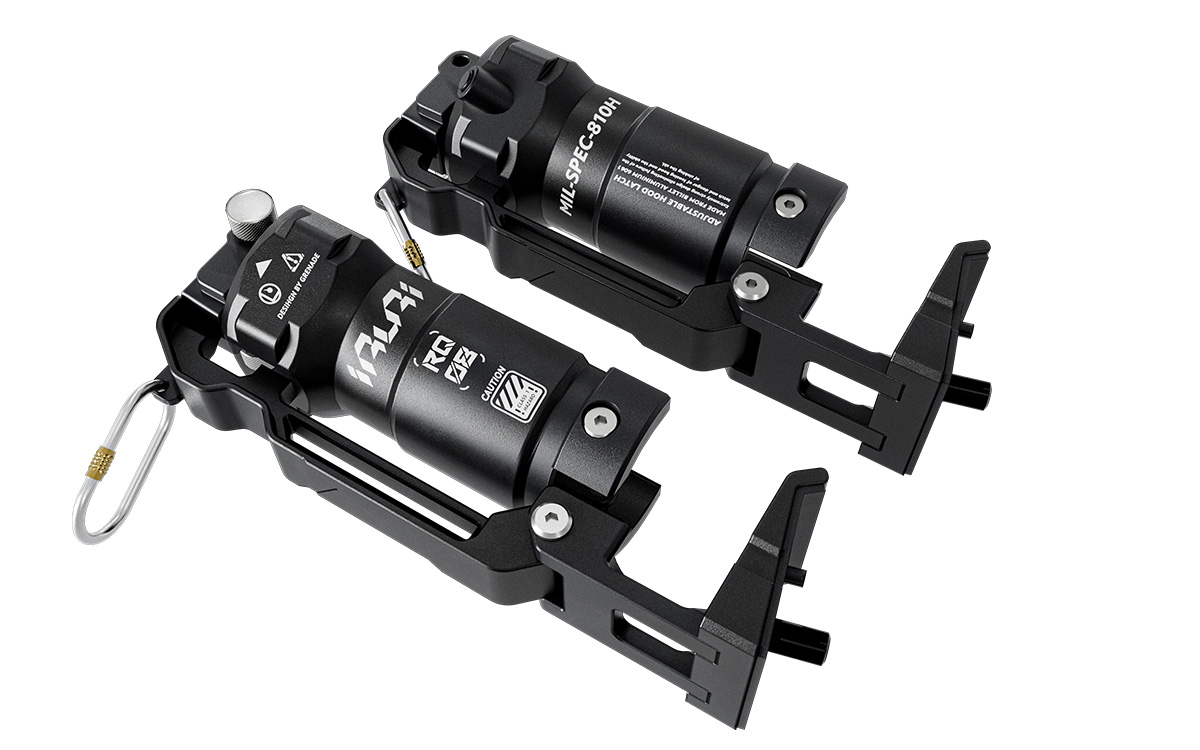
The resulting system is not a collection of features; it is the physical outcome of solving the load path:
• Why Billet 6061 Aluminum? Not for marketing cachet, but because structural rigidity at the pivot point matters far more than saving a few grams when resisting continuous lateral wind shear.
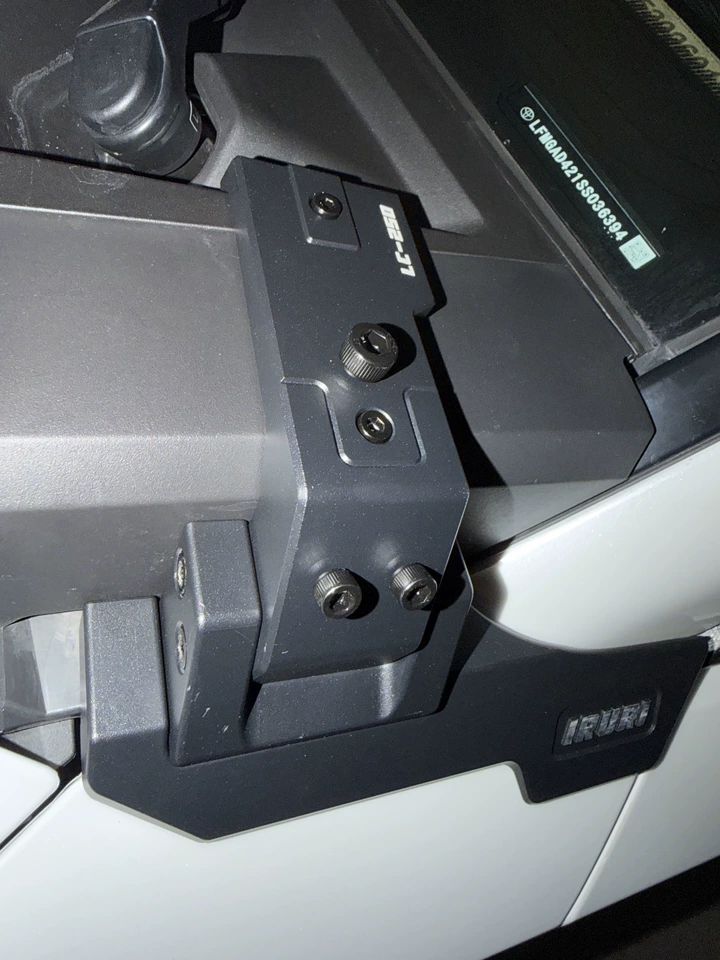
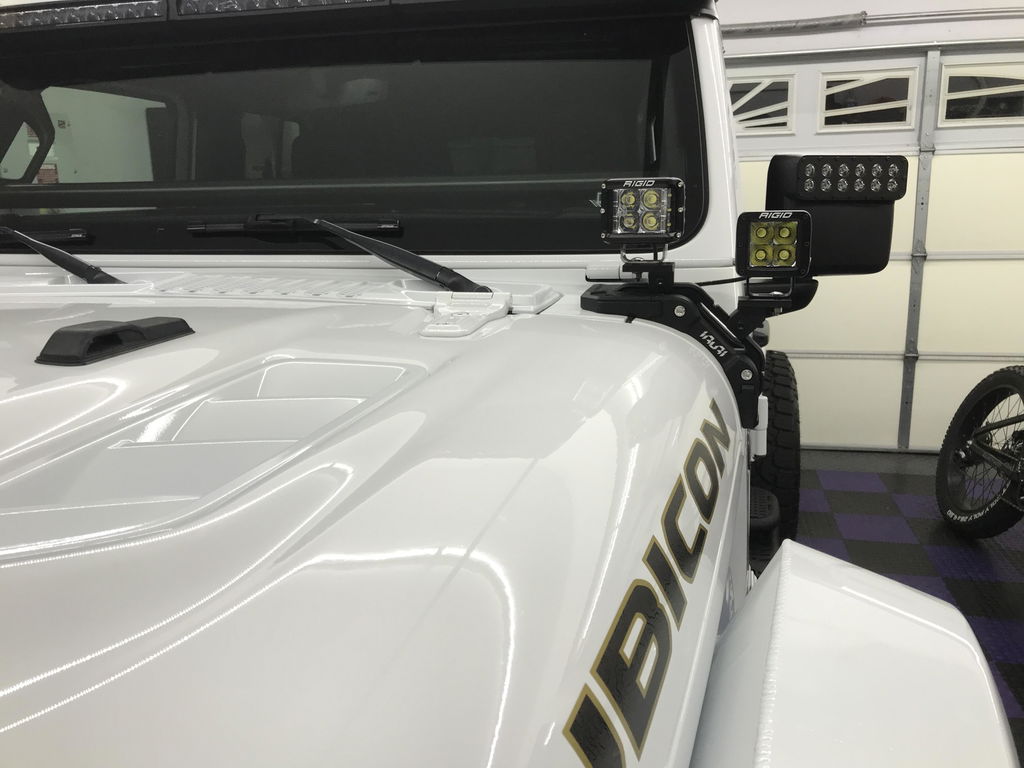
• Why Integrated Geometry? By anchoring the mirror linkage directly into the solid aluminum hood latch housing, we reduced the effective lever arm by more than 60% compared to hinge-mounted mirrors.
• Why Hard Anodizing? Because a finish on an exterior chassis component isn't about vanity—it's about surviving years of road salt, intense UV exposure, and trail dust without chalking.
• Why Direct Factory Bolt-On? Because forcing a driver to drill into factory sheet metal is an admission of failure in industrial design.


Part 5: Field Notes
Once installed, the engineering details fade into the background.
On a 70 mph highway stretch with the doors sitting back in the garage, the rear reflection remains steady. When passing heavy trucks, the hood stays planted. On corrugated dirt roads in National Parks, the mirror holds its set angle without creeping inward.
You stop adjusting hardware at traffic lights. You stop worrying about hood shake. The vehicle simply feels cohesive.

Good design rarely adds complexity. More often, it removes it.
You stop thinking about the hardware, and start paying attention to the road again.
Frequently Asked Questions
How do you stop Jeep Wrangler hood flutter at high speeds?
Replacing factory flexible rubber hood latches with rigid CNC aluminum latch systems eliminates rubber stretch, securing the hood to the inner fender frame and reducing vibration in crosswinds.
Replacing factory flexible rubber hood latches with rigid CNC aluminum latch systems eliminates rubber stretch, securing the hood to the inner fender frame and reducing vibration in crosswinds.
Why do aftermarket Jeep door-off mirrors shake so much?
Most door-off mirrors attach to thin windshield hinges or A-pillar clamps with long unsupported lever arms. These flexible points amplify body vibration and wind turbulence, causing reflection blur.
Most door-off mirrors attach to thin windshield hinges or A-pillar clamps with long unsupported lever arms. These flexible points amplify body vibration and wind turbulence, causing reflection blur.
Can you run integrated hood latches with side mirrors on Jeep Wrangler JL and Gladiator JT?
Yes. Integrated systems use the factory hood latch mounting location on the front quarter panel to anchor both the reinforced hood lock and an adjustable door-off side mirror on a single solid frame datum.
Yes. Integrated systems use the factory hood latch mounting location on the front quarter panel to anchor both the reinforced hood lock and an adjustable door-off side mirror on a single solid frame datum.
Will external door-off mirrors fold back automatically at highway speeds?
Mirrors engineered with high-torque friction pivots and short mounting linkages maintain their set angle even at 70+ mph highway speeds without folding inward.
Mirrors engineered with high-torque friction pivots and short mounting linkages maintain their set angle even at 70+ mph highway speeds without folding inward.
Does installing aluminum hood latches with mirror mounts require drilling?
No. High-quality kits use 100% factory bolt-on locations with standard tools, preserving original body paint and paneling.
No. High-quality kits use 100% factory bolt-on locations with standard tools, preserving original body paint and paneling.
Are door-off side mirrors required when driving a Jeep without doors?
Mirror requirements vary by region and state. Check your local regulations regarding rearward line-of-sight requirements when factory doors are removed.
Mirror requirements vary by region and state. Check your local regulations regarding rearward line-of-sight requirements when factory doors are removed.
Will a hood-latch mounted mirror interfere with windshield folding?
Precision-engineered hood latch mirror systems clear the windshield frame arc completely, allowing Jeep owners to drop the windshield forward without removing the mirror arm.
Precision-engineered hood latch mirror systems clear the windshield frame arc completely, allowing Jeep owners to drop the windshield forward without removing the mirror arm.
Are aluminum hood latches resistant to winter road salt?
Billet 6061 aluminum treated with hard matte anodizing is highly resistant to road salt, mud, high-pressure washing, and prolonged UV breakdown.
Billet 6061 aluminum treated with hard matte anodizing is highly resistant to road salt, mud, high-pressure washing, and prolonged UV breakdown.
| Engineering Anchor | System Specification Details |
|---|---|
| Vehicle Platform | Jeep Wrangler JL / JL Rubicon / 4xe & Gladiator JT (2018–Present) |
| Material Architecture | CNC-Machined 6061 Billet Aluminum Alloy |
| Surface Protocol | Matte Black Hard-Anodized UV-Resistant Finish |
| Installation Protocol | 100% Direct Factory Bolt-On (Zero Drilling or Cutting) |
Good design rarely adds complexity. More often, it removes it.
Explore the Aluminum Hood Latch & Door-Off Mirror Kit engineered for Jeep Wrangler JL & Gladiator JT.
Explore the Precision Jeep Hood Latch & Mirror Kit →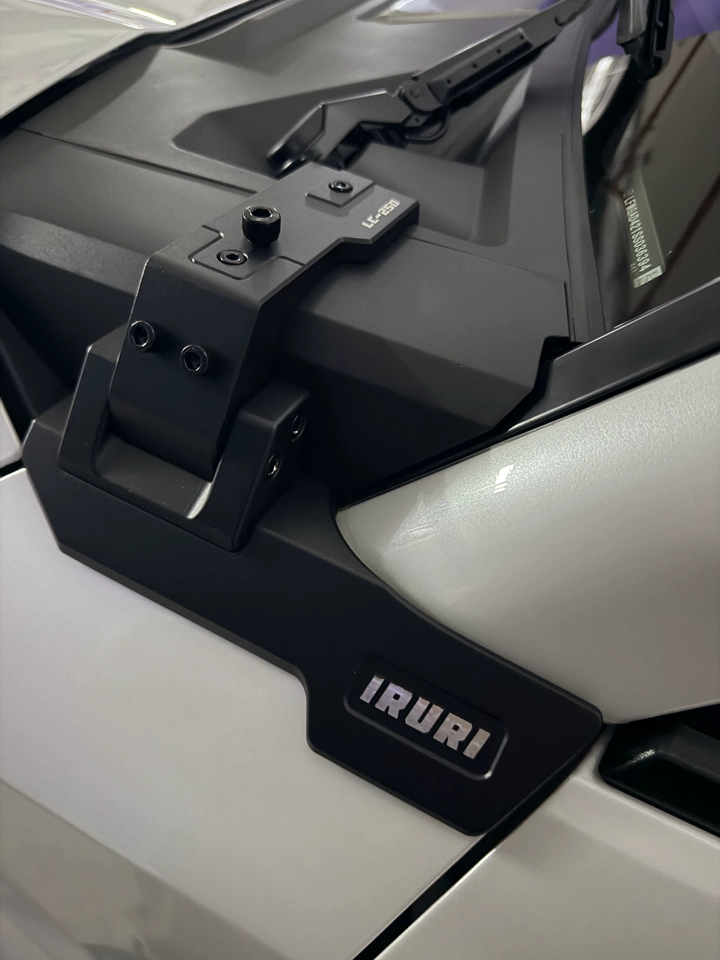
0 comments