

THE IRURI JOURNAL
ENGINEERING & DESIGN
The Bronco Was Built for Adventure. Its Cargo Area Wasn't Designed for Every Adventure.
Why We Designed a Sleeping Platform That Doesn't Force You to Choose Between Sleep and Storage.
How Re-engineering the Ford Bronco 4-Door Rear Cargo Space Converts Raw Volume Into a Functional Overlanding Habitat.
The Ford Bronco was designed to leave the pavement. It was built for rocky trails, open landscapes, and weekends that rarely go exactly as planned. But somewhere between the highway and the campsite, every owner eventually faces the same question: Where does everything go? We started looking at the Bronco's rear cargo area differently. Not as a place to store more, but as a space that needed to work harder.

The first few trips are simple. A single sleeping pad, a compact cooler, two duffel bags. Everything fits with room to spare.
Then the trips become longer. A recovery kit joins the cargo floor. Then a heavy tool roll. Then a camp stove, chairs, cameras, and additional layers for cold mountain nights.
Eventually, you realize the Bronco isn't actually short on raw volume.
It's short on usable space.

Field Observation 01
The problem was never raw volume. It was flexibility.
Chapter 1: The Hidden Problem With Sleeping In A Bronco
The Bronco already has plenty of interior volume. The challenge lies entirely in the transition.
A cargo area designed for carrying plastic totes is not automatically designed for human living. When you fold the rear seats down, you aren't met with a flat floor—you are met with uneven gaps and height transitions.
Sleeping comfortably inside a vehicle requires four non-negotiable elements:
• A continuous, dead-flat platform.
• Structural support that doesn't flex under body weight.
• Adequate vertical headroom for movement.
• Cargo space that doesn't disappear the moment you roll out a mattress.
The challenge was never simply building a wooden platform. The challenge was creating a system that solved sleep while respecting the rest of the vehicle.

Field Observation 02
A vehicle should adapt to your journey, not force your journey to adapt to the vehicle.
Chapter 2: The Paradox of Single-Point Optimization
Many aftermarket solutions focus on isolated problems rather than managing the vehicle as a whole.
When an owner wants to sleep inside, they build a rigid plywood deck. It solves sleep, but often locks the interior into a single function, reducing daily utility and limiting access to factory storage areas depending on the design. When an owner wants organized gear, they install a massive steel drawer block. It solves storage, but eats up so much vertical headroom that sleeping becomes an afterthought.
Single-point optimization creates an endless chain of trade-offs: solving one need by destroying another.
True design doesn't optimize a single task in isolation. It manages the dynamic relationships between tasks.

Chapter 3: Designing Around The Bronco, Not Against It
The Ford Bronco interior features smart factory engineering: available factory under-floor storage areas, factory tie-down points, and the natural geometry of the wheel wells.
Some aftermarket setups prioritize raw cargo volume and may reduce access to these factory features. We wanted to connect with the vehicle, not replace it.
A truly integrated architecture elevates the primary sleeping deck while preserving access to available factory under-floor storage areas beneath.


From the Notebook
Good design doesn't replace what already works. It reveals what was overlooked.
Field Observation 03
A flat deck is merely geometry. A multi-tier layout is spatial architecture.
Chapter 4: A Flat Surface Is Only The Beginning
To make an adventure vehicle work, a single cargo area must handle three simultaneous roles:
1. Sleeping: A continuous, level, rigid platform spanning across folded seats.
2. Storage: Organized, sliding capacity for recovery gear, stove kits, and tools.
3. Access: The ability to reach available factory under-floor storage without dismantling the entire bed.
Architecture follows function. The IRURI Integrated Platform solves this spatial triangle through a three-layer hierarchy:
• Upper Deck: A rigid, level surface spanning from the rear door across the folded seats for uncompromised rest.
• Middle Layer: Heavy-duty slide-out storage drawers that pull gear out smoothly toward the trail.
• Lower Layer: Access preserved for available factory under-floor storage areas.


Chapter 5: The Architecture Of A Weekend Away
A spatial architecture is defined by how effortlessly it handles different scenarios:
• Weekend Camping: Fold the second-row seats, lay down a sleeping pad onto a 100% level surface, and rest without rearranging the trunk.
• Long-Distance Overland: Heavy tools, recovery straps, and cooking hardware stay locked in the slide-out drawers, leaving the top platform clean for duffel bags and soft gear.
• Trail Recovery Day: Pull open a single drawer to quickly access tow straps and air hoses, keeping dirty gear completely isolated from the upper cabin.
• Daily Commute: Return the vehicle to daily driving mode without removing the structural framework.


Chapter 6: Strength Without Unnecessary Weight
Excessive added weight can affect payload, handling, and efficiency. The structure needed to support real adventure without becoming another burden.
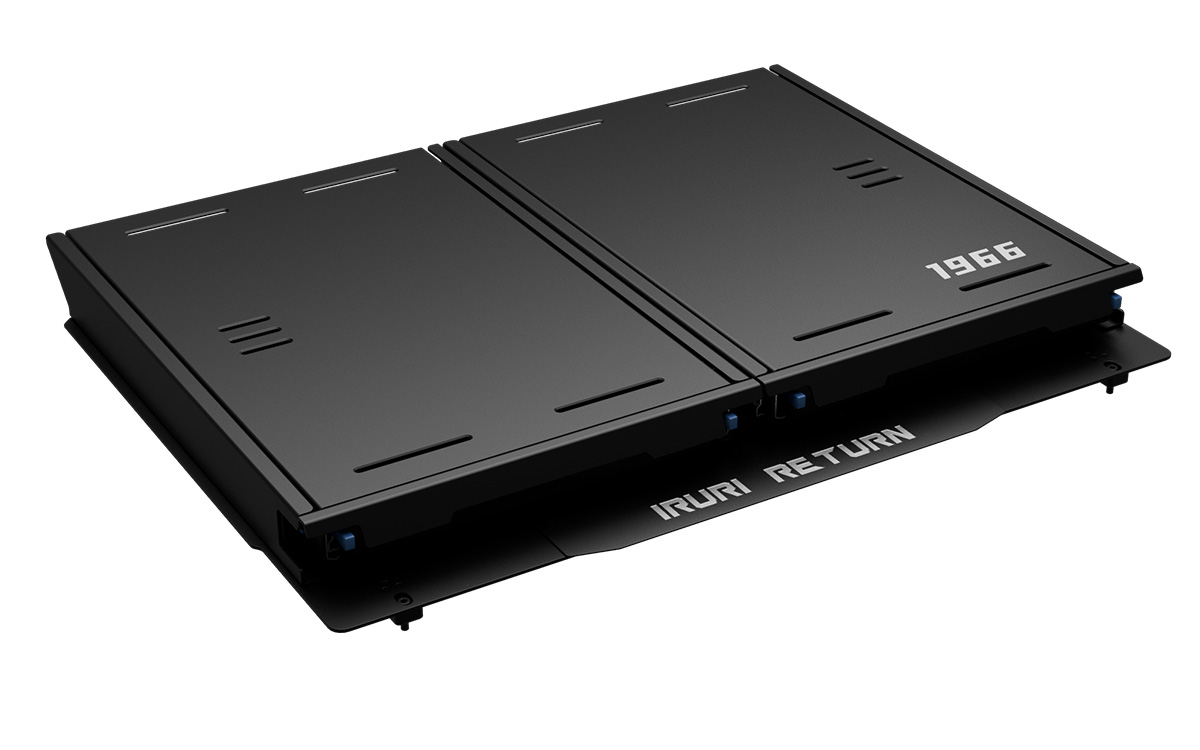
We engineered a Steel & Aluminum Hybrid matrix. By using precision-formed steel for load-bearing frame points and lightweight aluminum for structural panels, the entire 59 kg system achieves a static load rating exceeding 300 kg.
Finished in a textured matte black powder coat, it anchors directly into Ford factory floor mounting points—requiring no drilling, cutting, or permanent modifications to your Bronco.
Field Notes
The trail ended late in the pine ridge. The Bronco settled beside the trees, its hot exhaust ticking softly in the mountain cold.
The rear door swung open. Rain had begun to hit the hardtop, but inside, the gear remained bone-dry and locked in the drawers beneath. Within minutes, the platform was extended, the sleeping pad unrolled, and the cabin transformed.
Nothing had to be shifted onto the wet mud outside. No duffel bags were shuffled.
The vehicle simply changed roles.
Field Principle
The best adventure systems don't add more things to carry. They help the things you already have work better.
People often ask: "How much more can my Bronco carry?" We think a better question is: "How many different ways can my Bronco serve me?"
Adventure vehicles are not defined by how much equipment they can cram inside. They are defined by how effortlessly they adapt.
Frequently Asked Questions
How do you sleep comfortably in a Ford Bronco 4-Door?
Sleeping comfortably in a Bronco requires leveling the factory rear seat gap using an integrated sleep platform, providing a continuous flat surface from tailgate to front seats.
Sleeping comfortably in a Bronco requires leveling the factory rear seat gap using an integrated sleep platform, providing a continuous flat surface from tailgate to front seats.
Do Ford Bronco rear seats fold completely flat for sleeping?
No. Factory Bronco 4-Door seats leave a slight ridge and height incline when folded, which requires a leveling cargo platform system for sleeping.
No. Factory Bronco 4-Door seats leave a slight ridge and height incline when folded, which requires a leveling cargo platform system for sleeping.
What is the best way to add organized storage to a Ford Bronco?
The most efficient storage solution uses a two-tier hybrid setup with slide-out lockable drawers beneath an elevated cargo floor, leaving top space free for luggage.
The most efficient storage solution uses a two-tier hybrid setup with slide-out lockable drawers beneath an elevated cargo floor, leaving top space free for luggage.
Can you install a Ford Bronco sleeping platform without drilling?
Yes. Precision-engineered systems secure directly to Ford’s factory floor cargo tie-down points using metric bolt-on hardware with zero vehicle drilling.
Yes. Precision-engineered systems secure directly to Ford’s factory floor cargo tie-down points using metric bolt-on hardware with zero vehicle drilling.
Does a Bronco cargo platform block access to factory under-floor storage?
Quality integrated systems are engineered with access clearance or hinged floor sections, preserving utility of available factory sub-floor storage areas.
Quality integrated systems are engineered with access clearance or hinged floor sections, preserving utility of available factory sub-floor storage areas.
What is the ideal setup for Bronco car camping and overlanding?
An ideal setup combines a heavy-duty 300kg-rated flat sleeping deck, slide-out gear drawers, and factory storage retention into a single multi-functional matrix.
An ideal setup combines a heavy-duty 300kg-rated flat sleeping deck, slide-out gear drawers, and factory storage retention into a single multi-functional matrix.
| Engineering Anchor | System Specification Details |
|---|---|
| Vehicle Compatibility | Ford Bronco 4-Door (2021–Present) |
| Material Architecture | Heavy-Duty Steel & Lightweight Aluminum Hybrid Matrix |
| Surface Finish | Industrial Matte Black Powder Coat |
| System Mass | 59 kg Total System Weight |
| Static Load Capacity | > 300 kg Structural Capacity |
| Overall Dimensions | 1072 × 118 × 811 mm |
| Installation Protocol | 100% Factory Bolt-On (Zero Vehicle Drilling) |
The best adventure systems don't add more things to carry. They help the things you already have work better.
Explore the Integrated Sleep & Cargo Platform engineered for Ford Bronco 4-Door.
Explore the Bronco Sleep & Cargo Platform →

0 comments