

THE IRURI JOURNAL
FIELD NOTES & HARDWARE STUDY
LC250 Stone Guard: What It Protects (and What It Doesn't)
A Mechanical & Material Analysis of Leading-Edge Stone Chips, Modular Construction, Factory-Point Mounting, and Protection Boundaries.
Toyota Land Cruiser 250 (Prado 250) Front-End Stone Protection & Engineering Study
Short answer: A stone guard is not an all-encompassing shield for your vehicle. Its engineering purpose is specific: to provide a rigid, metal protective surface across the covered leading edge of the hood. For owners driving frequently on gravel roads or building a modular expedition setup, it offers dedicated physical protection. It does not alter high-velocity debris trajectories aimed at the upper windshield, nor is it a universal substitute for broad-panel paint protection film.
Protection should match the problem. The goal is not to claim complete invulnerability, but to place a durable mechanical barrier precisely where impact forces concentrate.

01 / Understanding Stone Chip Damage on the LC250
The Toyota Land Cruiser 250 returns to the upright, purposeful silhouette that built the nameplate’s reputation. Its vertical front fascia, square-cut shoulders, and horizontal hood line create exceptional presence on the trail. At the same time, this exterior profile presents an exposed forward surface during highway travel and unpaved driving.
Road debris can be thrown into the path of following vehicles by passing traffic, construction zones, and loose road surfaces. The likelihood and specific location of impact depend on several factors, including vehicle speed, ambient traffic conditions, following distance, and the position of exposed exterior body panels.
On roads where loose gravel or surface debris is present, exposed front-end body panels may be struck by material thrown up by surrounding traffic. The location and severity of these impacts vary with driving conditions.
02 / Where Does Your LC250 Need Protection?
When examining stone chip damage, the forward section of the Land Cruiser 250 divides into three distinct zones:
• The Hood Leading Edge: This front-facing crease is positioned directly toward oncoming road debris. Rocks striking this leading boundary can chip the painted finish, occasionally reaching the underlying metal.
• The Upright Windshield: The upright windshield glass is exposed to airborne gravel carried by traffic. Depending on the size, angle, and velocity of airborne debris, impacts can cause surface pitting, star chips, or cracks.
• The Lower Grille and Bumper Trim: These composite and plastic components absorb light impacts, but continuous gravel exposure can cause cosmetic pitting over time.


03 / Stone Guard vs. PPF vs. Windshield Protection Film
No single protective method covers every surface of the front end. Each approach serves a distinct physical purpose:
| Protection Type | Primary Target Area | Protection Mechanism | Installation Method |
|---|---|---|---|
| Metal Stone Guard | Hood leading edge | Rigid metal barrier across covered area | Reversible mechanical mounting |
| Paint Protection Film (PPF) | Painted body panels (hood, fenders) | Energy-absorbing urethane film | Wet-applied adhesive |
| Windshield Protection Film | Windshield exterior glass | Transparent sacrificial protective film; varies by product | Exterior glass application |
• PPF provides broad surface coverage against light abrasions and scratches on the flat expanse of the hood. Performance and durability vary across different film formulations, thicknesses, and application qualities.
• Windshield Films provide an exterior sacrificial layer for the glass, though their service life can be influenced by environmental exposure and wiper blade friction.
• A Metal Stone Guard is an external physical shield designed specifically to provide a metal contact surface across the covered hood edge.
04 / What a Stone Guard Actually Protects
To make an informed purchase, vehicle owners need clear expectations about what this component delivers:
• The Covered Hood Leading Edge: It provides a metal protective surface across the specific hood area it covers. Debris striking this covered zone contacts the guard rather than the factory paint finish.
• An Additional Metal Protective Layer: The guard provides a dedicated metal surface over the covered portion of the hood's leading edge.
What It Does Not Protect:
• It cannot guarantee the prevention of windshield cracks. A hood-mounted guard covers only its specific surface area; it cannot stop rocks or debris traveling above its physical profile.
• It does not cover unprotected panels. Bumper fascias, lower grilles, and front fenders remain exposed to standard road conditions.
05 / The IRURI Modular Engineering Approach
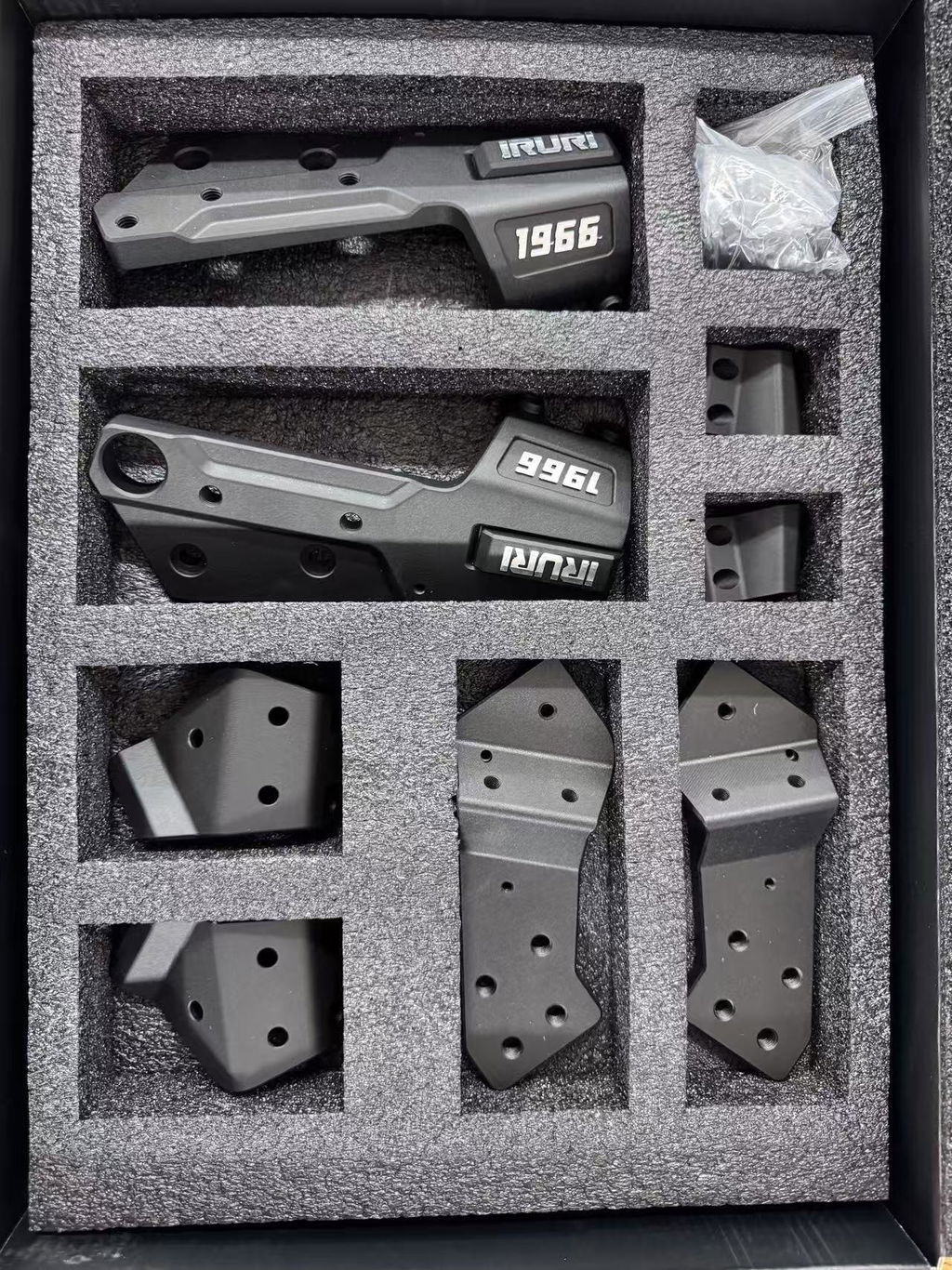
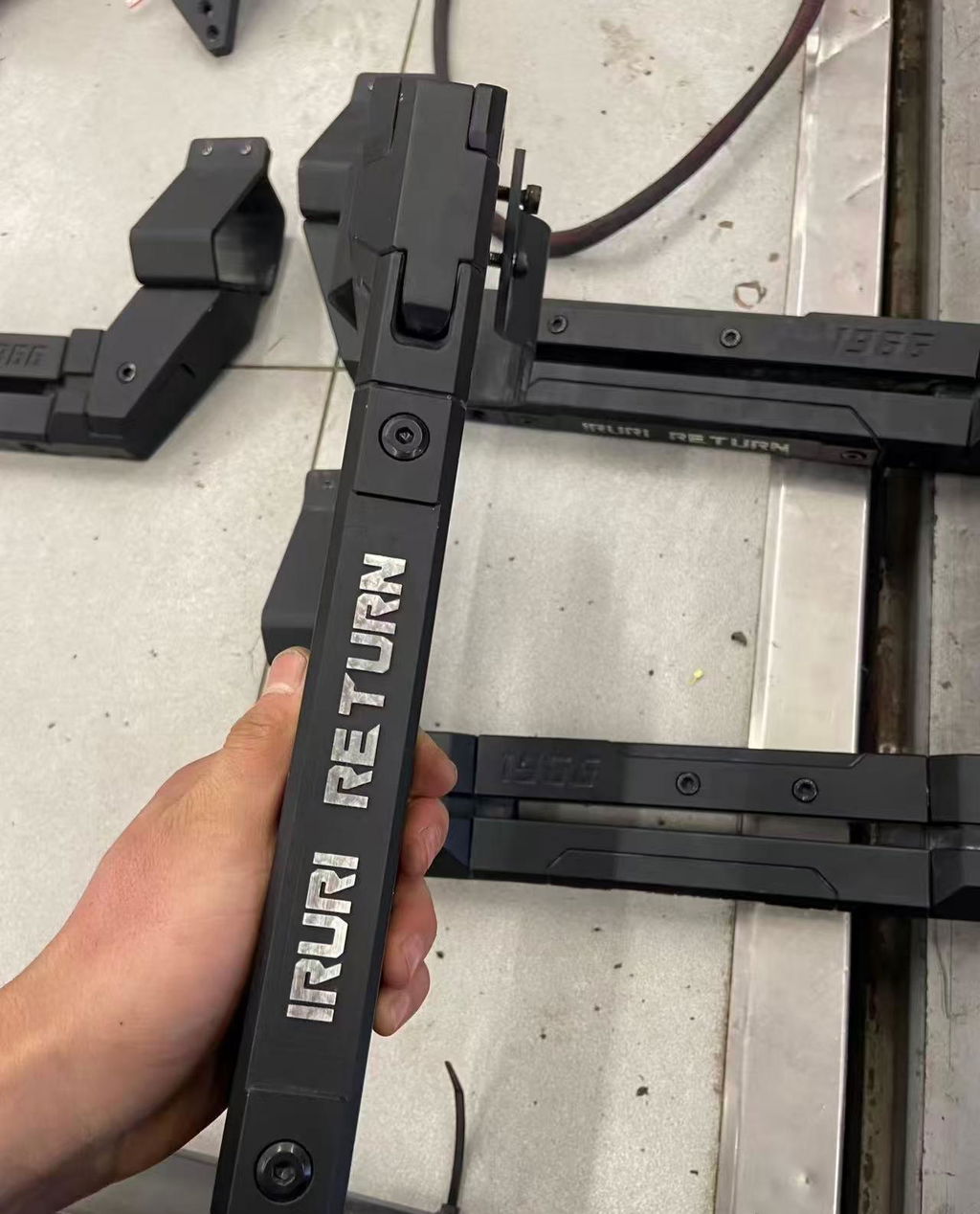
The IRURI Stone Guard is built around a multi-component metal architecture rather than a generic plastic molding:
• Aluminum-Magnesium Alloy Construction: Formed from high-ductility aluminum-magnesium alloy sheet, the guard provides a metal protective surface across the covered hood-edge area. The forming process allows individual sections to trace the LC250's front-end geometry.
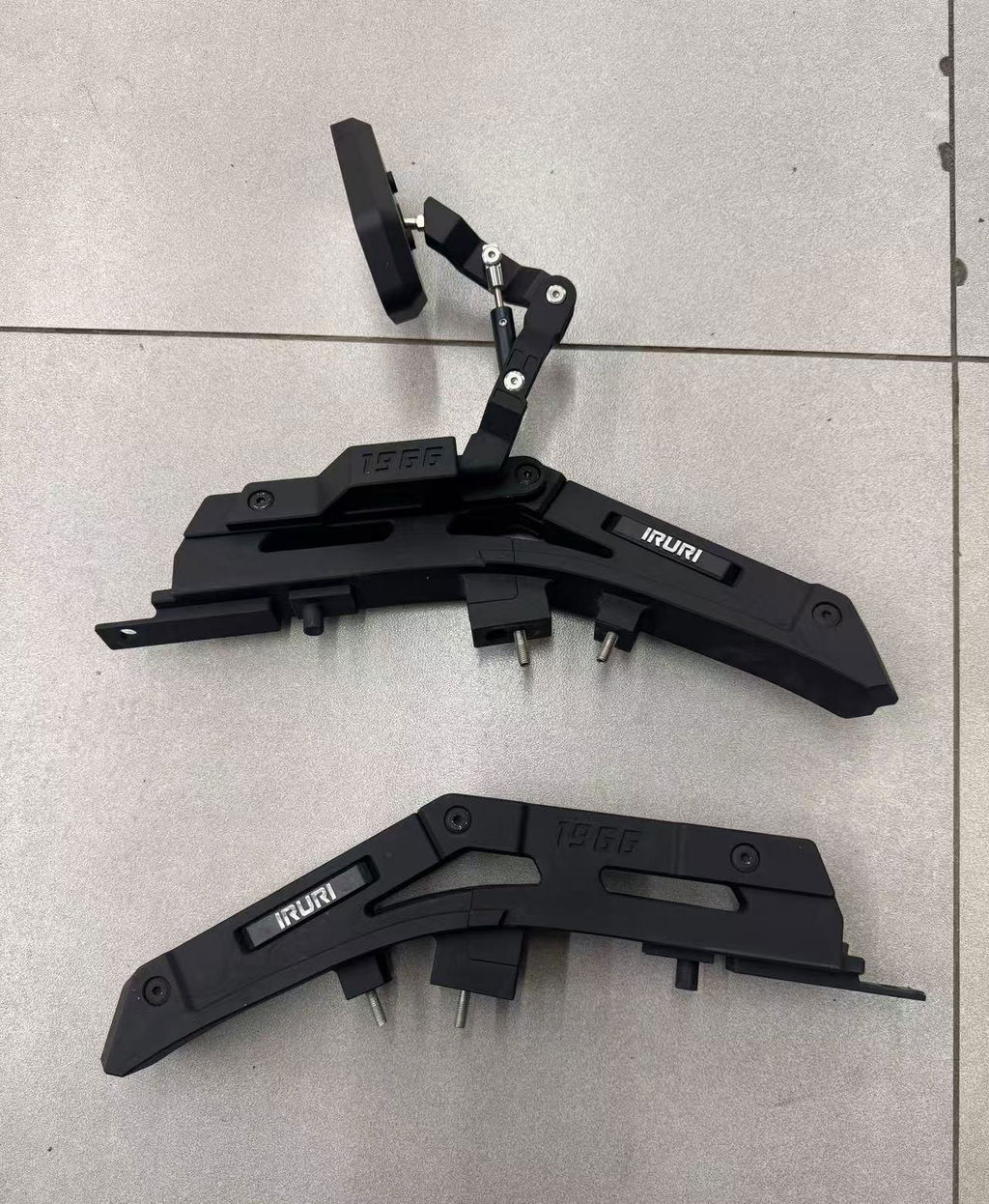
• Modular Multi-Component Construction: The assembly utilizes a multi-piece design configured specifically around the LC250's front contours. Individual structural sections are mechanically fastened to create a coordinated protective system, rather than relying on a single stamped piece.
• 2.0 kg Assembly Weight: The complete multi-component assembly weighs approximately 2.0 kg. This figure should be considered alongside the vehicle's original hood hardware and installation requirements.
• Matte Black Finish: The guard features a matte black exterior finish that visually coordinates with the LC250's factory dark trim and surrounding front-end components.
• Modular Accessory Expansion: The guard incorporates dedicated mechanical interfaces for compatible accessories, including matching IRURI branch deflector components. This allows the front-end arrangement to support additional equipment without relying on unrelated mounting brackets.


06 / Factory-Point Installation Without Drilling
The mounting design focuses on mechanical security and non-destructive fitment:
• Secured via Existing Factory Mounting Locations: The mounting brackets attach directly to existing structural points under the hood.
• Zero Vehicle Body Drilling: Installation requires no new holes drilled into the vehicle's hood, sheet metal, or exterior panels.
• No Adhesives or Double-Sided Tape: The assembly is fastened mechanically with threaded hardware, avoiding the use of adhesive tapes or glues.
• Designed Mounting Clearance: The mounting brackets position the guard relative to the hood's painted surfaces. Correct installation and periodic inspection are important for maintaining the intended clearances and checking for trapped debris.
INSTALLATION OVERVIEW
Uses existing factory mounting locations and standard metric hand tools. Expected installation time is approximately 15–20 minutes.
PHYSICAL SPECIFICATIONS
Overall dimensions measure 1569 × 221 × 57 mm. Total assembly weight is approximately 2.0 kg across all sections.


07 / Is a Stone Guard Right for Your LC250?
A stone guard is a targeted physical accessory. It is engineered for:
1. Gravel Road & Outdoor Drivers: Owners who frequently encounter loose gravel, unpaved tracks, or construction-area road debris and want additional physical coverage along the hood's leading edge.
2. Owners Seeking Metal Edge Coverage: Drivers looking for an external metal barrier across the front edge of the hood.
3. Overland Builds Planning Accessory Expansion: Owners who want integrated mounting interfaces for trail accessories such as branch deflectors.
Conversely, for vehicles primarily driven in urban environments or on well-maintained paved highways, existing paint protection or the factory configuration may already be sufficient.
08 / Frequently Asked Questions
Has the Stone Guard undergone high-speed aerodynamic or wind-noise testing?
We have not conducted dedicated high-speed road testing, wind-noise measurements, or aerodynamic validation for this product. Therefore, we do not make specific claims regarding wind-noise reduction, airflow management, or vibration performance at highway speeds.
We have not conducted dedicated high-speed road testing, wind-noise measurements, or aerodynamic validation for this product. Therefore, we do not make specific claims regarding wind-noise reduction, airflow management, or vibration performance at highway speeds.
Will this guard guarantee that my windshield will not crack?
No. A hood-mounted guard covers only its specific mounting envelope. It cannot alter the path of airborne debris directed toward the windshield. It functions as a physical surface for the covered hood area, not an all-encompassing shield for the glass.
No. A hood-mounted guard covers only its specific mounting envelope. It cannot alter the path of airborne debris directed toward the windshield. It functions as a physical surface for the covered hood area, not an all-encompassing shield for the glass.
Can the Stone Guard be installed on a hood with PPF?
Compatibility depends on the film's placement, thickness, and edge wrapping around the mounting areas. The guard uses mechanical mounting rather than adhesive attachment, but installation clearance should be checked before fitting it to a PPF-covered hood.
Compatibility depends on the film's placement, thickness, and edge wrapping around the mounting areas. The guard uses mechanical mounting rather than adhesive attachment, but installation clearance should be checked before fitting it to a PPF-covered hood.
Does installation require permanent vehicle modifications?
The guard mounts using factory structural points without drilling or adhesives, meaning the hardware can be removed. However, proper installation care and routine inspection are recommended to ensure mounting points remain clean and correctly adjusted over time.
The guard mounts using factory structural points without drilling or adhesives, meaning the hardware can be removed. However, proper installation care and routine inspection are recommended to ensure mounting points remain clean and correctly adjusted over time.
What accessories can be mounted to the expansion interfaces?
The corner assemblies feature dedicated interfaces designed to support compatible IRURI branch deflector accessories. Other accessory attachments should only be used after confirming specific mechanical compatibility.
The corner assemblies feature dedicated interfaces designed to support compatible IRURI branch deflector accessories. Other accessory attachments should only be used after confirming specific mechanical compatibility.
Protection Should Match the Problem.
A stone guard cannot prevent every stone chip or windshield crack. Its purpose is more specific: to provide a physical protective surface over the hood area it covers. For LC250 owners who regularly travel on gravel roads or want a modular front-end setup, that may be a practical addition. For others, existing paint protection or the factory configuration may already be sufficient. The right choice depends on how the vehicle is used—not how much equipment can be added.

EXPLORE THE IRURI STONE GUARD FOR TOYOTA LAND CRUISER LC250
Modular aluminum-magnesium construction with factory-point mechanical mounting and integrated branch deflector compatibility. Engineered specifically for the Land Cruiser 250.
VIEW LC250 STONE GUARD →
0 comments