

LC250 Roof Access: Do You Really Need a Side Ladder?
A Practical Guide to Roof Cargo Access, Ladder Alternatives, and Vehicle-Specific Fitment for the Toyota Land Cruiser 250.

OPENING / BEFORE BOLTING HARDWARE TO THE ROOFLINE
Mounting cargo to the roof of a Toyota Land Cruiser 250 is straightforward. Reaching it on a daily basis is where the friction begins.
Whether setting up an overland platform, installing crossbars, or mounting an enclosed cargo box for family road trips, utilizing the roof preserves valuable cabin space. Bulky camping chairs, recovery boards, and outdoor equipment stay outside the interior.
However, once gear is secured above the roofline, accessing tie-down straps, zippers, and latches becomes increasingly inconvenient.
How do you reach your gear comfortably and maintain a stable footing without repeatedly improvising?
A side ladder is one way to solve that problem, but it is not necessary for every owner. Before adding exterior hardware to your LC250, consider your actual loading frequency, available access methods, and the mechanical requirements of a dedicated ladder system.
Modification should solve friction, not create more of it.
01 / THE REAL FRICTION OF ROOF STORAGE
The Land Cruiser 250 serves a wide range of purposes. For some owners, it is a dedicated overland platform; for others, it is a family vehicle used for road trips, camping, and everyday transportation.
Roof-mounted cargo systems offer practical advantages. Wet equipment can remain outside the cabin, bulky items no longer occupy rear storage space, and dedicated platforms provide additional room for travel equipment.
However, frequent roof access introduces several practical challenges:
- Securing Tie-Downs: Strapping down dry bags, recovery equipment, or camping gear requires a stable position and sufficient reach.
- Operating Cargo Boxes: Roof boxes typically require access to side-mounted opening mechanisms, internal locks, and tensioning hardware.
- Retrieving Equipment: Items positioned toward the center or opposite side of the roof can be difficult to reach from ground level.
- Repeated Daily Access: During multi-day trips, roof access may be needed every morning and evening rather than just once.
When roof access becomes inconvenient, owners may begin avoiding certain storage arrangements or relying on temporary climbing methods.
The question is not simply whether your vehicle has enough roof storage. It is whether you can use that storage conveniently.

02 / WHY ROOF ACCESS IS CHALLENGING ON THE LC250
Accessing the LC250 roof is primarily a matter of vehicle geometry and equipment placement.
The LC250 already has a relatively tall body. Once a roof rack, cargo platform, storage box, or additional off-road equipment is installed, the distance between the ground and frequently accessed cargo increases further.
Owners commonly consider several temporary access methods:
1. Reaching from the Rear Tire
The rear tire can provide a convenient elevated position in certain situations. However, it limits access to the area around the rear wheel arch and may not provide sufficient reach for equipment positioned toward the center or front of the roof.
2. Using a Portable Step
A portable folding step offers a flexible alternative. It can be positioned wherever access is needed and stored when not in use. The trade-off is that it requires additional storage space and setup each time.
3. Using the Door Sill
Some owners use the door sill as a temporary foothold. While this may work for occasional access, it is not a dedicated climbing solution and requires attention to interior trim and footing.
For owners who repeatedly access roof-mounted equipment, a dedicated external foothold can provide a more consistent approach.


03 / FOUR WAYS TO ACCESS YOUR LC250 ROOF
There is no single solution that works for every LC250 owner. The right approach depends on your vehicle configuration, cargo placement, loading frequency, and available storage space.
| Access Method | Main Advantage | Considerations |
|---|---|---|
| Rear Tire / Ground-Level Reach | No additional hardware | Limited reach depending on vehicle height and cargo position |
| Portable Folding Step | Flexible and portable | Requires storage and setup |
| Rear-Mounted Ladder | Direct access from the rear | Some designs may affect rear glass or tailgate clearance |
| Rack-Integrated Side Ladder | Convenient side access to roof equipment | Requires a compatible roof rack and dedicated mounting interface |
A side ladder is particularly useful when your roof equipment is accessed repeatedly from the side of the vehicle.
It provides a designated access point alongside the roof platform, reducing the need to reposition temporary steps or improvise a climbing position.
However, the installation structure matters. A universal ladder and a vehicle-specific rack-integrated ladder are not necessarily interchangeable.


04 / WHAT TO LOOK FOR IN AN LC250 SIDE LADDER
If a dedicated side ladder fits your usage requirements, evaluate the product beyond its appearance.
1. Mounting Structure & System Integration
Understand how the ladder connects to the vehicle. A properly designed system should clearly define its upper and lower mounting interfaces.
For rack-integrated designs, verify that the upper connection is engineered for the corresponding roof rack rather than relying on an unspecified universal attachment.
2. Load Performance & Practical Testing
A ladder intended for climbing should be evaluated through actual-use testing and appropriate structural assessment. Ask whether the manufacturer has conducted practical human-use testing, whether a numerical load rating is available, and what usage conditions apply.
Do not infer a safe load limit solely from the material or appearance.
3. Weight & Material
The ladder is mounted on the exterior of the vehicle, so its weight should be considered alongside structural requirements.
Aluminum-magnesium alloy offers a practical balance of material properties for vehicle accessories where weight and structural design both matter.
4. Vehicle Clearance
Check the relationship between the ladder, side glass, painted body panels, and surrounding vehicle components.
The mounting structure should maintain appropriate clearance during normal vehicle use.
5. Manufacturing & Surface Treatment
Examine the manufacturing quality of the main structure and mounting interfaces.
Accurate machining, consistent forming, and appropriate surface treatment all contribute to product fitment and long-term exterior use.
6. Installation Method
If preserving the factory bodywork is important, confirm whether the ladder uses existing mounting locations and whether drilling, cutting, or permanent modifications are required.


05 / A CLOSER LOOK AT THE IRURI LC250 SIDE LADDER
At IRURI, we approach vehicle accessories as integrated mechanical systems rather than isolated aftermarket components.
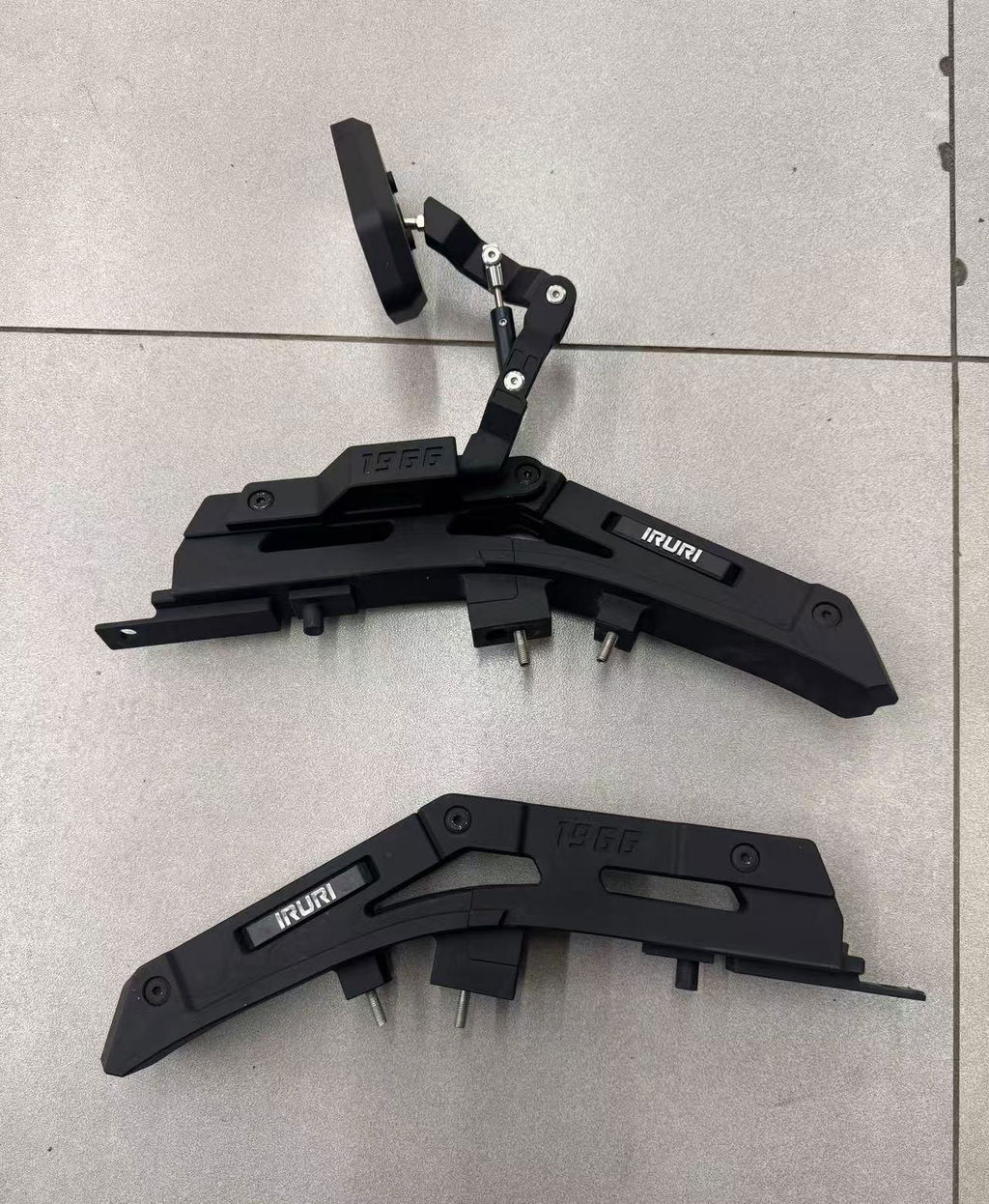
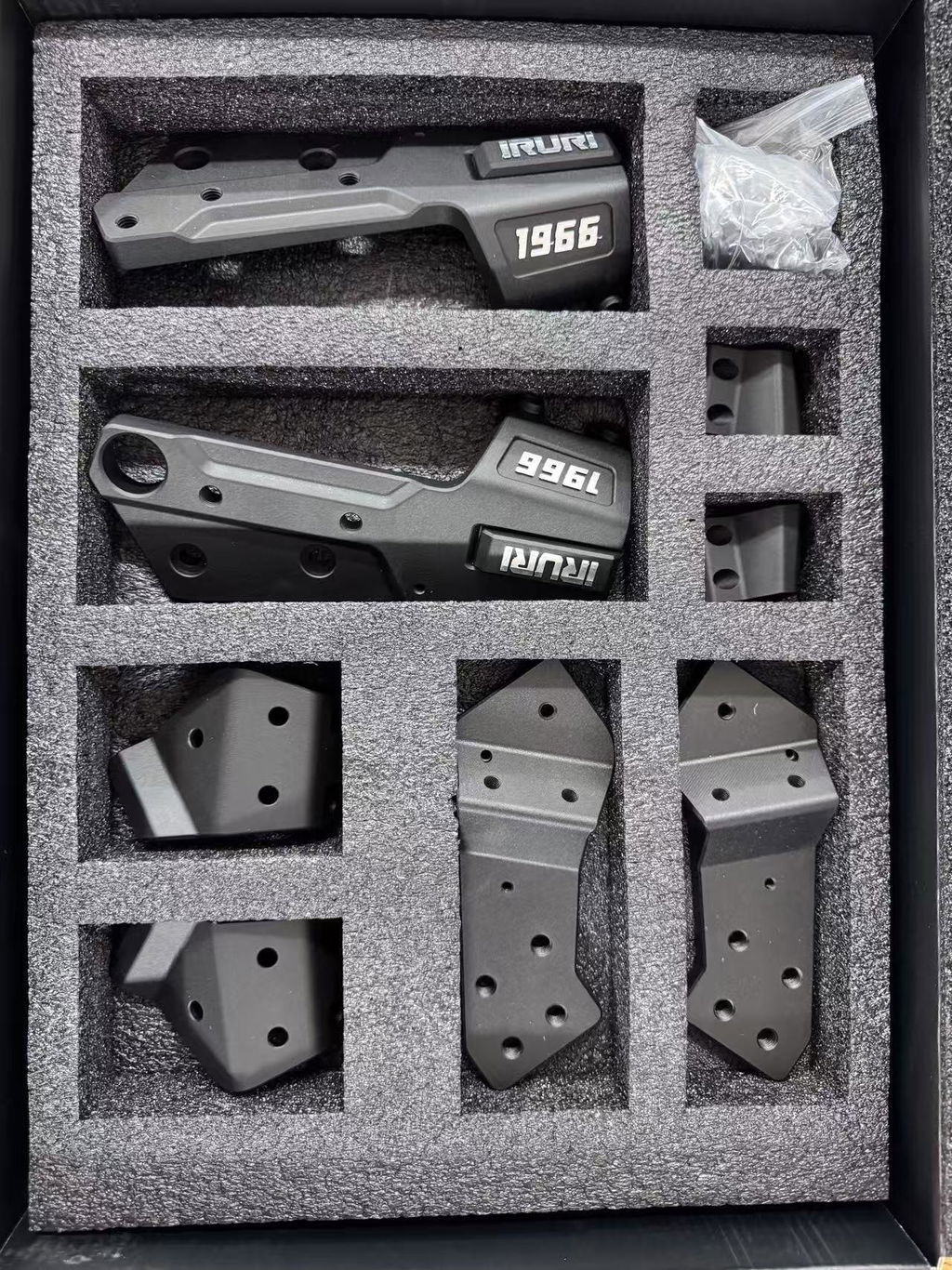
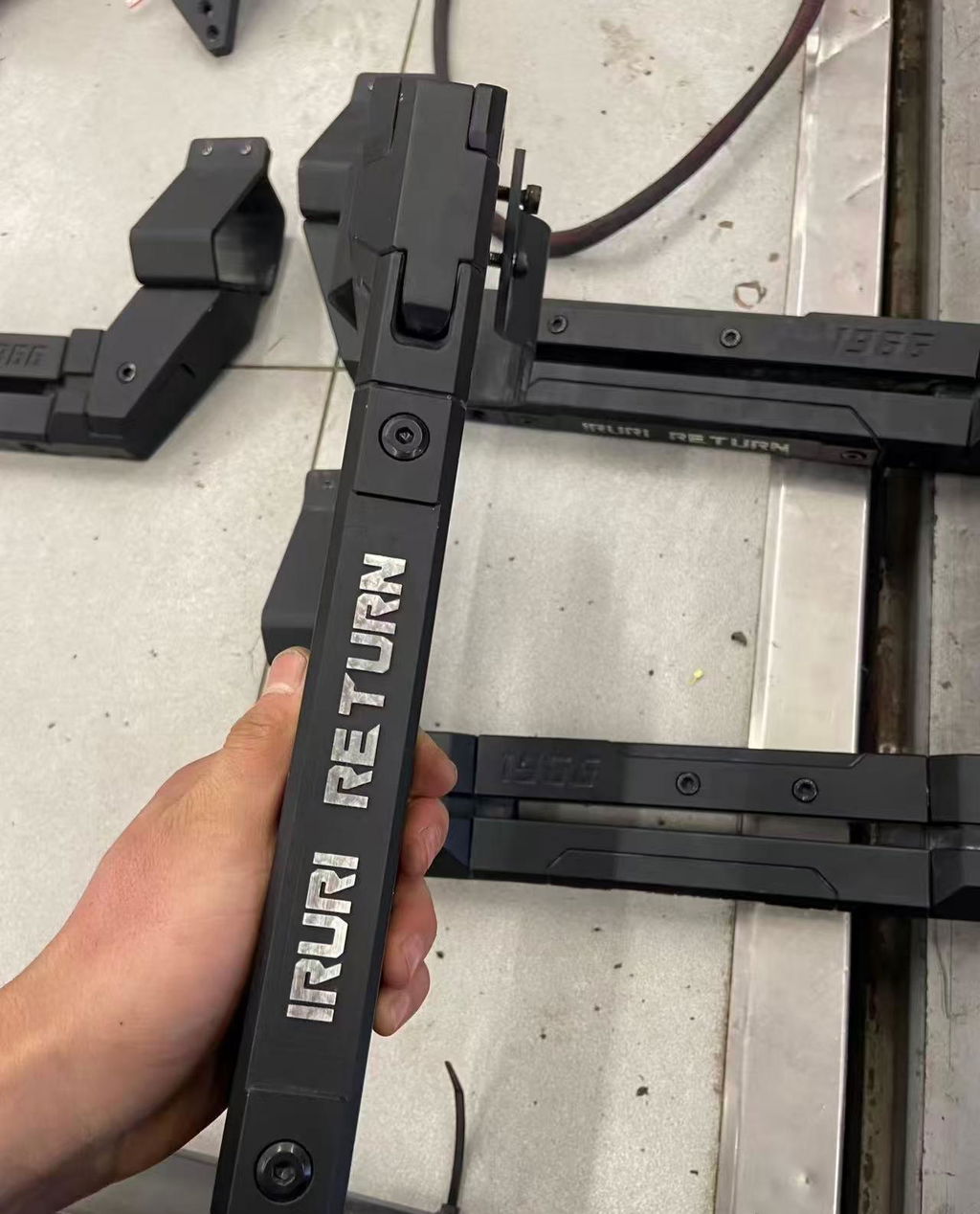
The IRURI Side Ladder for Toyota Land Cruiser LC250 was developed specifically around the IRURI LC250 Roof Rack mounting architecture.
Its installation uses two defined mounting interfaces:
- Upper Mount – Roof Rack Interface: The upper section connects directly to the structural mounting interface of the IRURI LC250 Roof Rack.
- Lower Mount – Factory Vehicle Mounting Point: The lower section connects to the designated original vehicle mounting location.
This arrangement coordinates the ladder with both the roof rack and the vehicle, rather than relying on a standalone window-frame or universal roof attachment.
Key Engineering Specifications
- Aluminum-Magnesium Alloy Construction: The main ladder structure uses aluminum-magnesium alloy, balancing material efficiency and structural requirements.
- 5-Axis CNC-Machined Mounting Components: Precision-machined mounting interfaces are designed to provide accurate fitment between the ladder and its corresponding mounting locations.
- Black Anodized Finish: A black anodized surface treatment provides a consistent exterior finish suited to the vehicle's dark trim and off-road equipment.
- Practical Human-Use Testing: IRURI has conducted hands-on testing with a person using the installed ladder. The ladder remained stable during our practical testing. This is an internal functional evaluation, not a published numerical load rating or third-party certification.
- Controlled Exterior Weight: The complete ladder assembly weighs approximately 4.8 kg.
- Vehicle-Specific Dimensions: Overall dimensions measure approximately 770 × 494 × 408 mm.
- No-Drill / No-Cut Installation: Designed to use the designated IRURI roof rack interface and factory vehicle mounting locations, requiring no drilling or cutting of the vehicle body or factory trim.
- Installation: Installation typically takes approximately 35 minutes using standard hand tools.
- Single-Side Configuration: Sold as one complete side ladder assembly, not as a pair.
System Compatibility
The IRURI LC250 Side Ladder is designed specifically for the IRURI LC250 Roof Rack.
It is not designed as a standalone accessory for a bare roof, and compatibility with third-party roof rack systems has not been established.
06 / WHO ACTUALLY DOESN'T NEED A SIDE LADDER?
A practical vehicle build should also recognize when additional hardware is unnecessary.
You probably do not need a dedicated side ladder if:
Your Roof Stays Empty: If your LC250 is primarily a daily commuter and you do not use a roof rack, platform, or cargo box, a ladder serves little practical purpose.
You Rarely Access Roof Cargo: If roof-mounted equipment is only used during occasional holidays, a portable folding step may be sufficient.
You Do Not Use the IRURI Roof Rack: This particular ladder is designed around the IRURI LC250 Roof Rack interface. Without the corresponding rack, it is not a suitable standalone purchase.
Your Existing Access Method Works: If your current setup already provides convenient access to roof-mounted equipment, there may be little reason to add another exterior component.
A side ladder makes the most sense when roof access is a repeated part of your travel or equipment-loading routine.
07 / FREQUENTLY ASKED QUESTIONS
Q1: Does the LC250 require a side ladder to use a roof rack?
No. A side ladder is an access convenience, not a mechanical requirement. Many owners manage roof cargo using portable steps or other access methods. A dedicated ladder provides a permanent and repeatable access point for frequent roof use.
Q2: Is a side ladder better than a rear ladder on the LC250?
Neither is universally better. A side ladder provides access alongside the vehicle, which can be convenient when loading or retrieving equipment from a side-mounted cargo area. A rear ladder provides access from the back of the vehicle and may suit different roof layouts. The right choice depends on cargo placement, available clearance, and how you use your roof rack.
Q3: Can the IRURI side ladder be installed on a bare roof or with third-party roof racks?
No. The IRURI LC250 Side Ladder is engineered specifically for the IRURI LC250 Roof Rack. Its upper mounting interface connects directly to the corresponding IRURI rack structure, while the lower section attaches to the designated factory vehicle mounting point. Compatibility with bare roofs or third-party roof rack systems has not been established.
Q4: Has the IRURI LC250 Side Ladder been tested for stability?
Yes. IRURI has conducted practical human-use testing with the ladder installed. During our hands-on testing, the ladder remained stable under the tested conditions. However, we do not currently publish a numerical load rating or claim a third-party certified maximum load capacity. Always follow the installation instructions and use the ladder as intended.
Q5: Does the IRURI LC250 Side Ladder require drilling or cutting?
No. The ladder is designed to connect to the corresponding IRURI roof rack interface at the upper end and the designated factory vehicle mounting point at the lower end. No drilling or cutting of the vehicle body or factory trim is required.
Q6: How much does the IRURI LC250 Side Ladder weigh?
The complete ladder assembly weighs approximately 4.8 kg. Its aluminum-magnesium alloy construction helps maintain a controlled exterior weight while meeting the product's structural requirements.
Q7: Is the IRURI LC250 Side Ladder sold as a pair or individually?
It is sold as a single side ladder assembly, not as a pair. Owners can select the intended mounting side according to their vehicle configuration and loading preferences.
CONCLUSION / PURPOSE BEFORE PRESENCE
Building a capable Land Cruiser is an exercise in editing. The objective is not to see how many accessories can be attached to the exterior, but how effectively the vehicle supports the way you actually travel.
If your LC250 regularly carries equipment on an IRURI roof platform, a purpose-designed side ladder can make repeated loading and retrieval more convenient while maintaining a vehicle-specific mounting approach.
If rooftop storage is rarely part of your routine, there may be no reason to add another accessory.
The objective is not to add more equipment to the vehicle. It is to make the equipment you actually use work better.
IRURI — Designed Around Function.

Make Roof Access More Deliberate.
Explore the IRURI LC250 Side Ladder, engineered to connect with the IRURI LC250 Roof Rack and the designated factory vehicle mounting point.
Explore the LC250 Side Ladder
0 comments