

THE IRURI JOURNAL
ENGINEERING & DESIGN
The Most Useful Table Is the One You Never Have to Pack.
Why We Turned the Jeep Tailgate Into a Permanent Outdoor Workspace.
How Re-engineering the Jeep Wrangler Tailgate Inner Panel Creates an Immediate Trailside Camp Kitchen.
We packed tables because we thought we needed more workspace. What we actually needed was a workspace that never had to be packed. We kept seeing the same thing: tables came out before coffee did. That's where this story starts.

You arrive at the trailhead or campsite at dusk.
The stove is somewhere under the recovery bag. The camp kitchen boxes are stacked inside. The folding aluminum table is strapped behind everything else.
Nothing is particularly difficult to reach, but nothing is ready either.
Before the first meal, the first trail repair, or the first cup of coffee, the campsite has to be assembled.
Field Observation 01
A workspace is most useful before the campsite is ready.
Chapter 1: The Problem Was Never the Table
A table is only one answer to a much larger need.
When people say they need a camping table, they rarely mean they want more furniture in the woods. They are asking for a place where a task can begin—a comfortable height that doesn't demand constant bending over, a clean surface away from dirt, and a spot to set down heavy items while organizing gear.
The surface matters, but readiness matters more.
People do not always need more equipment at camp. They need fewer steps before the work can begin.
Chapter 2: Why Portable Tables Become Another Piece of Cargo
Portable folding tables are undeniably useful once they are set up. But they carry an unseen operational cost: they consume cargo space long before they ever create a working surface.
If a table is buried beneath heavy gear, it loses its core purpose of immediate utility. It demands careful placement during packing, a dedicated setup step upon arrival, and a thorough cleaning before going back into the vehicle at the end of the trip.
The portable table solves the problem after it has been unpacked. We wanted to solve it before.


Field Observation 02
The best place for a workspace may be the surface that already travels with you.
Chapter 3: We Started Looking at the Tailgate Differently
We stopped seeing the tailgate as merely a door.
The inner panel of a swinging tailgate possesses inherent structural advantages: it travels with the vehicle everywhere, swings open directly toward your outdoor area, rests at a natural standing height, and remains accessible even when the interior trunk is packed to the roof.
When engineered thoughtfully into a dedicated tailgate table, the real estate was already there. It simply had not been asked to do very much.

From the Notebook
We did not add another object to the cargo area. We gave an existing surface another job.
Chapter 4: Chaos Before Architecture
Why does a flat table eventually turn into a chaotic mess?
Because when people work in the field, different tasks compete for the exact same surface at the exact same time. The stove sits next to raw food prep. A loose wrench rests beside a coffee mug. A camera case crowds out the cutting board.
Adding a larger single table doesn't solve this; it just creates a larger arena for the mess.
That's when the idea of separating tasks appeared:
• Active Tasks vs. Passive Gear: Cutting food or using a wrench needs an unobstructed deck, while kettles, gear pouches, and tool rolls simply need to stay off the dirt within arm's reach.
• Heat vs. Everything Else: Placing an open flame on the primary prep deck restricts every other task happening beside it. Heat needs its own isolated boundary.


Field Observation 03
More surface area creates space. Separate surface areas create order.
Chapter 5: Ready Without Being in the Way
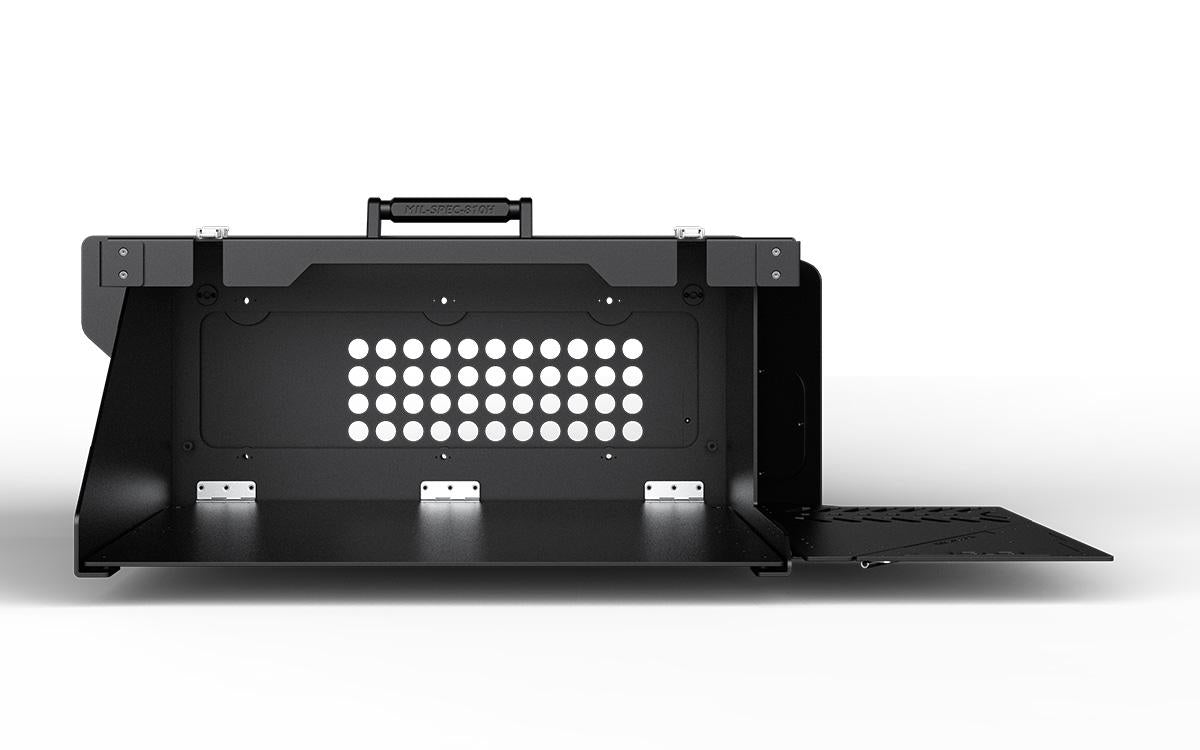
When closed, a tailgate structure should behave like an integrated part of the interior door—not like an accessory waiting to be put away.
The folding mechanism rests flush against the door's inner line, preserving total load depth for cargo boxes or fridge slides.
A truly useful design does not demand your attention when it is not in use.
Open when the task begins. Flat when it ends.
Chapter 6: Designing Around the Vehicle, Not Through It
We wanted a solution that worked with the vehicle before asking the owner to modify it.
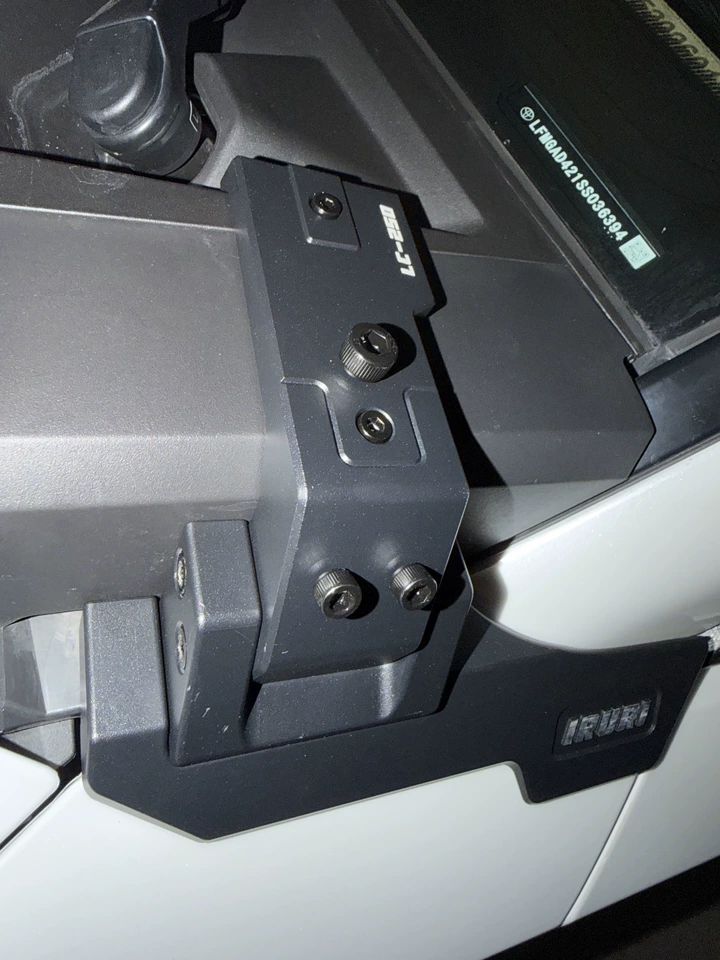
The vehicle frame already established where structural support could be anchored. Our job was not to drill new holes, but to work carefully with the factory mounting points that were already there.

From the Notebook
A vehicle should not have to be damaged to become more useful.
Chapter 7: Different Trips. The Same Starting Point.
There is no single "correct" way to use a tailgate workspace:
• Someone prepares breakfast by the lake before hitting the trail.
• Someone opens a tool roll to adjust a sway bar link after hearing an odd trail noise.
• Someone sets down a camera body on the upper shelf while swapping lenses in the field.
• Someone lights a burner on the side tray and brews coffee without moving a single bag inside the vehicle.
Different tasks. Same first step: Swing open the door.
It was never designed around one specific version of camping. It was designed around the moment someone needs a clean, stable place to begin.

Field Notes
The Jeep stopped beside the water. The tailgate swung open.
The coffee started brewing on the side tray. The toolbox stayed open on the main deck. Dinner hadn't started yet. But work already had.
Nothing had changed about the campsite. Only the way it began.
Field Principle
Useful space does not always have to be carried. Sometimes it only has to be uncovered.
People often ask how much weight a tailgate platform can hold, or how many square inches the surface provides. Those metrics matter. But the more practical question is simpler: How quickly can you begin using it?
A portable table is useful once it has been unpacked. A tailgate workspace is useful the moment the door opens. It had been part of the vehicle all along.
Frequently Asked Questions
What is a Jeep tailgate table used for?
A Jeep tailgate table creates an instant elevated workstation for campsite food preparation, cooking stove placement, trail repairs, and temporary gear organization without unloading extra furniture.
A Jeep tailgate table creates an instant elevated workstation for campsite food preparation, cooking stove placement, trail repairs, and temporary gear organization without unloading extra furniture.
Does the IRURI Jeep tailgate table require drilling?
No. The system attaches directly to factory mounting locations on the Jeep Wrangler JL tailgate using basic hand tools, requiring zero drilling, cutting, or permanent body modifications.
No. The system attaches directly to factory mounting locations on the Jeep Wrangler JL tailgate using basic hand tools, requiring zero drilling, cutting, or permanent body modifications.
Which Jeep models are compatible with this tailgate workstation?
This system is specifically engineered for the 2018+ Jeep Wrangler JL (including 2-Door, 4-Door, Rubicon, and 4xe models).
This system is specifically engineered for the 2018+ Jeep Wrangler JL (including 2-Door, 4-Door, Rubicon, and 4xe models).
How much weight can the tailgate workstation hold?
The workstation is engineered for a distributed load capacity of up to 21 kg under standard operating conditions, spanning the main lower deck and upper MOLLE grid.
The workstation is engineered for a distributed load capacity of up to 21 kg under standard operating conditions, spanning the main lower deck and upper MOLLE grid.
Can I use a portable camp stove on the workstation?
Yes. A dedicated pull-out side tray is designed specifically to hold compact butane or propane camp stoves, isolating open flames and heat from the primary prep surface.
Yes. A dedicated pull-out side tray is designed specifically to hold compact butane or propane camp stoves, isolating open flames and heat from the primary prep surface.
Does it take up cargo space when folded closed?
When folded, the platform rests flush against the inner tailgate liner, preserving total trunk load depth and avoiding interference with cargo totes or fridge slides.
When folded, the platform rests flush against the inner tailgate liner, preserving total trunk load depth and avoiding interference with cargo totes or fridge slides.
Why use a dual-level design instead of a single flat table?
Dual levels separate active prep tasks from passive gear storage, keeping cooking space clear while storing gear, tools, and kettles on an upper shelf within reach.
Dual levels separate active prep tasks from passive gear storage, keeping cooking space clear while storing gear, tools, and kettles on an upper shelf within reach.
How long does installation take?
Installation typically takes approximately 30 minutes using standard hand tools like Torx bits, sockets, and hex wrenches.
Installation typically takes approximately 30 minutes using standard hand tools like Torx bits, sockets, and hex wrenches.
| Engineering Anchor | System Specification Details |
|---|---|
| Vehicle Platform | Jeep Wrangler JL / JL Rubicon / 4xe (2018–Present) |
| Material Architecture | High-Strength Magnesium-Aluminum Alloy |
| Surface Finish | Matte Black Industrial Weather-Resistant Coating |
| Load Rating | 21 kg Total Distributed Load Capacity |
| Open Dimensions | 1066 × 602 × 407 mm |
| Installation Protocol | 100% Factory Bolt-On (Zero Vehicle Drilling) |
Useful space does not always have to be carried. Sometimes it only has to be uncovered.
Explore the Rear Tailgate Multi-Function Platform engineered for Jeep Wrangler JL.
Explore the Jeep Tailgate Multi-Function Platform →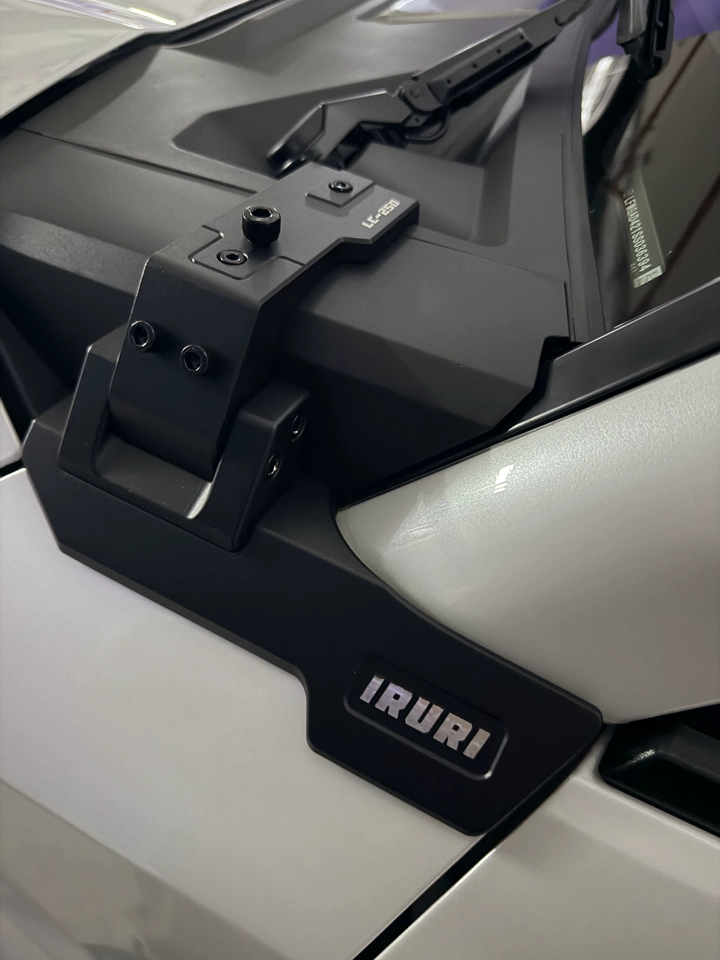
0 comments