

THE IRURI JOURNAL
ENGINEERING & DESIGN
The Roof Was Never the Hard Part. Reaching It Was.
Why Roof-Mounted Capability Only Works When Access Becomes Part of the Architecture.
An Ergonomic Interface Study on Designing Vertical Roof Access for the Ford Bronco (2021+).
A roof rack adds storage. A rooftop tent adds shelter. A cargo case moves heavy gear out of the passenger cabin. Yet every one of these decisions moves equipment farther away from the person using it. As an overland build evolves, the vehicle becomes substantially more capable above the beltline, while the person operating it remains standing at ground level. That vertical separation is where the ergonomic problem begins: space does not automatically become useful simply because something can be bolted to the roof.

Ford Bronco Roof Access: Designing the Missing Vertical Interface
Chapter 01: Capability Moves Upward
Off-road builds naturally migrate upward. Once the rear cargo area is occupied by refrigeration, recovery drawers, or daily luggage, the roofline becomes the primary territory for expansion.
However, usable volume and usable access are not the same thing.
When equipment moves above the roofline without a dedicated access route, reaching upper mounting points requires improvised physical effort. Stepping onto tires, door sills, or bumpers are simply symptoms of a structural gap: the vehicle’s storage has expanded upward, but the route connecting the person to that storage was left unaddressed.
Field Observation 01
Every new surface on a vehicle creates a new relationship with the human body.


Chapter 02: The Missing Vertical Interface
Traditional vehicle ergonomics focus almost entirely on horizontal transitions: stepping laterally into the cabin or loading gear rearward into the cargo area.
Roof-mounted systems introduce a purely vertical interface. The user is no longer moving forward or backward along the floor plan; they are transitioning upward against gravity.
This shift introduces practical questions: Where does the foot find stable purchase? Where does the hand naturally grip for balance? Does the body transition smoothly, or does access feel like an awkward climb around sheet metal?
When access is unplanned, using roof systems creates continuous operational friction.
Chapter 03: Why a Ladder Should Behave Like Part of the Vehicle
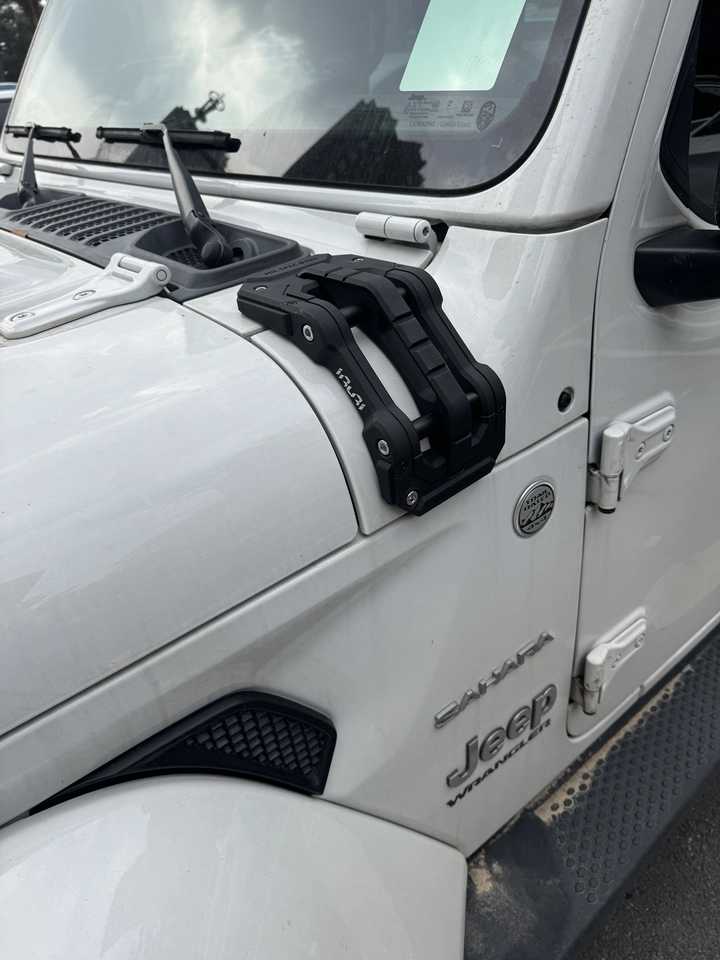
An exterior ladder attached to a modern vehicle should never feel like a piece of camping equipment temporarily clamped to the body. It needs to establish a predictable, defined access path that integrates directly with the vehicle's architecture.
• Contoured Profile: Engineered specifically around the Bronco body profile to align with factory exterior lines.
• Textured Stepping Surfaces: Stepping surfaces feature a mechanical texture intended to improve foot contact during upward movement.
• Defined Contact Zones: The upper structure provides a defined hand-contact zone to assist body stabilization during transition.


From the Notebook
A roof rack changes what the vehicle can carry. A ladder changes whether that capability is actually easy to use.
Field Observation 02
The most useful access point is the one you stop thinking about.
Chapter 04: Access Should Be Repeated, Not Reconsidered
Good ergonomics minimizes decision-making.
When an interface is predictable, repeated movement gradually becomes routine. The owner no longer has to evaluate the route upward or plan every transition point. Access simply happens.
A permanent, dedicated vertical route removes the mental hesitation of reaching roof-mounted gear. It turns an awkward climb into an ordinary, repeatable interaction.


Chapter 05: The Product as Resolution
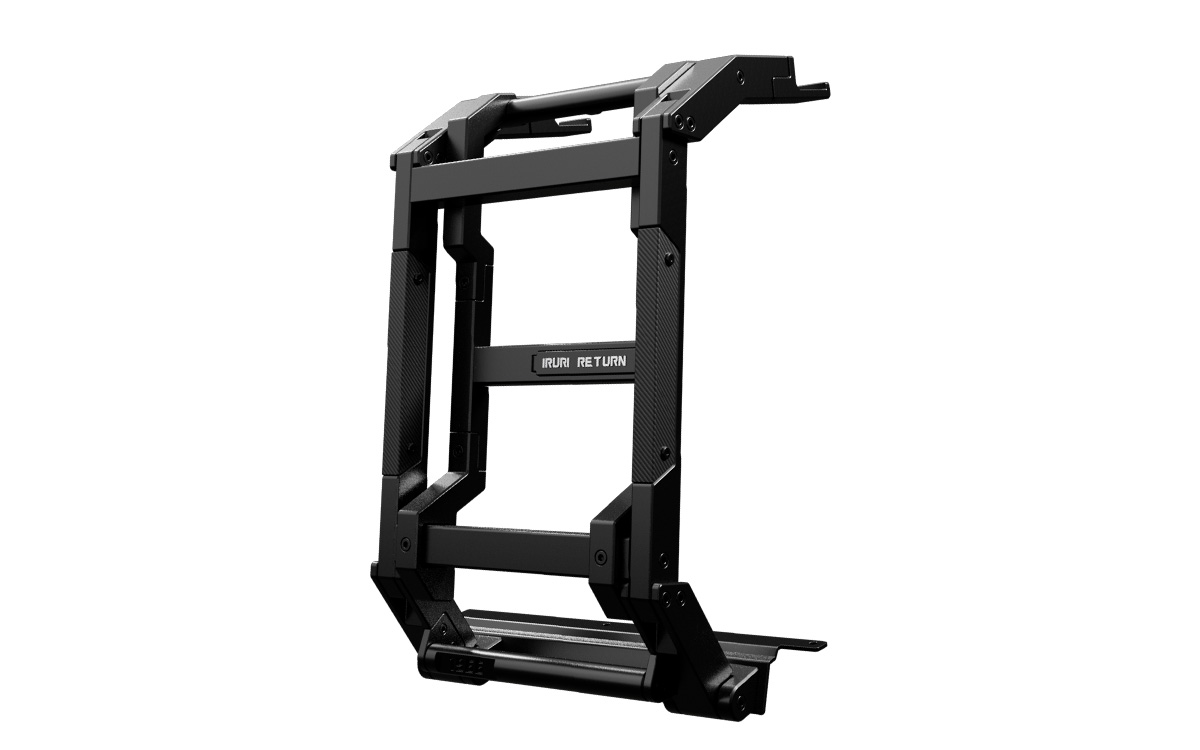
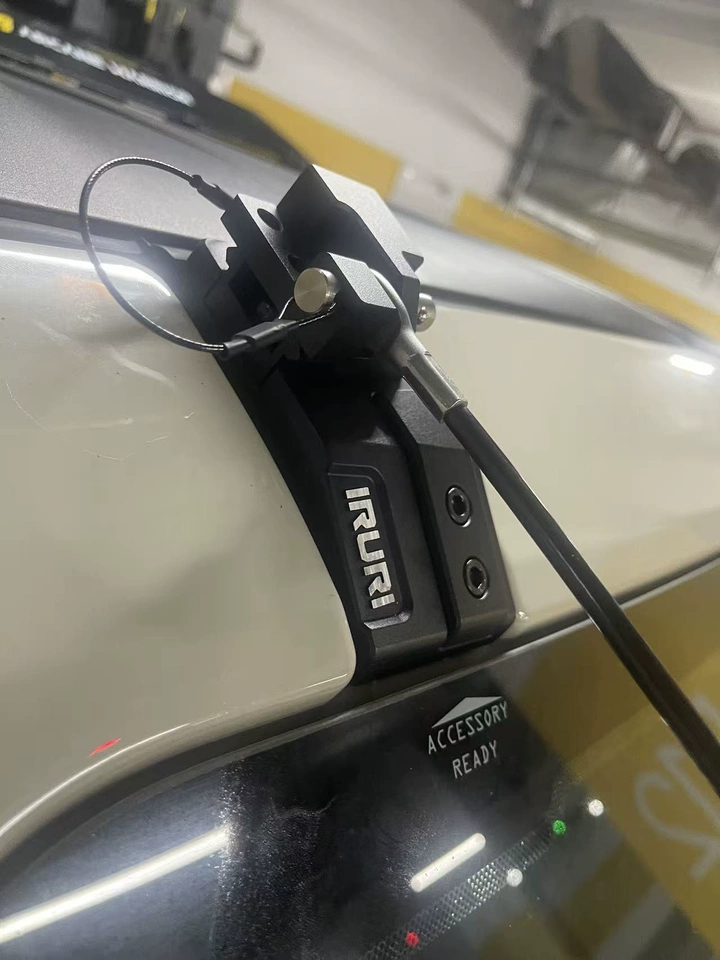
The IRURI-RETURN Bronco Side Ladder serves as the physical resolution to the roof-access challenge. Its purpose is not simply to attach an accessory to the exterior, but to establish a permanent vertical interface between the ground, the vehicle body, and the roof cargo zone.
• Material Matrix: Built combining aluminum and steel elements within a 13.7 kg structure.
• Dimensions & Form: Engineered with overall dimensions of 467 × 304 × 663 mm to sit close along the rear quarter panel.
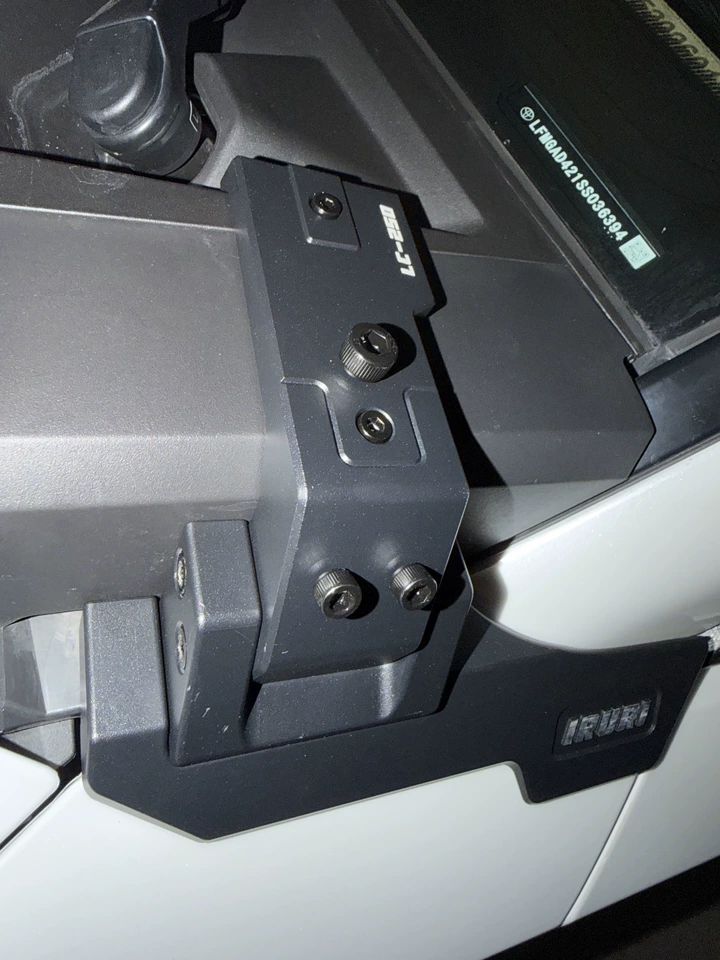
• Factory-Location Mounting: Uses a bolt-on mounting approach designed around factory mounting locations, requiring no vehicle drilling, cutting, or permanent modifications.
• Surface Protection: Finished in a matte black powder coat for exterior use.

Field Notes
At camp, a roof-mounted cargo box eventually needs to be opened, checked, or adjusted.
With a defined access route, the sequence becomes simple: step, reach, retrieve, return.
No searching. No extra stool. No reconsidering the route upward.
Good vehicle architecture is often felt most in the simplest, quietest moments.


Field Principle
Capability is not measured by what sits above the vehicle, but by how effortlessly it remains within reach.
A roof rack makes a vehicle taller in function. A rooftop tent makes it taller in lifestyle. But capability above the roofline only becomes complete when the person standing beside the vehicle can interact with it naturally.
The ladder is not the feature. Access is. A Bronco can carry more than the human body can comfortably reach from the ground. The design goal is to ensure that added capability always feels like it belongs within reach.
Frequently Asked Questions
Does the IRURI Bronco Side Ladder require drilling into the vehicle body?
No. The ladder uses a factory bolt-on mounting design that secures directly into existing factory locations on the vehicle without drilling, cutting, or permanent modifications.
No. The ladder uses a factory bolt-on mounting design that secures directly into existing factory locations on the vehicle without drilling, cutting, or permanent modifications.
What vehicle models are compatible with this side ladder?
It is engineered specifically for the 2021+ Ford Bronco platform.
It is engineered specifically for the 2021+ Ford Bronco platform.
What material is used in the ladder's construction?
The ladder is manufactured from an Aluminum & Steel Alloy and finished with a durable matte black powder coat.
The ladder is manufactured from an Aluminum & Steel Alloy and finished with a durable matte black powder coat.
What are the dimensions and total weight of the ladder?
The overall dimensions are 467 × 304 × 663 mm with a total system weight of 13.7 kg.
The overall dimensions are 467 × 304 × 663 mm with a total system weight of 13.7 kg.
Does the side ladder interfere with opening or closing the vehicle doors?
The ladder uses a contoured vehicle-specific profile. Confirm final clearance details against current product fitment information.
The ladder uses a contoured vehicle-specific profile. Confirm final clearance details against current product fitment information.
Are the ladder steps slip-resistant in wet conditions?
The ladder uses textured stepping surfaces intended to improve foot contact. No independent wet-condition performance rating is stated.
The ladder uses textured stepping surfaces intended to improve foot contact. No independent wet-condition performance rating is stated.
| Engineering Anchor | System Specification Details |
|---|---|
| Vehicle Compatibility | Ford Bronco (2021–Present) |
| Material Architecture | Aluminum & Steel Alloy |
| Surface Finish | Industrial Matte Black Powder Coat |
| System Weight | 13.7 kg |
| Dimensions | 467 × 304 × 663 mm |
| Installation Protocol | Factory Bolt-On (No Drilling, Cutting, or Permanent Modifications) |
| Estimated Install Time | Approximately 45–60 minutes |
| Installation Difficulty | Intermediate |
| Required Tools | Metric socket set, Torque wrench, Hex keys |
Capability is not measured by what sits above the vehicle, but by how effortlessly it remains within reach.
Explore the Contoured Side Ladder engineered for the Ford Bronco (2021+).
Explore the Bronco Side Ladder →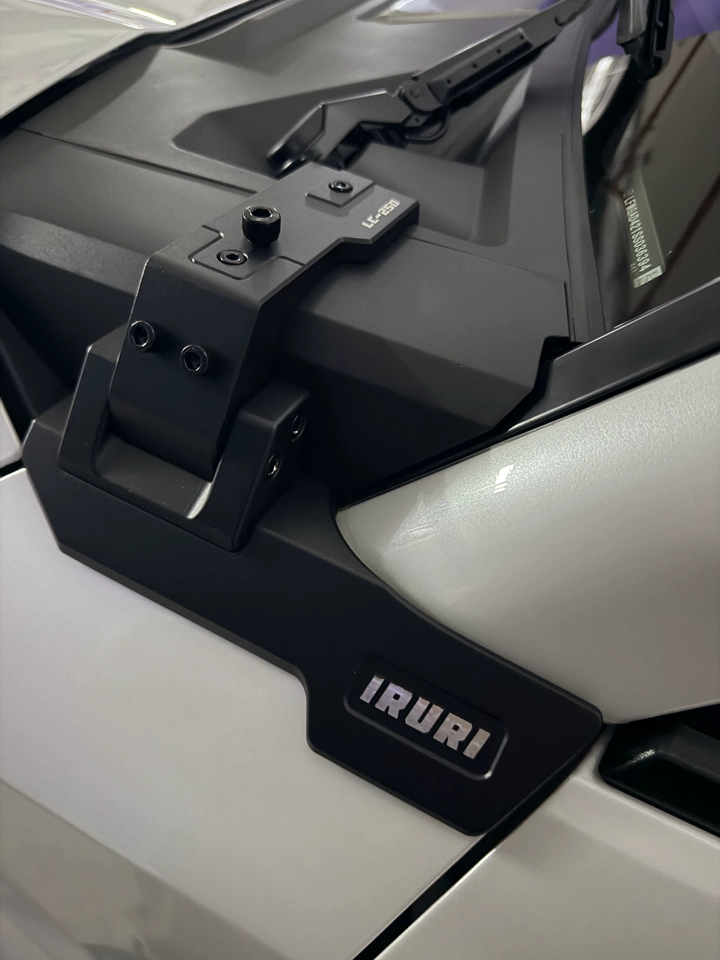
0 comments